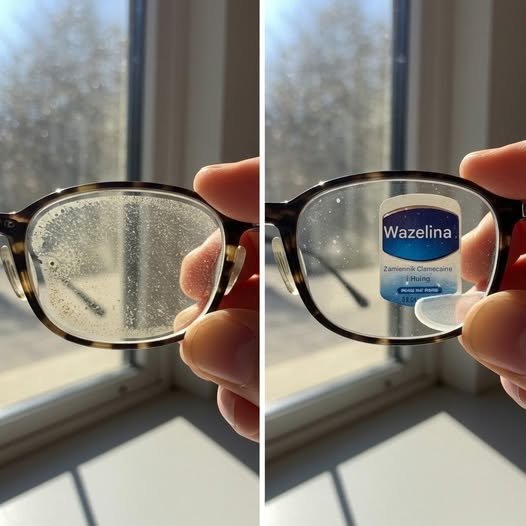
It sounds like you applied Vaseline (petroleum jelly) to jars and noticed a stronger-than-expected effect, but it’s not fully clear what changed in your case.
In general, coating jar surfaces or rims with Vaseline can have a few noticeable effects depending on what’s inside and how it was used:
If you applied it around the lid or rim, it can create a much tighter seal. This reduces air exchange, which can:
- Slow down drying or evaporation inside the jar
- Increase moisture retention
- Change how smells or gases build up
- In food or organic material, sometimes accelerate anaerobic (low-oxygen) conditions, which can change decomposition or fermentation patterns
If you applied it on the outside of the jar, it can:
- Make the surface slippery and harder to grip
- Reduce dust sticking
- Slightly insulate the glass (minor temperature buffering effect)
- Change how condensation forms on the surface
If you saw a “strong effect,” it’s usually because Vaseline is a very effective barrier to air and water vapor, so even a thin layer can noticeably change the environment inside or around the jar.
To explain it more accurately, I need one detail:
What exactly was inside the jars, and where did you apply the Vaseline (lid, rim, inside, or outside)?