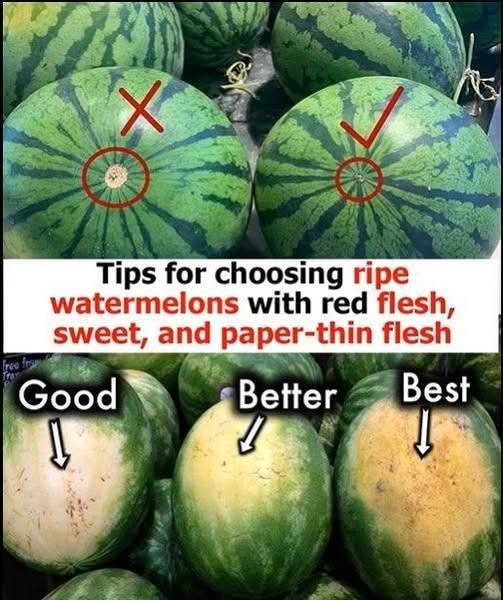
Picking a good watermelon is mostly about learning a few visual + physical cues. Once you know them, you can consistently pick sweet, juicy ones instead of bland or overripe ones.
Here’s a detailed, practical guide:
A good watermelon should feel heavy for its size. This is one of the most reliable signs. A heavier melon means it has more water content, which usually translates into juiciness. If two melons are the same size, pick the one that feels denser in your hands.
Next, check the field spot (the patch where the melon rested on the ground). This spot should be creamy yellow or deep yellow, not white or pale. A white field spot usually means it was picked too early and won’t be as sweet. A rich yellow color suggests it ripened naturally on the vine.
Look at the skin pattern and texture. A ripe watermelon often has a dull, matte surface rather than a shiny one. Shiny skin can mean it’s underripe. You may also see web-like brown markings (sometimes called “sugar webbing”)—these can indicate good sweetness because they form when bees pollinate the flower more often.
Pay attention to the shape. Round watermelons tend to be sweeter, while oval ones are often more watery and less sweet. This isn’t a strict rule, but it’s a useful pattern.
Check the stem if it’s still attached. A dry, brown stem usually means the melon ripened on the vine. A green stem may suggest it was picked too early.
Now do the tap test. Gently knock on the melon. A ripe one gives a deep, hollow sound, while an unripe or overripe one sounds dull or flat. This takes practice, but it becomes reliable over time.
Finally, inspect for consistent shape and no major bruises or soft spots. Small scratches are fine, but deep dents or soft areas can mean internal damage.
If you want, I can also show you a quick “5-second checklist” so you can pick a perfect watermelon in a store without overthinking it.