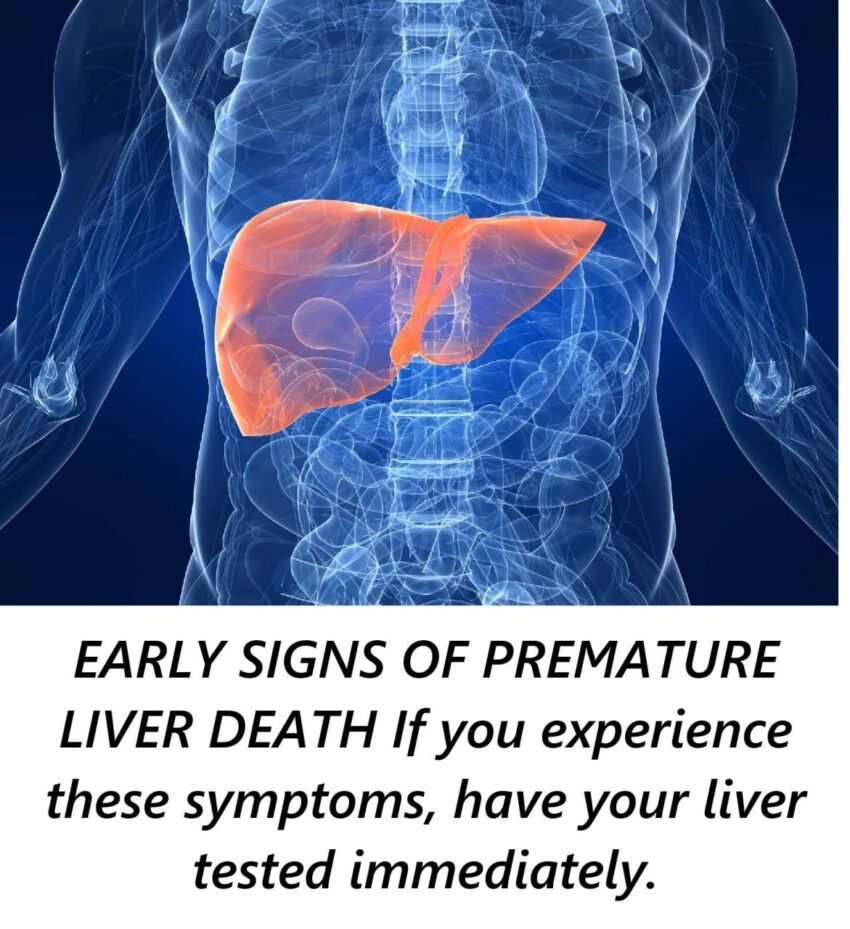
Below are 12 hidden warning signs your liver might be struggling. If several of these apply to you, it’s worth paying attention and considering a medical check-up.
1. Constant fatigue and low energy
Feeling tired all the time—even after resting—can happen when the liver isn’t efficiently removing toxins or managing energy metabolism. This isn’t normal “busy day” tiredness; it’s persistent exhaustion.
2. Unexplained weight gain or difficulty losing weight
A sluggish liver can disrupt fat metabolism and hormone balance, making weight management harder even if your diet hasn’t changed.
3. Loss of appetite or feeling full quickly
If you suddenly feel less hungry or get full after small meals, it could be linked to liver inflammation affecting digestion.
4. Bloating and abdominal discomfort
A damaged liver can lead to fluid retention or poor digestion, causing bloating, heaviness, or pressure in the upper right abdomen.
5. Yellowing of skin or eyes (jaundice)
One of the most recognizable signs. It happens when bilirubin builds up because the liver isn’t processing it properly.
6. Dark urine
Urine that becomes unusually dark (like tea or cola) can indicate excess bilirubin being excreted by the kidneys due to liver dysfunction.
7. Pale or clay-colored stools
If bile flow is reduced, stool may lose its normal brown color and appear pale or grayish.
8. Itchy skin without rash
Bile salts accumulating under the skin can cause persistent itching, even when there’s no visible skin condition.
9. Easy bruising or bleeding
The liver produces proteins needed for blood clotting. When it weakens, you may notice frequent bruises or slow healing cuts.
10. Swelling in legs or ankles
Fluid retention (edema) can occur when liver function drops, especially in more advanced conditions.
11. Brain fog or difficulty concentrating
A struggling liver may allow toxins like ammonia to affect the brain, leading to confusion, poor focus, or forgetfulness.
12. Red palms or spider-like blood vessels on skin
Visible small blood vessels (spider angiomas) or unusually red palms can be signs of hormonal imbalance linked to liver disease.
When to take these signs seriously
One or two mild symptoms alone don’t confirm liver disease. But if you notice several symptoms together, or symptoms that persist for weeks, it’s important to get checked.
A doctor may recommend:
- Blood tests (LFTs – liver function tests)
- Ultrasound of the liver
- Lifestyle evaluation (diet, alcohol use, medications)
Common causes of liver problems
- Fatty liver disease (very common today)
- Excess alcohol intake
- Hepatitis infections
- Poor diet and obesity
- Certain medications or supplements
- High sugar and processed food intake
Simple ways to protect your liver
- Reduce sugary drinks and processed foods
- Maintain a healthy weight
- Stay hydrated
- Exercise regularly
- Avoid unnecessary medications or alcohol
- Get regular health check-ups
If you want, I can also explain early fatty liver symptoms specifically, or give a diet plan to improve liver health naturally.