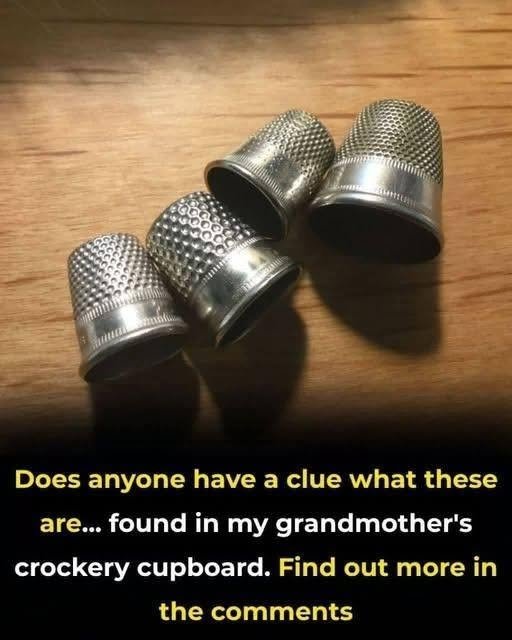
Here’s a clear, practical guide on how to use it.
🧵 What the thimble actually does
When you hand-sew, your needle often resists thick fabric. Instead of pushing the needle with your bare fingertip (which can hurt or cause blisters), you use the metal thimble to push the needle from the back end (eye end) using your finger’s strength.
👆 Which finger to wear it on
- Usually the middle finger of your dominant hand
- Some people also use the index finger, but middle finger gives best control and power
It should fit snugly—not too loose, not too tight.
🪡 Step-by-step: How to use a metal thimble
1. Thread your needle and start stitching
Hold your fabric in your non-dominant hand and position the needle where it needs to go through.
2. Position the needle correctly
Instead of pushing the sharp tip with your finger:
- Place the back end of the needle (eye end) against the fabric
- This is where the pressure is applied
3. Use the thimble to push
- Place your thumb and other fingers to guide the needle
- Use the thimble-covered finger to push the needle forward
- Press firmly and steadily—not suddenly
The metal surface protects your skin while giving you leverage.
4. Guide the needle through
Once the needle starts going through:
- Pull it with your opposite hand
- Repeat the process for the next stitch
🧷 Tips for better use
- ✔️ Don’t push from the needle tip—always from the back
- ✔️ Keep your finger steady; use controlled pressure
- ✔️ If it slips, adjust size or grip
- ✔️ Practice on scrap fabric first
- ✔️ Use the textured dents (if your thimble has them) for better grip on the needle
⚠️ Common mistakes
- Wearing it too loose (it will slip off)
- Trying to “poke” fabric instead of pushing
- Using it on the wrong finger
- Not applying steady pressure (causes missed stitches)
🧵 When it’s especially useful
- Thick fabrics like denim or canvas
- Quilting layers
- Long sewing sessions (prevents finger pain)
- Embroidery work requiring many small stitches
If you want, I can also show you how to choose the right size thimble or explain the difference between open vs closed metal thimbles.