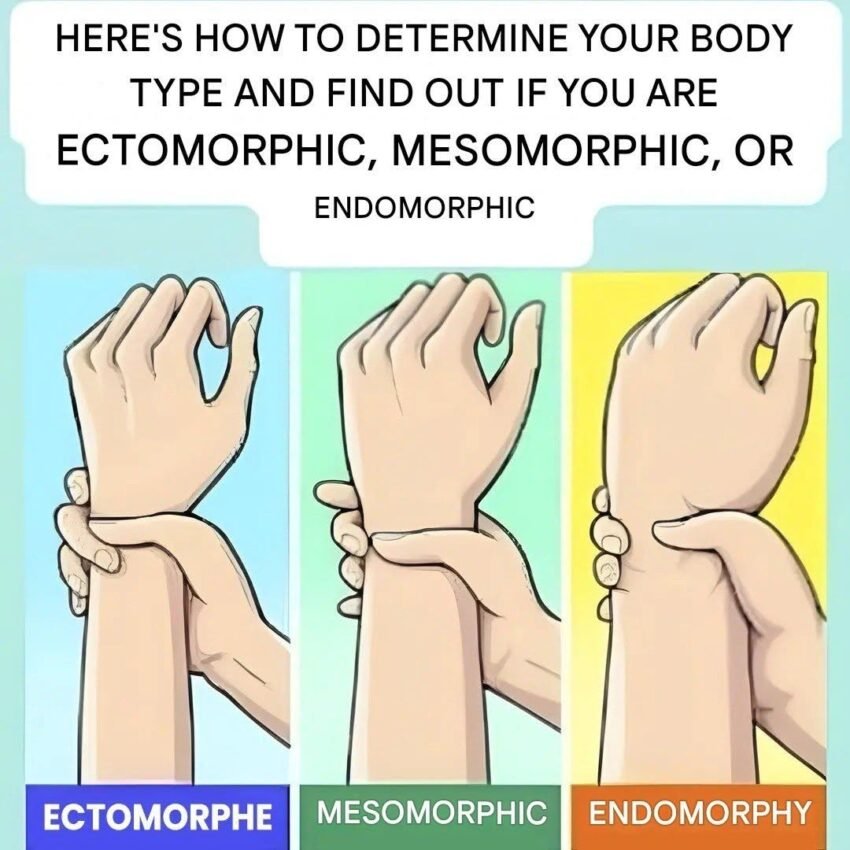
That said, the model can still be useful as a rough guide for understanding tendencies and how your body responds to food and training.
🧬 The Three Body Types (and what they mean)
1. Ectomorph – “Naturally lean”
Typical traits:
- Slim frame, narrow shoulders/hips
- Fast metabolism
- Hard to gain weight (muscle or fat)
- Low natural body fat
Training tendencies:
- Gains muscle slowly but can get lean easily
- May struggle with recovery if overtraining
Best approach:
- Training: Heavy compound lifts (squats, deadlifts, bench press), lower reps (5–10 range), fewer long cardio sessions
- Nutrition: Calorie surplus is key (eat more than you burn)
- Protein: High intake (1.6–2.2 g/kg body weight)
- Recovery: Prioritize sleep and rest days
Common mistake: doing too much cardio and not eating enough.
2. Mesomorph – “Naturally athletic”
Typical traits:
- Broad shoulders, narrow waist
- Gains muscle easily
- Responds quickly to training
- Moderate metabolism
Training tendencies:
- Builds muscle and loses fat relatively easily
Best approach:
- Training: Balanced strength + hypertrophy (6–12 reps range works well)
- Nutrition: Flexible—adjust calories depending on goal
- Cardio: Moderate for heart health and fat control
Common mistake: relying on genetics and skipping structured programming.
3. Endomorph – “Naturally strong but stores fat easily”
Typical traits:
- Wider frame, thicker bone structure
- Gains fat easily
- Slower metabolism (on average)
- Gains strength well
Training tendencies:
- Builds muscle fairly easily, but fat loss can be slower
Best approach:
- Training: Strength training + higher activity levels
- Cardio: Regular (walking, cycling, HIIT)
- Nutrition: Slight calorie deficit when cutting fat
- Diet quality: High priority (protein + fiber, lower processed carbs)
Common mistake: extreme dieting instead of sustainable habits.
⚠️ Important reality check (this matters)
Modern sports science says:
- Somatotypes are not fixed categories
- They don’t determine your destiny
- They are more like a snapshot of tendencies, not biology rules
Two people with the same “body type” can look completely different depending on:
- Training history
- Diet consistency
- Hormones
- Sleep and stress
- Activity level
💪 How to actually “make the most” of your body type
Instead of trying to “fit” a type, focus on:
1. Training principle (works for everyone)
- Progressive overload (gradually increasing weight/reps)
- Consistency (months, not days)
- Compound movements first
2. Nutrition principle
- Protein every day
- Calories adjusted to goal (gain, maintain, lose)
- Mostly whole foods, not extreme restriction
3. Lifestyle principle
- 7–9 hours sleep
- Daily movement (walking matters more than people think)
- Stress control (high stress can block fat loss or muscle gain)
🧠 A better way to think about it
Instead of asking:
“Am I ectomorph, mesomorph, or endomorph?”
Ask:
“Am I currently under-eating, over-eating, under-training, or under-recovering?”
That question leads to real results.
If you want, I can help you figure out your likely body tendency based on your height, weight, and how easily you gain/lose fat or muscle—and give you a personalized workout + diet plan.