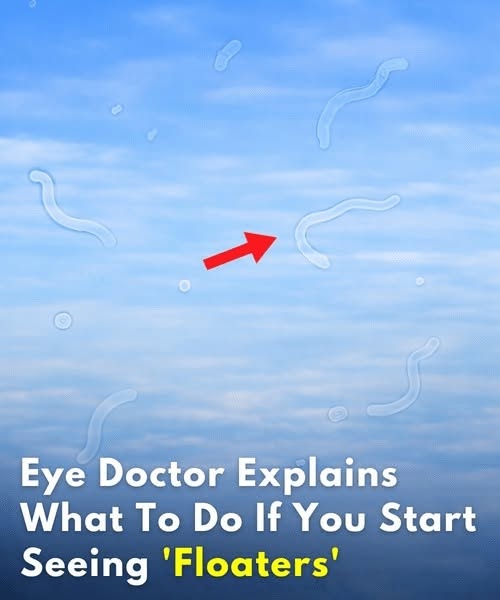
This guide explains what eye floaters are, why they occur, when to seek help, and what treatment options are available.
What Are Eye Floaters?
Eye floaters are small clumps of gel, cells, or fibers inside the vitreous—the clear, jelly-like substance that fills the center of the eye.
As light enters your eye, these tiny particles cast shadows on the retina (the light-sensitive tissue at the back of the eye). You perceive these shadows as floating objects moving through your vision.
Common descriptions include:
- Black or gray spots
- Transparent circles
- Cobweb-like strands
- Thread-like lines
- Small dots
- Squiggly shapes
Many people notice floaters more clearly when looking at:
- A bright blue sky
- A white wall
- A computer screen
- Brightly lit surfaces
Why Do Eye Floaters Occur?
1. Natural Aging
The most common cause is age-related changes in the vitreous.
As you get older:
- The vitreous gradually shrinks.
- Its collagen fibers clump together.
- These clumps cast shadows on the retina.
This process commonly begins after age 40 and becomes more frequent with advancing age.
2. Posterior Vitreous Detachment (PVD)
As the vitreous shrinks, it can pull away from the retina.
This condition, called Posterior Vitreous Detachment, is common and usually harmless. However, in some cases the pulling can tear the retina, making prompt evaluation important.
3. Nearsightedness (Myopia)
People with significant myopia often develop floaters earlier because changes in the vitreous occur sooner.
4. Eye Injury
Trauma can:
- Cause bleeding inside the eye
- Dislodge cells into the vitreous
- Create new floaters
5. Eye Inflammation
Inflammatory conditions affecting the eye can release inflammatory cells into the vitreous, producing floaters.
6. Retinal Tear or Retinal Detachment
A retinal tear can allow fluid to enter beneath the retina, potentially causing a sight-threatening condition called Retinal Detachment.
New floaters may be one of the earliest warning signs.
7. Bleeding Inside the Eye
Conditions such as:
- Diabetes
- Retinal blood vessel disorders
- Eye trauma
can cause bleeding into the vitreous, leading to sudden floaters.
What Should You Do If You Suddenly Notice Eye Floaters?
Step 1: Pay Attention to the Details
Ask yourself:
- Did the floaters appear suddenly?
- Are there many more than before?
- Do you see flashes of light?
- Is your vision becoming blurry?
- Is there a dark curtain or shadow in your vision?
- Is the problem affecting one eye or both?
These details help determine whether the situation is urgent.
Step 2: Monitor Mild, Stable Floaters
If:
- The floaters appeared gradually
- There are only a few
- No flashes occur
- Vision remains normal
the cause may be age-related vitreous changes.
Even then, scheduling a comprehensive eye examination is a good idea, especially if the floaters are new.
Step 3: Seek Immediate Eye Care for Warning Signs
Contact an eye doctor urgently or seek emergency ophthalmic care if you experience:
Sudden Shower of Floaters
A large number of floaters appearing within hours may indicate retinal traction or bleeding.
Flashes of Light
Brief flashes—especially in peripheral vision—can suggest the vitreous is pulling on the retina.
Curtain or Shadow in Vision
This may indicate retinal detachment and requires emergency evaluation.
Sudden Vision Loss
Any sudden decrease in vision should be treated as a medical emergency.
Floaters After Eye Injury
Trauma increases the risk of retinal tears and internal bleeding.
What Happens During an Eye Examination?
An eye doctor will usually perform:
Medical History Review
Questions may include:
- When did symptoms begin?
- Have the floaters changed?
- Are flashes present?
- Any recent injuries?
- Existing medical conditions?
Dilated Eye Exam
Special eye drops enlarge the pupil, allowing detailed examination of:
- Retina
- Vitreous
- Optic nerve
This is often the most important test for identifying retinal tears.
Retinal Imaging
Additional imaging may be used when the retina cannot be fully visualized.
Can Eye Floaters Go Away?
Floaters often become less noticeable over time because:
- The brain gradually adapts to them.
- They may settle lower within the eye.
- The shadows become less distracting.
However, the actual vitreous changes usually remain.
Some floaters persist indefinitely but become much easier to ignore.
Treatment Options
Observation
Most floaters require no treatment.
Doctors often recommend monitoring if:
- The retina is healthy
- Symptoms are stable
- Vision is not significantly affected
Laser Vitreolysis
A specialized laser may be used to break larger floaters into smaller, less noticeable fragments.
Potential advantages:
- Minimally invasive
- Outpatient procedure
Limitations:
- Not suitable for all floaters
- Results vary
- Some floaters remain visible
Vitrectomy
A vitrectomy is a surgical procedure that removes the vitreous gel and replaces it with a clear solution.
Benefits:
- Can eliminate severe floaters
Risks include:
- Cataract formation
- Retinal detachment
- Infection
- Bleeding
Because of these risks, surgery is generally reserved for severe cases that significantly affect quality of life.
How to Reduce the Impact of Floaters
While you cannot eliminate most floaters naturally, these tips may help:
Move Your Eyes
Looking up and down can sometimes shift floaters temporarily out of your central vision.
Use Proper Lighting
Good lighting reduces visual strain and may make floaters less noticeable.
Manage Underlying Health Conditions
Control conditions such as:
- Diabetes
- High blood pressure
to reduce the risk of eye complications.
Get Regular Eye Exams
Routine eye examinations help detect retinal problems early.
Who Is at Higher Risk?
You may be more likely to develop floaters if you:
- Are over 40 years old
- Are highly nearsighted
- Have diabetes
- Have had eye surgery
- Have experienced eye trauma
- Have a history of retinal problems
Frequently Asked Questions
Are eye floaters dangerous?
Most are harmless and related to aging. However, sudden new floaters—especially with flashes or vision loss—can indicate a retinal tear or detachment.
Can stress cause floaters?
Stress does not directly create vitreous floaters, though stress-related visual symptoms may make existing floaters more noticeable.
Are floaters a sign of blindness?
Usually not. However, retinal detachment can threaten vision if not treated promptly.
Should I see a doctor for new floaters?
Yes. Any new onset of floaters should be evaluated by an eye care professional, particularly if they appear suddenly.
Key Takeaway
Most eye floaters are a normal consequence of aging and become less bothersome with time. However, a sudden increase in floaters, flashes of light, a curtain-like shadow, or any loss of vision should be treated as an urgent eye emergency because these symptoms can indicate a retinal tear or retinal detachment. A prompt dilated eye examination is the safest way to determine whether the floaters are harmless or require treatment.
This information is for educational purposes and is not a substitute for professional medical advice. If you have sudden or concerning visual symptoms, seek urgent evaluation by an eye care professional.