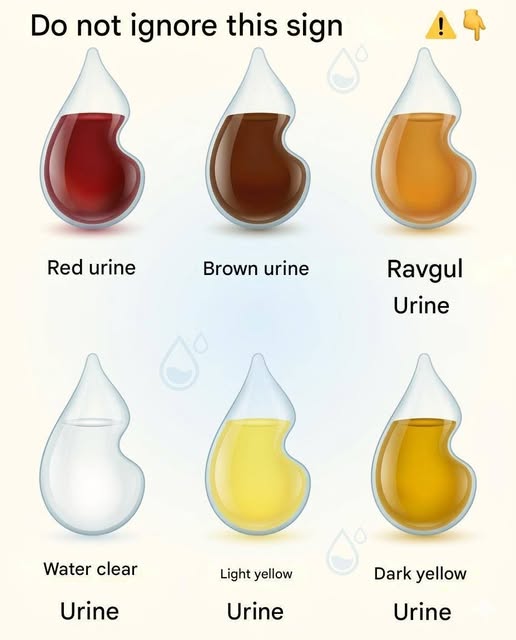
The color of your urine can provide useful clues about your hydration, diet, medications, and sometimes underlying health conditions. While urine color alone cannot diagnose a disease, persistent or unusual changes are worth paying attention to.
Here’s a detailed guide:
| Urine Color | What It May Mean | Common Causes |
|---|---|---|
| Clear | Very diluted urine | Drinking a lot of water, certain medications, or sometimes medical conditions that increase urine output |
| Pale yellow to light gold | Normal and healthy | Good hydration; the yellow color comes from a pigment called urochrome |
| Dark yellow | Mild dehydration | Not drinking enough fluids, sweating, or first urine in the morning |
| Amber or honey-colored | Moderate dehydration | Significant fluid loss, fever, prolonged exercise |
| Orange | Dehydration or other causes | Certain medications, vitamin supplements (especially B vitamins), foods, or occasionally liver or bile duct problems |
| Pink or red | Blood, food, or medications | Beets, blackberries, rhubarb, urinary tract bleeding, kidney stones, urinary tract infections, or kidney disease |
| Brown or cola-colored | Possible serious condition | Severe dehydration, liver disease, muscle injury, blood in urine, or certain medications |
| Blue or green | Usually medication or food dyes | Artificial food coloring, some medications, or rare inherited conditions; occasionally certain bacterial infections |
| Cloudy or milky | May indicate infection or crystals | Urinary tract infection, kidney stones, dehydration, or minerals in the urine |
| Foamy or bubbly | Sometimes normal, sometimes concerning | Fast urination can cause temporary foam. Persistent foam may suggest protein in the urine, which can be a sign of kidney disease. |
Normal urine color
Healthy urine is usually:
- Pale yellow
- Straw-colored
- Light gold
This indicates you are generally well hydrated.
Signs of dehydration
As you become dehydrated:
- Urine becomes darker.
- You urinate less often.
- The urine may have a stronger odor.
Increasing water intake usually returns urine to a lighter yellow.
Red or pink urine
Red urine isn’t always caused by blood. It can result from:
- Beets
- Blackberries
- Rhubarb
- Certain medications
However, blood in the urine can also be caused by:
- Urinary tract infections
- Kidney stones
- Kidney disease
- Enlarged prostate
- Bladder or kidney cancer
If you notice red urine and haven’t eaten foods that commonly cause it, or if it happens repeatedly, you should seek medical evaluation promptly.
Orange urine
Orange urine may occur due to:
- Dehydration
- High-dose vitamin supplements
- Certain medications
- Liver or bile duct problems
If orange urine occurs along with yellowing of the skin or eyes, pale stools, or severe abdominal pain, seek medical care promptly.
Brown urine
Brown urine can be associated with:
- Severe dehydration
- Liver disease
- Muscle breakdown after major injury or extreme exercise
- Certain medications
This color warrants medical evaluation if it persists or is accompanied by symptoms such as weakness, muscle pain, fever, or jaundice.
Blue or green urine
Although uncommon, blue or green urine is often due to:
- Food coloring
- Certain medications
- Some medical dyes used during procedures
Rarely, it can indicate a bacterial urinary infection or a genetic condition.
Cloudy urine
Cloudy urine may be caused by:
- Urinary tract infection
- Kidney stones
- Dehydration
- Phosphate crystals
If it is accompanied by pain, fever, foul odor, or burning during urination, you should be evaluated by a healthcare professional.
Foamy urine
A few bubbles after urinating are usually harmless.
Persistent, thick foam may indicate:
- Protein in the urine
- Kidney disease
- High blood pressure affecting the kidneys
If foamy urine occurs repeatedly, especially with swelling of the legs, face, or hands, a urine test is recommended.
Medications and foods that change urine color
Some common examples include:
- Vitamin B supplements: bright yellow
- Beets: pink or red
- Carrots: orange
- Food dyes: blue or green
- Some antibiotics and laxatives: various color changes
These changes are usually temporary and resolve after the substance is no longer consumed.
When to seek medical care
Contact a healthcare professional if you have:
- Blood in your urine.
- Dark brown or cola-colored urine that doesn’t improve with hydration.
- Persistent cloudy urine with pain or fever.
- Orange urine with yellow skin or eyes.
- Persistent foamy urine.
- Severe pain while urinating.
- Fever, chills, or back pain along with changes in urine.
- Little or no urine despite drinking fluids.
Key takeaway
The healthiest urine color is generally pale yellow. Darker shades often suggest dehydration, while red, brown, cloudy, or persistently foamy urine can sometimes signal a medical condition that deserves evaluation. If an unusual color persists for more than a day or two, or if it’s accompanied by symptoms such as pain, fever, or blood, it’s advisable to seek medical care.