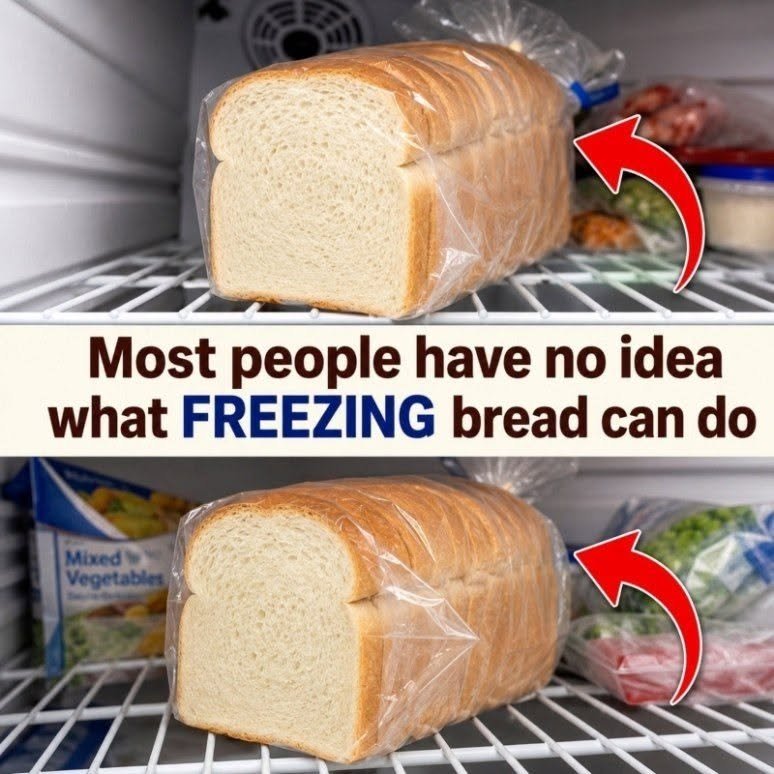
If you put bread in the freezer, a few predictable (and useful) things happen—mostly related to slowing down spoilage and changing texture.
When bread goes into the freezer, the water inside it turns into ice. That essentially “pauses” the processes that make bread go stale or moldy. Mold can’t grow at freezing temperatures, and the chemical changes that cause staling slow down a lot. That’s why freezing is one of the best ways to store bread long-term.
The structure of the bread also changes slightly. Ice crystals form inside the crumb, and that can damage the soft network that gives bread its fresh texture. Because of that, frozen bread isn’t great to eat straight from the freezer—it will feel dry, a bit tough, and not very pleasant.
Once you thaw it, though, most of the moisture redistributes. If you warm it in an oven or toaster after thawing, it can come surprisingly close to fresh-baked texture, especially for sliced bread.
A couple of practical notes:
- Whole loaves freeze better than already-stale bread.
- Sliced bread is even more convenient because you can toast directly from frozen.
- Very moist or artisanal breads (like sourdough) may lose a bit more texture quality compared to standard sandwich bread.
So in short: freezing bread doesn’t ruin it—it basically puts it on “pause,” preserving it until you’re ready to revive it with heat.