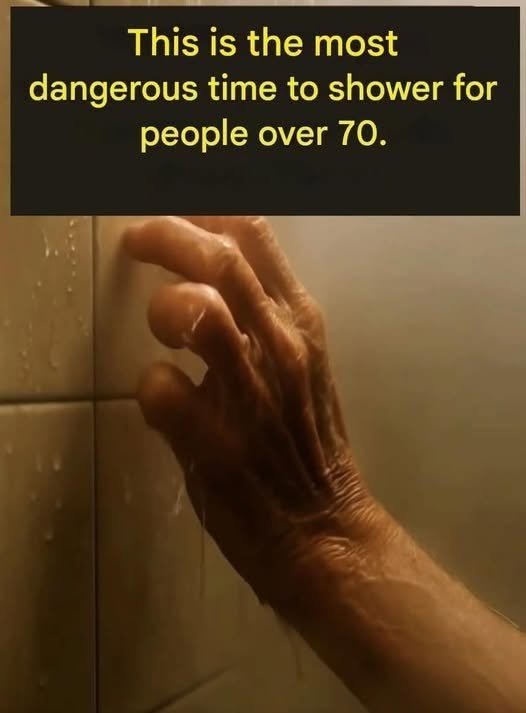
If you’re asking “What’s the riskiest time to shower after age 70?”, the answer depends on a person’s health, but there are times when showering can carry a higher risk of falls, fainting, or other problems.
The riskiest times to shower after age 70
- Immediately after waking up
- Blood pressure is often lower in the morning.
- Standing in a hot shower can make blood vessels widen, causing dizziness or lightheadedness.
- Risk is higher for people with low blood pressure or those taking blood pressure medications.
- Right after eating a large meal
- Blood flow shifts toward the digestive system.
- A hot shower may further lower blood pressure, increasing the chance of dizziness.
- Immediately after strenuous exercise
- The body is already warm and blood vessels are dilated.
- A hot shower can worsen this effect and may cause lightheadedness.
- It’s generally better to cool down for 15–30 minutes first.
- After drinking alcohol
- Alcohol impairs balance and judgment.
- It can also lower blood pressure.
- Combined with wet, slippery surfaces, this significantly increases the risk of falling.
- When feeling unwell
- If you have a fever, dehydration, vomiting, diarrhea, or feel faint, showering alone may not be safe.
- Heat can worsen dehydration and dizziness.
Why falls are a concern
For people over 70, falls in the bathroom are a major source of injury because:
- Wet floors are slippery.
- Stepping over the edge of a bathtub can be difficult.
- Balance, muscle strength, and reaction time may be reduced with age.
Safety tips (“remedies”)
- Use warm rather than very hot water.
- Sit on a shower chair if standing is tiring or you have balance problems.
- Install grab bars (towel bars are not designed to support body weight).
- Use a non-slip mat inside and outside the shower.
- Keep the bathroom well lit.
- Stay hydrated, especially in hot weather.
- If you’ve had recent dizziness or falls, let someone know you’re showering or keep a phone or emergency alert device nearby.
When to speak with a doctor
If someone over 70 regularly feels dizzy, faints, has chest pain, becomes short of breath, or has repeated falls during or after showering, they should be evaluated by a healthcare professional. These symptoms can be caused by low blood pressure, heart conditions, medication side effects, or other medical issues that may need treatment.
For most healthy adults over 70, there isn’t a specific “dangerous hour” to shower. The greatest risks come from very hot showers, showering when dehydrated or dizzy, or showering after alcohol or intense exercise, rather than the time of day itself.