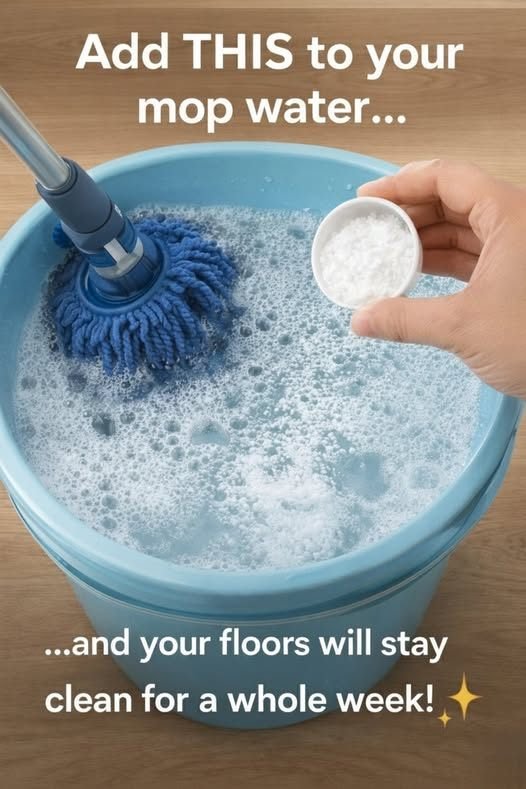
The “mop water trick” usually refers to a cleaning hack where people add something (like salt, vinegar, dish soap, ice, etc.) to mop water to improve cleaning results or reduce streaks.
Here’s a clear breakdown of what it actually means and how it works:
🧼 1. Basic idea of mop water
“Mop water” is simply water mixed with a cleaning agent (soap or floor cleaner) used to clean floors. The mop soaks up dirt, and that dirt transfers into the bucket water. Over time, the water gets dirty and less effective.
❄️ 2. The “ice in mop water trick” (most viral version)
This is the most common “mop water trick” online:
👉 What people do:
Add ice cubes to the mop bucket
Use cold water instead of warm/hot
👉 Why people say it works:
Cold water evaporates slower
Helps reduce streaks
Makes floors look more “polished”
Safer for wood or laminate floors (less damage risk)
👉 Reality check:
It doesn’t “deep clean” better
It mainly affects drying speed and streak formation, not actual dirt removal
🧴 3. Dish soap “mop water trick”
👉 What people do:
Add a small amount of dish soap (like 1 teaspoon)
👉 Claim:
Makes floors shinier and removes grease better
👉 Reality:
Can work for greasy floors
But too much soap leaves a sticky residue that attracts more dust
🪣 4. Big mistake people miss (important)
A lot of cleaning problems come from:
Using the same dirty mop water too long
Spreading dirty water instead of removing dirt
Not changing water often enough
This can actually make floors dirtier instead of cleaner.
🧠 5. Simple science behind mopping
Water + movement loosens dirt
Mop absorbs dirt into fibers
Rinsing transfers dirt into bucket
Dirty water reduces cleaning efficiency over time
So the “trick” doesn’t replace proper cleaning—it only tweaks results slightly.
👍 Final truth
Most “mop water tricks” are just small hacks:
❄️ Ice = fewer streaks
🧴 Tiny soap = better grease removal
🚫 Too much additives = sticky floors
If you want, tell me your floor type (tile, marble, wood, etc.), and I’ll tell you the best exact mop water mix for your home.