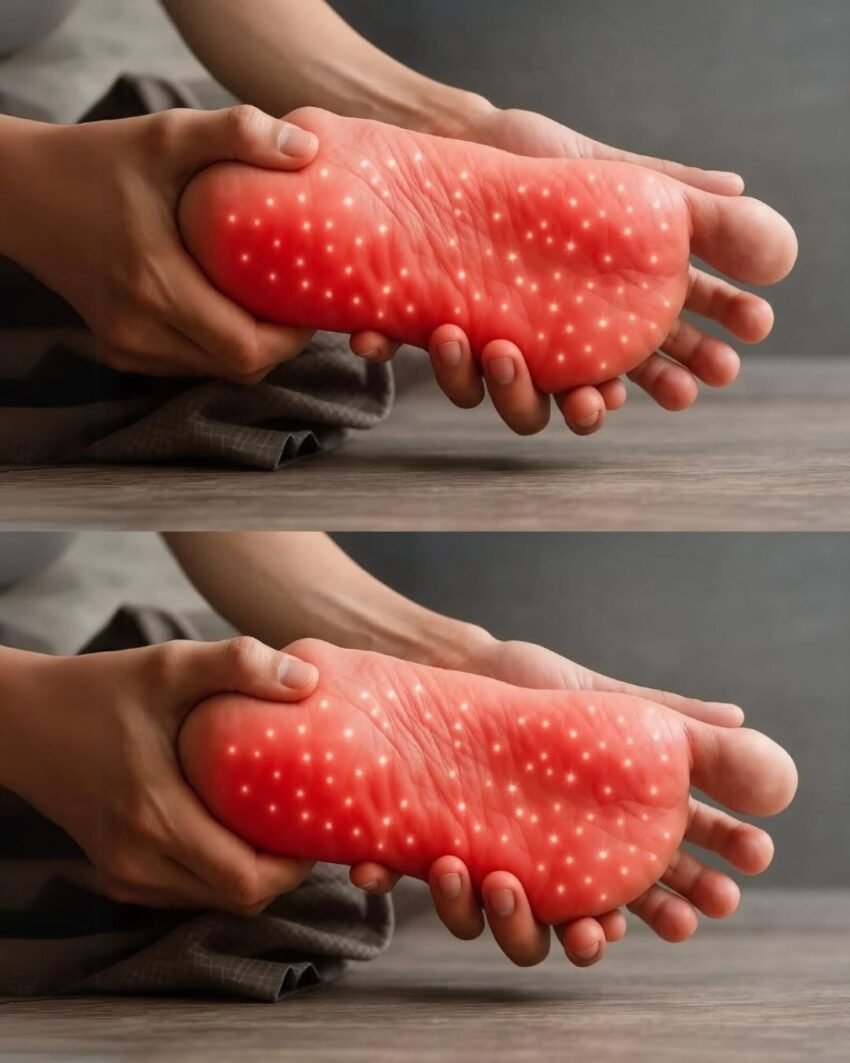
A red, circular rash on the sole of the foot can happen for several different reasons. The exact cause depends on how it looks, whether it itches or hurts, how long it’s been there, and whether it’s spreading. Here are the most common possibilities and how to deal with them.
🔴 Common causes
1) Fungal infection (Athlete’s foot / tinea pedis) — very common
This is the most likely cause.
What it looks like:
- Red or pink circular or patchy rash
- Itchy or burning feeling
- Sometimes peeling, cracking, or dry skin
- May spread slowly across the sole or between toes
Why it happens:
- Warm, sweaty shoes
- Walking barefoot in public places (gyms, bathrooms)
- Moisture trapped in socks/shoes
Treatment:
- Antifungal creams like clotrimazole or terbinafine
- Keep feet dry and clean
- Change socks daily
- Use breathable shoes
- Continue treatment for 1–2 weeks even after improvement
2) Ringworm (fungal infection of skin)
Even though the name says “worm,” it’s also a fungus.
What it looks like:
- Circular rash with clearer center and red edges
- Can itch a lot
- Slowly expands outward
Treatment:
- Same antifungal creams as above
- Avoid sharing towels or footwear
3) Contact dermatitis (skin allergy or irritation)
Triggered by something your skin reacts to.
Causes:
- New shoes, rubber, glue, leather chemicals
- Detergent in socks
- Friction or sweating
Symptoms:
- Red patch or circle
- Itching or burning
- May swell or become dry/peeling
Treatment:
- Stop using suspected trigger
- Mild steroid cream (like hydrocortisone)
- Moisturizer for healing
4) Eczema (including dyshidrotic eczema)
What it looks like:
- Itchy red patches
- Sometimes small blisters
- Can be recurrent
Triggers:
- Stress
- Heat/sweating
- Allergies
Treatment:
- Moisturizers
- Steroid creams (doctor-recommended if severe)
5) Psoriasis (less common on soles but possible)
What it looks like:
- Thick, red patches
- May be scaly or cracked
- Often symmetrical (both feet)
Treatment:
- Needs medical diagnosis
- Steroid creams or other prescription treatments
6) Other possibilities
- Insect bite (temporary red round spot, itchy)
- Pressure/friction mark from shoes
- Bacterial infection (if painful, warm, or pus appears — more serious)
⚠️ When to see a doctor quickly
Go for medical help if:
- Rash is spreading fast
- Severe pain, swelling, or pus
- Fever develops
- No improvement after 1–2 weeks of antifungal treatment
- You have diabetes or weak immunity
🧼 What you can do now (safe steps)
- Keep feet clean and dry
- Wash and dry between toes carefully
- Wear cotton socks, change daily
- Avoid tight or non-breathable shoes
- Don’t scratch or peel the skin
- Start an OTC antifungal cream if it looks fungal (itchy, scaly, spreading)
🧠 Key point
Most circular red rashes on the sole are fungal infections, especially if there is itching or scaling. But eczema or irritation from shoes can look similar.
If you want, describe:
- Is it itchy or painful?
- Is it dry, scaly, or blistered?
- How long has it been there?
I can narrow it down more accurately.