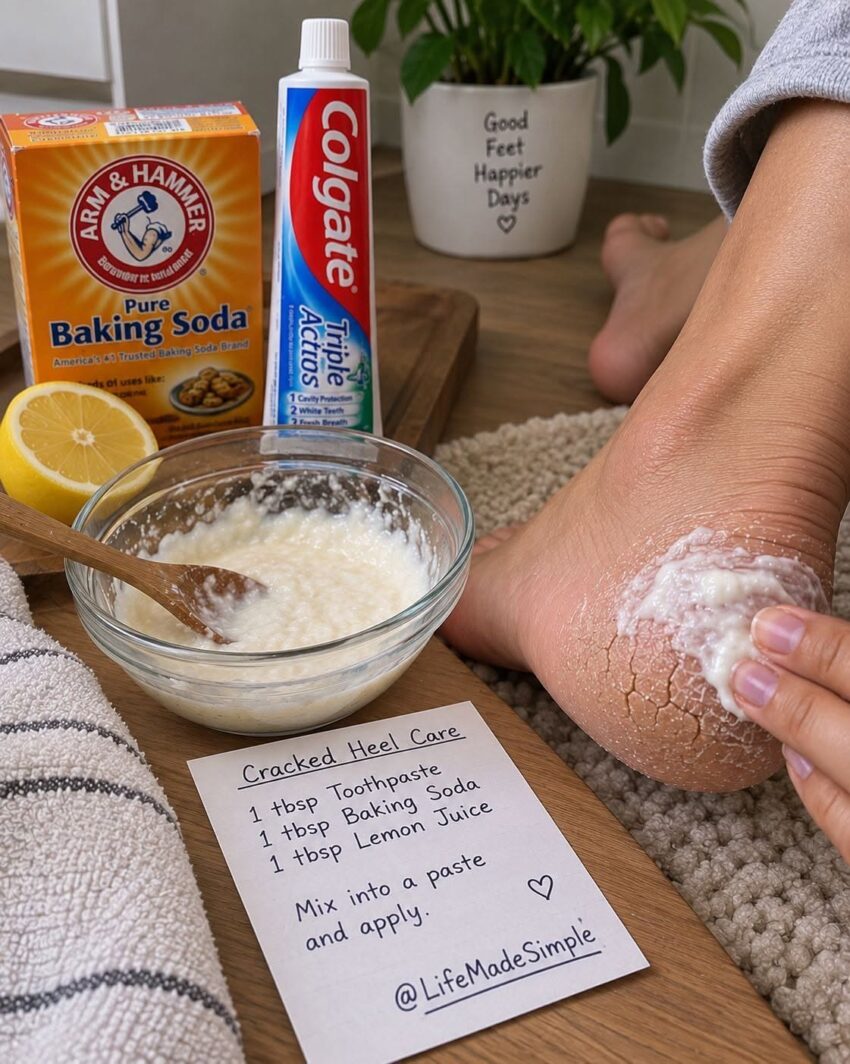
5 Simple Home Remedies for Cracked Heels 👣
Cracked heels can develop when the skin becomes dry, thick, and rough. These five simple home remedies can help soften the skin, improve moisture, and make your feet feel smoother.


1. Coconut Oil and Honey Foot Mask

Benefits: Coconut oil helps moisturize dry skin, while honey acts as a humectant that attracts moisture.
Ingredients
-
1 tablespoon coconut oil
-
1 teaspoon honey
Recipe and application
-
Mix the coconut oil and honey in a small bowl.
-
Wash your feet with lukewarm water and pat them dry.
-
Apply a thin layer of the mixture to your heels.
-
Leave it on for 15–20 minutes.
-
Rinse gently and apply a thick, fragrance-free moisturizer.
Frequency: 3–4 times per week.
2. Warm Water Foot Soak

Benefits: A short soak softens hardened skin and makes moisturizing easier.
Ingredients
-
A basin of lukewarm water
-
A soft towel
-
A thick foot cream or moisturizer
Recipe and application
-
Fill a basin with comfortably warm, not hot, water.
-
Soak your feet for 5–10 minutes.
-
Gently pat them dry, especially between the toes.
-
Apply a moisturizer while the skin is still slightly damp.
-
Wear clean cotton socks to help retain moisture.
Frequency: 2–3 times per week, or whenever your feet feel particularly dry.
Tip: Avoid long soaks, hot water, and harsh soaps, which can worsen dryness.
3. Petroleum Jelly Overnight Treatment

Benefits: Petroleum jelly creates a protective barrier that reduces moisture loss and helps dry heels recover.
Ingredients
-
1–2 teaspoons petroleum jelly
-
1 pair of clean cotton socks
Recipe and application
-
Wash your feet gently and dry them thoroughly.
-
Apply a generous layer of petroleum jelly to the dry heel skin.
-
Put on cotton socks before going to bed.
-
Leave the treatment on overnight.
-
In the morning, wash your feet if needed and apply moisturizer.
Frequency: Every night until the skin improves, then as needed.
Best for: Dry, rough heels and superficial cracks. Do not apply it deep inside open or bleeding cracks.
4. Shea Butter and Glycerin Heel Cream

Benefits: Shea butter softens rough skin, while glycerin helps attract and retain moisture.
Ingredients
-
1 teaspoon shea butter
-
½ teaspoon glycerin
-
½ teaspoon petroleum jelly (optional)
Recipe and application
-
Place the shea butter in a clean bowl and soften it between your fingers.
-
Mix in the glycerin and, if desired, the petroleum jelly.
-
Apply a thin layer to clean, dry heels.
-
Massage gently for 1–2 minutes without pulling at cracked skin.
-
Wear socks if applying the mixture before bed.
Frequency: Once or twice daily.
Tip: For convenience, a ready-made heel cream containing urea (10–25%) can be especially helpful for thick, dry heel skin. Avoid urea directly on open or bleeding cracks because it may sting.
5. Gentle Pumice Stone Treatment

Benefits: Gentle exfoliation can gradually reduce thick, hardened skin around the heels.
Ingredients
-
Lukewarm water
-
A clean pumice stone
-
A thick moisturizer
Recipe and application
-
Soak your feet in lukewarm water for 5–10 minutes.
-
Gently rub the pumice stone over thickened heel skin for a few seconds.
-
Stop if you feel pain, irritation, or tenderness.
-
Rinse and pat your feet dry.
-
Immediately apply a thick moisturizer or petroleum jelly.
Frequency: Once a week initially, only if the skin is intact.
Important: Never cut thick skin with a blade, use harsh scrubs, or exfoliate open cracks. Avoid pumice stones if you have diabetes, poor circulation, or reduced sensation in your feet unless a healthcare professional advises you otherwise.
Simple 7-Day Heel Care Routine
|
Day |
Morning |
Night |
|---|---|---|
|
Monday |
Moisturizer |
Petroleum jelly + socks |
|
Tuesday |
Moisturizer |
Shea butter cream |
|
Wednesday |
Moisturizer |
Petroleum jelly + socks |
|
Thursday |
Moisturizer |
Coconut oil and honey mask, then moisturizer |
|
Friday |
Moisturizer |
Petroleum jelly + socks |
|
Saturday |
Gentle foot soak and moisturizer |
Shea butter cream |
|
Sunday |
Moisturizer |
Petroleum jelly + socks |
Repeat the routine as needed. Consistent moisturizing is more important than using many different remedies.
Important precautions
-
Choose closed-back, well-fitting footwear to reduce pressure on your heels.
-
Avoid walking barefoot on hard floors if your heels are cracked.
-
Do not use lemon juice, vinegar, baking soda, or strong exfoliating mixtures on cracked skin.
-
Seek medical advice if the cracks are deep, bleeding, increasingly painful, red, swollen, warm, or draining fluid. If you have diabetes or poor circulation, seek professional advice early.
My simplest recommendation: Apply a thick, fragrance-free heel cream or petroleum jelly every night and wear cotton socks. This is often the easiest and most useful starting point for dry, cracked heels.