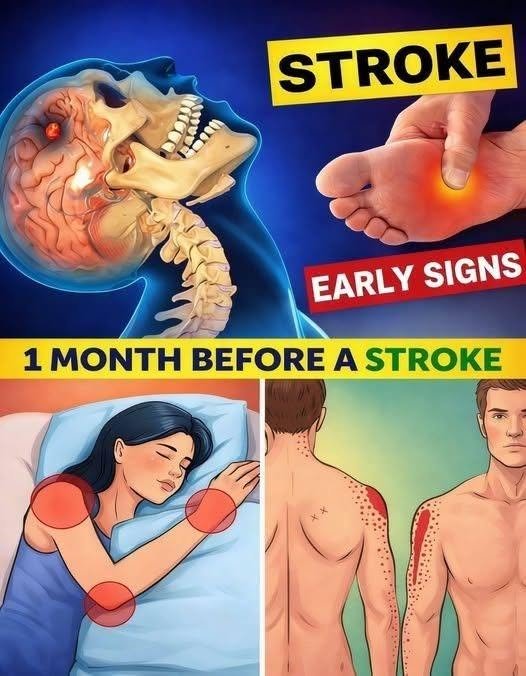
A stroke often happens suddenly, but in some cases there are warning signs or transient symptoms beforehand. It’s important to know that there are no scientifically established warning signs that reliably appear a month before every stroke. Many articles online overstate this. However, some people experience a Transient ischemic attack (“mini-stroke”) or develop risk-related symptoms in the days or weeks leading up to a stroke.
8 Possible Warning Signs
Seek medical attention immediately if any of these occur, even if they go away:
- Sudden weakness or numbness on one side of the face, arm, or leg.
- Sudden trouble speaking or difficulty understanding speech.
- Sudden vision problems in one or both eyes.
- Sudden dizziness, loss of balance, or difficulty walking.
- A severe, sudden headache with no known cause (more common with bleeding strokes).
- A drooping face, especially on one side.
- Brief episodes of confusion or difficulty thinking clearly.
- A transient ischemic attack (TIA)—stroke-like symptoms that resolve within minutes to hours. A TIA is a medical emergency because it greatly increases the risk of a full stroke in the following days and weeks.
Remember FAST
A simple way to recognize a stroke is FAST:
- Face: Ask the person to smile. Does one side droop?
- Arms: Ask them to raise both arms. Does one drift downward?
- Speech: Is speech slurred or strange?
- Time: Call your local emergency services immediately if any of these signs are present.
9 Tips to Help Prevent Stroke
- Control high blood pressure, the biggest modifiable risk factor.
- Don’t smoke and avoid secondhand smoke.
- Exercise regularly—aim for at least 150 minutes of moderate activity each week.
- Eat a heart-healthy diet rich in fruits, vegetables, whole grains, and lean proteins while limiting salt and saturated fat.
- Maintain a healthy weight.
- Manage diabetes by keeping blood sugar under control.
- Keep cholesterol at healthy levels through diet, exercise, and medication if prescribed.
- Limit alcohol and avoid illicit drugs such as cocaine and methamphetamine.
- Take prescribed medications consistently, especially those for blood pressure, cholesterol, or conditions like Atrial fibrillation, which can significantly increase stroke risk.
If you or someone else develops sudden stroke symptoms, treat it as an emergency even if the symptoms disappear. Rapid treatment can greatly improve the chances of recovery.