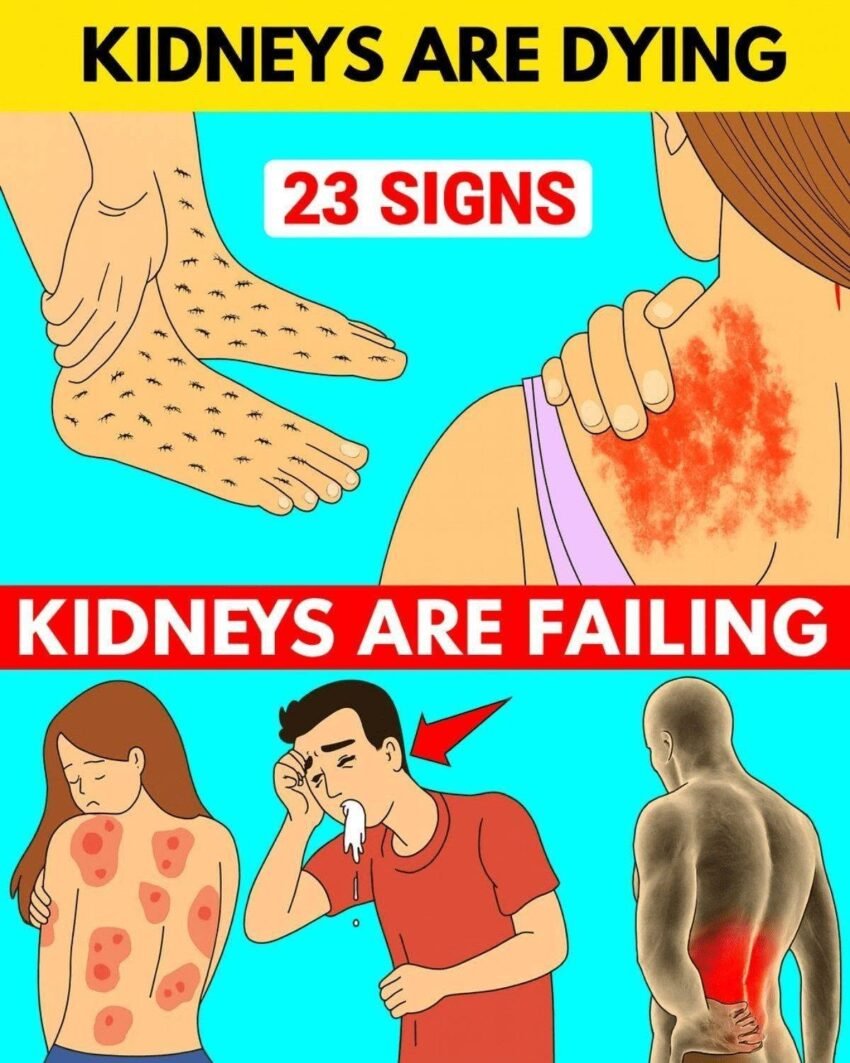
Kidneys are vital organs that filter waste and extra fluid from your blood, balance minerals, help control blood pressure, and support red blood cell production. Kidney problems can develop slowly, and early signs may be subtle. Recognizing warning signs early can help you seek medical advice before serious damage occurs.
Below are 23 possible signs that your kidneys might be in trouble, with detailed explanations.
Important: These signs do not always mean kidney disease. Many other conditions can cause similar symptoms. A healthcare professional can confirm kidney problems with tests such as blood creatinine/eGFR and urine tests.
1. Changes in Urination
Your kidneys make urine, so changes in urination are among the most noticeable warning signs.
Possible changes include:
- Urinating much more often, especially at night
- Producing much less urine than usual
- Difficulty starting urination
- A weak urine stream
- Feeling that your bladder is not empty
- Urgent need to urinate
Frequent nighttime urination can happen when damaged kidneys cannot properly concentrate urine.
2. Blood in Urine (Hematuria)
Seeing pink, red, or cola-colored urine may indicate blood in the urine.
Possible causes include:
- Kidney stones
- Urinary infections
- Kidney inflammation
- Kidney disease
- Tumors of the urinary tract
Even small amounts of blood that are not visible can sometimes be detected through urine testing.
3. Foamy or Frothy Urine
Persistent foam or bubbles in urine may be a sign of excess protein leaking through damaged kidney filters.
Healthy kidneys usually keep proteins such as albumin in the blood. When kidney filters become damaged, protein may pass into urine.
This condition is called proteinuria and is a common early sign of kidney damage.
4. Swelling (Edema)
Kidneys help remove extra fluid from the body. When they cannot do this effectively, fluid can build up.
Swelling may appear in:
- Feet and ankles
- Legs
- Hands
- Face
- Around the eyes (especially in the morning)
Persistent swelling should be evaluated because it can also relate to heart, liver, or circulation problems.
5. Fatigue and Low Energy
Kidney disease can cause extreme tiredness because:
- Waste products build up in the blood
- The kidneys produce less erythropoietin, a hormone that helps make red blood cells
- Anemia may develop
People may feel:
- Weak
- Exhausted despite enough sleep
- Less able to exercise
- Mentally slowed
6. Trouble Sleeping
Kidney problems may affect sleep because:
- Waste buildup can cause discomfort
- Muscle cramps may occur at night
- Restless legs may develop
- Frequent urination interrupts sleep
People with chronic kidney disease often report poor sleep quality.
7. Dry and Itchy Skin
Kidneys maintain mineral balance and remove waste. When kidney function declines, waste and mineral imbalances can affect the skin.
Symptoms may include:
- Persistent itching
- Dryness
- Skin irritation
- Changes in skin color
Severe itching is more common in advanced kidney disease.
8. Loss of Appetite
Waste buildup in the bloodstream can affect digestion and taste.
You may notice:
- Reduced hunger
- Feeling full quickly
- Avoiding certain foods
- Nausea after eating
9. Metallic Taste in the Mouth
Some people with kidney problems experience:
- Metallic taste
- Bad breath
- Food tasting different
- Loss of interest in meat or protein foods
This can happen because waste products accumulate in the blood.
10. Nausea and Vomiting
When kidneys cannot remove toxins effectively, a condition called uremia may develop.
Symptoms can include:
- Nausea
- Vomiting
- Stomach discomfort
- Poor appetite
Persistent nausea without a clear cause deserves medical evaluation.
11. Shortness of Breath
Kidney problems may cause breathing difficulty because:
- Extra fluid can collect in the lungs
- Anemia reduces oxygen delivery
- Acid balance in the body can be disturbed
Shortness of breath can also indicate heart or lung conditions, so it should not be ignored.
12. High Blood Pressure
The kidneys and blood pressure are closely connected.
Damaged kidneys may:
- Fail to control fluid balance
- Release hormones that raise blood pressure
At the same time, uncontrolled high blood pressure can damage kidney blood vessels.
High blood pressure and kidney disease often worsen each other.
13. Pain in the Back or Side
Kidney-related pain is often felt:
- Under the ribs
- On either side of the spine
- In the flank area
Possible causes include:
- Kidney stones
- Infection
- Cysts
- Blockage of urine flow
Chronic kidney disease itself often causes no pain, so pain is not always present.
14. Muscle Cramps
Kidney problems can disturb levels of:
- Calcium
- Phosphorus
- Potassium
- Sodium
These imbalances may cause:
- Leg cramps
- Muscle twitching
- Weakness
15. Difficulty Concentrating or Confusion
Waste buildup and chemical imbalances may affect brain function.
Possible symptoms:
- Poor concentration
- Memory problems
- Confusion
- Feeling mentally “foggy”
Severe confusion requires urgent medical attention.
16. Pale Skin or Anemia Symptoms
Kidney disease can reduce production of erythropoietin, leading to fewer red blood cells.
Signs of anemia include:
- Pale skin
- Weakness
- Dizziness
- Fast heartbeat
- Shortness of breath with activity
17. Puffy Eyes
Swelling around the eyes can occur when protein leaks into urine and fluid balance changes.
Morning puffiness around the eyes may sometimes be an early sign of kidney-related protein loss.
18. Unexplained Weight Loss
Kidney problems may cause weight loss due to:
- Poor appetite
- Nausea
- Changes in metabolism
- Chronic illness effects
Unintentional weight loss should always be checked.
19. Increased Thirst
Kidney problems can sometimes affect the body’s ability to regulate fluids.
Excessive thirst may occur with:
- Increased urine output
- Diabetes-related kidney damage
- Fluid imbalance
20. Bad Breath or Ammonia-Like Breath
When waste products accumulate, breath may develop an unusual smell sometimes described as:
- Ammonia-like
- Chemical
- Metallic
This is sometimes called uremic breath.
21. Difficulty Controlling Blood Sugar (in Diabetes)
Diabetes is one of the leading causes of kidney disease.
Kidney damage from diabetes may appear as:
- Protein in urine
- Rising blood pressure
- Declining kidney function
People with diabetes should regularly monitor kidney health.
22. Frequent Urinary Tract Infections or Kidney Infections
Repeated infections may indicate problems such as:
- Blockages
- Kidney stones
- Structural abnormalities
Symptoms may include:
- Burning during urination
- Fever
- Back pain
- Cloudy urine
23. Abnormal Kidney Test Results
Sometimes kidney disease has no symptoms.
Tests may show:
Blood tests:
- Increased creatinine
- Reduced eGFR (estimated glomerular filtration rate)
Urine tests:
- Protein leakage
- Blood
- Abnormal cells
Regular testing is especially important for people with risk factors.
People at Higher Risk of Kidney Disease
You should be more alert if you have:
- Diabetes mellitus
- Hypertension (high blood pressure)
- Family history of kidney disease
- Heart disease
- Obesity
- Kidney stones
- Long-term use of certain pain medicines (especially NSAIDs)
- Age over 60
When to Seek Medical Help Quickly
Seek urgent medical care if you experience:
- Very little or no urine
- Blood in urine
- Severe swelling
- Severe shortness of breath
- Chest pain
- Confusion
- Severe weakness
- Sudden severe flank pain with fever
How Kidney Health Is Checked
Doctors commonly use:
- Blood tests
- Creatinine
- eGFR
- Electrolytes
- Urine tests
- Protein/albumin
- Blood
- Infection markers
- Imaging
- Ultrasound or other scans if needed
Ways to Protect Your Kidneys
- Keep blood pressure controlled
- Manage diabetes carefully
- Drink adequate fluids (unless your doctor restricts fluids)
- Avoid unnecessary painkiller use
- Maintain a healthy weight
- Exercise regularly
- Reduce excess salt intake
- Avoid smoking
- Get kidney tests if you have risk factors
Kidney disease can often be slowed or managed effectively when detected early. If you have several of these symptoms or risk factors, a medical checkup with kidney function testing is a good idea.