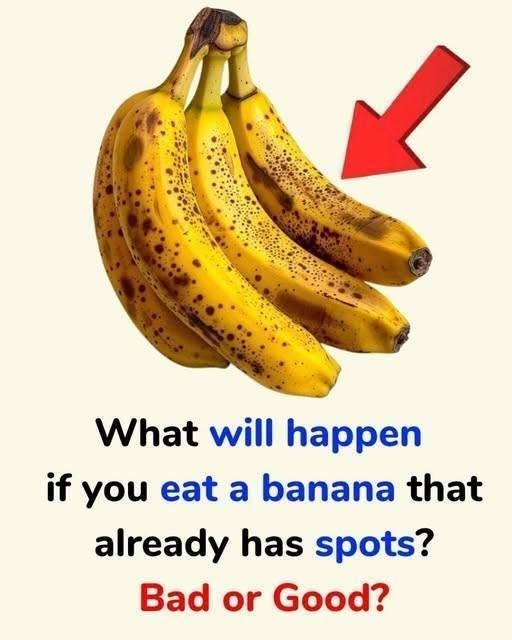
Eating a banana that already has brown spots is usually safe and often even better in some ways than eating a fully yellow banana. The spots are a sign that the banana is ripening and its internal chemistry is changing.
What happens inside a spotted banana?
As a banana ripens:
- Starch turns into sugar
- Green bananas contain a lot of starch, which makes them less sweet and harder to digest.
- As they develop brown spots, enzymes break starch down into sugars.
- The banana becomes sweeter, softer, and easier to digest.
- The texture becomes softer
- The cell walls in the fruit break down over time.
- This makes the banana mushier, which is why spotted bananas are often preferred for smoothies and baking.
- Nutrients change slightly
- Ripening can increase the availability of some antioxidants.
- Vitamin C may gradually decrease as the fruit ages.
- The banana still provides useful nutrients like potassium, vitamin B6, and fiber.
Are brown spots dangerous?
Usually, no. Brown or black spots on the peel are generally just signs of ripening. A banana with spots is fine to eat if:
- The inside smells normal (sweet, fruity smell)
- The flesh is not slimy
- There is no mold (fuzzy white, green, or black growth)
- It does not taste fermented or alcoholic
What if you eat an overripe banana?
A very ripe banana may cause:
- A quick rise in blood sugar because it contains more simple sugars
- Mild stomach discomfort in some people if they eat a large amount
- A stronger, sweeter flavor that some people dislike
For most healthy people, eating a spotted banana is harmless.
When should you throw it away?
Avoid eating a banana if:
- The peel has mold growing on it
- The inside is leaking liquid
- It smells like alcohol, vinegar, or fermentation
- The flesh is unusually slimy or has a rotten taste
- There are large areas of decay rather than normal brown spots
Interesting fact:
Many people actually prefer spotted bananas for cooking because the extra sugar makes them ideal for foods like banana bread, pancakes, and smoothies. A banana covered in brown spots is often at its sweetest stage, not its spoiled stage.