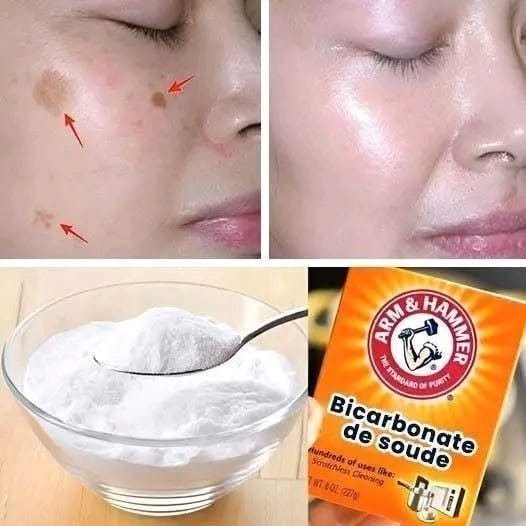
Baking soda is often promoted online as a remedy for dark spots, wrinkles, and dark circles, but there is no good scientific evidence that it safely or effectively treats these concerns. Because baking soda is highly alkaline (pH around 9), it can disrupt the skin’s natural barrier, leading to dryness, irritation, redness, and, in some cases, worsening pigmentation—especially on sensitive facial skin.
If you still want to know how it is commonly used as a DIY remedy, here’s the recipe people often share, along with important precautions.
Baking Soda Face Paste (DIY)
Ingredients
- 1 teaspoon baking soda
- 1–2 teaspoons water (or enough to make a smooth paste)
Method
- Mix the baking soda and water into a smooth paste.
- Wash your face with a gentle cleanser and pat dry.
- Apply a thin layer only to the area of concern. Avoid the eyes, eyelids, and lips.
- Leave it on for no more than 1–2 minutes if trying it for the first time.
- Rinse thoroughly with lukewarm water.
- Apply a fragrance-free moisturizer immediately afterward.
How often
- At most once every 1–2 weeks. Stop immediately if you notice burning, redness, or irritation.
Why it isn’t recommended for these concerns
- Dark spots: Baking soda does not fade excess pigment. Irritation from it can actually make pigmentation worse.
- Wrinkles: It does not increase collagen or reduce wrinkles.
- Dark circles: Most dark circles are caused by genetics, blood vessels, allergies, aging, or lack of sleep. Baking soda does not address these causes and should never be applied close to the eyes.
Safer options that are supported by evidence
- For dark spots: Ingredients such as niacinamide (4–5%), vitamin C, azelaic acid, or retinoids, along with daily sunscreen.
- For wrinkles: A retinoid, sunscreen every day, and moisturizers containing ceramides or hyaluronic acid.
- For dark circles: Use sunscreen around the eye area, get adequate sleep if sleep deprivation is a factor, treat allergies if present, and consider products containing caffeine or retinol formulated specifically for the eye area.
Important precautions
- Do a patch test on the inside of your arm for 24 hours before applying anything to your face.
- Never use baking soda on broken, irritated, or sunburned skin.
- Do not scrub with baking soda, as the abrasive particles can damage the skin.
- Stop using it if you experience stinging, persistent redness, or a rash.
If your goal is to reduce dark spots, wrinkles, and dark circles, a skincare routine with sunscreen and ingredients that have clinical evidence is much more likely to help than baking soda.