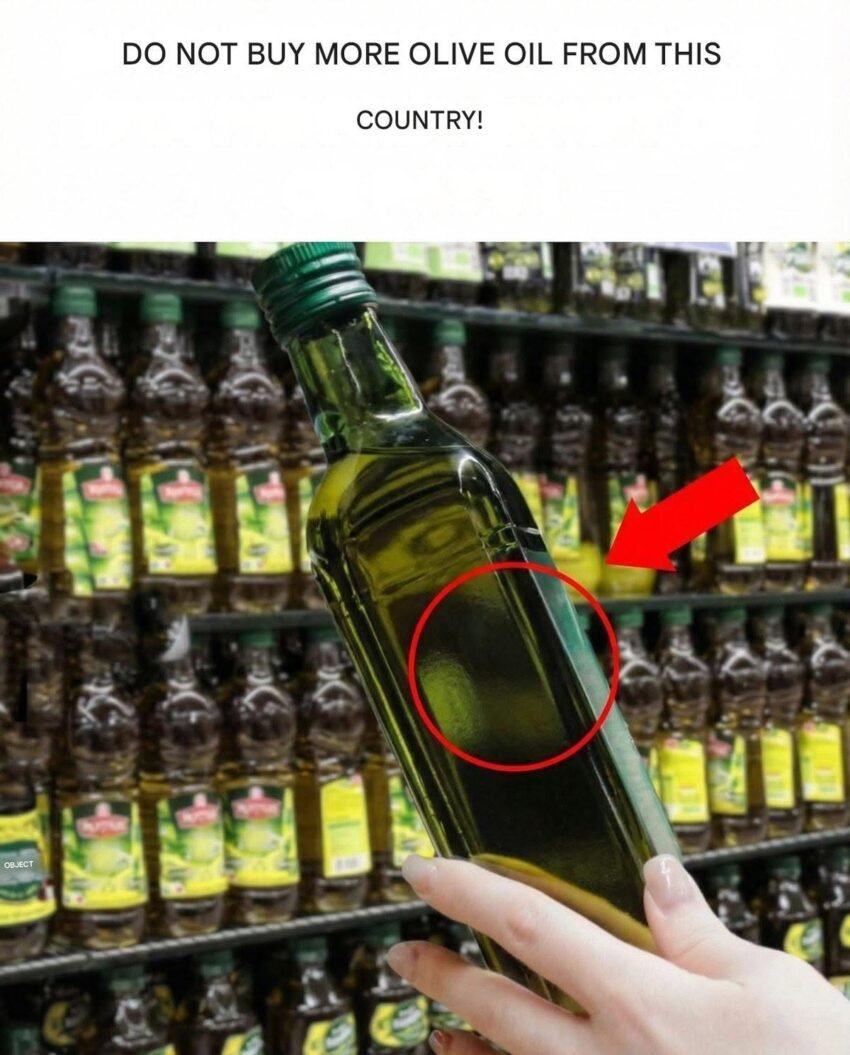
The claim “80% of olive oil is fake” is widely repeated online, but it needs context. It does not mean that 80% of all olive oil bottles sold everywhere are fake. The reality is more nuanced: the olive oil industry has had significant fraud problems, especially involving mislabeling, adulteration, and poor quality oils being sold as extra virgin.
What does “fake olive oil” actually mean?
“Fake” can refer to several things:
1. Adulterated oil
This is when olive oil is mixed with cheaper oils, such as:
- Soybean oil
- Sunflower oil
- Canola oil
- Refined seed oils
- Low-quality refined olive oils
The product may still be labeled “olive oil” or “extra virgin olive oil,” which is misleading.
2. Mislabeling quality
Many bottles labeled “Extra Virgin Olive Oil (EVOO)” do not meet the official standards for extra virgin quality.
Extra virgin olive oil should have:
- Very low acidity (free fatty acid level ≤ 0.8%)
- No taste defects
- Positive sensory qualities (fresh, fruity, bitter, peppery characteristics)
Some oils are actually:
- Old olive oil
- Heat-treated oil
- Oxidized oil
- Lower-grade olive oil
3. Origin fraud
Some oils are labeled as:
- “Italian olive oil”
- “Spanish premium olive oil”
- “Greek extra virgin”
…but the olives may come from other countries, or the oil may be blended and falsely marketed.
Why is olive oil easy to fake?
Olive oil is expensive because:
- Olive trees take years to mature
- Harvesting is labor-intensive
- Weather affects production
- Good extra virgin oil requires careful processing
Cheap oils are much easier to produce, creating an incentive for fraud.
Where did the “80% fake” number come from?
The number is often linked to claims from:
- Fraud investigations
- Industry reports
- Testing of specific markets or samples
For example, some studies have found high failure rates in particular batches, regions, or retail samples, but this does not prove that 80% of all olive oil worldwide is fake.
The percentage varies greatly depending on:
- Country
- Brand
- Price range
- Testing method
- Supply chain controls
How to tell if your olive oil is real
1. Check the label
Better signs:
✅ “Extra Virgin Olive Oil” clearly stated
✅ Harvest date included
✅ Country/region of origin listed
✅ Dark glass bottle or metal tin
✅ Producer information available
Be cautious with:
❌ “Pure olive oil”
❌ “Light olive oil” (usually means refined, not fewer calories)
❌ Very cheap “extra virgin” oil
❌ Bottles with no harvest information
2. Look at the price
Real extra virgin olive oil is rarely extremely cheap.
A suspiciously low price can indicate:
- Old oil
- Blending
- Lower quality
- Mislabeling
3. Taste test (a better method than many internet tricks)
Good EVOO often has:
- Fresh grassy smell
- Fruitiness
- Slight bitterness
- Peppery sensation in the throat
That peppery feeling comes from natural compounds such as polyphenols.
Bad oil may taste:
- Flat
- Greasy
- Like old nuts
- Wax-like
- Rancid
4. The refrigerator test: myth vs reality
A common internet claim:
“Put olive oil in the fridge. If it solidifies, it is real.”
This is not a reliable test.
Different genuine olive oils solidify at different temperatures, and some fake oils may also behave similarly.
How olive oil fraud is detected professionally
Laboratories use tests such as:
- Fatty acid profile analysis
- Sterol analysis
- UV absorbance testing
- Peroxide value testing
- Sensory panel evaluation
- Chemical fingerprinting
These are much more reliable than home tests.
Which olive oils are usually safer?
Look for oils from producers with strong quality controls, such as those certified by organizations like:
- International Olive Council
- North American Olive Oil Association
Some reputable producers include:
- California Olive Ranch
- Cobram Estate
- Kosterina
(Availability and quality can vary by country and specific product.)
Simple checklist before buying
Choose:
✅ Extra virgin
✅ Recent harvest date
✅ Dark bottle/tin
✅ Traceable producer
✅ Reasonable price
✅ Strong aroma and flavor
Avoid:
❌ Extremely cheap “premium” olive oil
❌ Clear bottles sitting under bright lights
❌ No origin information
❌ Very old bottles
Bottom line
The statement “80% of olive oil is fake” is an exaggeration, but olive oil fraud is a real problem. The biggest issue is usually not that a bottle contains something completely different—it is often that lower-quality or adulterated oil is sold as expensive extra virgin olive oil.
If you tell me the brand name, country of purchase, and a photo of the bottle label (front and back), I can help evaluate whether your olive oil looks trustworthy.