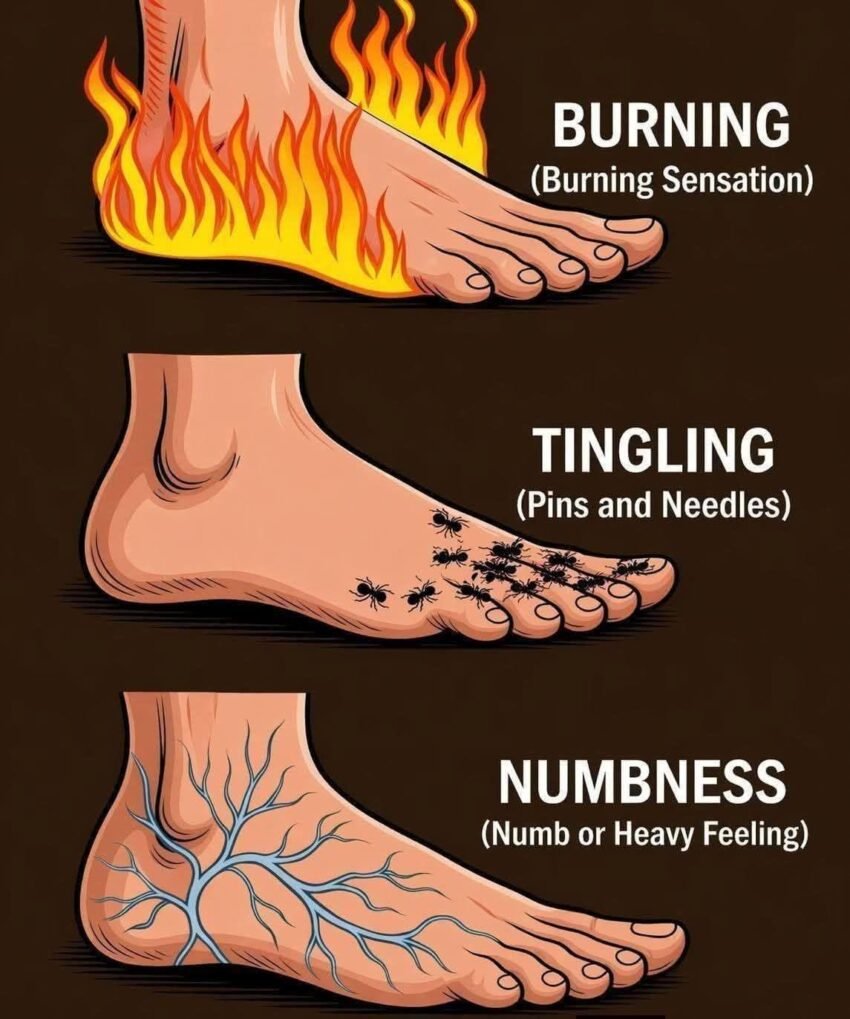
Burning, numbness, and tingling in the feet are common symptoms that can happen when nerves, blood vessels, muscles, or other tissues in the feet are affected. These sensations are often described as “pins and needles,” “electric shocks,” “burning pain,” loss of feeling, or a crawling sensation. The medical term for abnormal nerve sensations is paresthesia.
1. Nerve damage (Peripheral Neuropathy) — one of the most common causes
Peripheral neuropathy occurs when the small nerves that carry signals between the feet and the brain become damaged or irritated.
Common symptoms:
- Burning pain, especially at night
- Tingling or prickling sensations
- Numbness or reduced ability to feel heat, cold, or pain
- Feeling like you are walking on cotton or wearing tight socks
- Increased sensitivity to touch
Common causes:
- Diabetes (the most common cause)
- Vitamin deficiencies (especially vitamin B12)
- Alcohol overuse
- Certain medications (including some chemotherapy drugs)
- Kidney or liver disease
- Thyroid disorders
- Autoimmune diseases
- Infections affecting nerves
2. Diabetes-related nerve damage
High blood sugar over time can injure nerves and small blood vessels supplying the feet.
Signs that may suggest diabetic neuropathy:
- Burning feet, often worse at night
- Loss of sensation in toes and soles
- Slow-healing cuts or wounds
- Foot ulcers
- Balance problems
People with diabetes should regularly check their feet because reduced sensation can allow injuries to go unnoticed.
3. Vitamin B12 deficiency
Vitamin B12 is important for healthy nerve function. A deficiency can damage the protective covering of nerves.
Symptoms may include:
- Tingling in feet and hands
- Numbness
- Weakness
- Fatigue
- Balance difficulties
- Memory or concentration problems in some cases
Risk factors include:
- Poor diet
- Absorption problems
- Certain stomach or intestinal conditions
- Long-term use of some medications (such as some acid-reducing drugs or metformin)
4. Poor blood circulation
Reduced blood flow can cause discomfort in the feet.
Possible symptoms:
- Cold feet
- Tingling or numbness
- Pain while walking that improves with rest
- Skin color changes
- Slow healing of wounds
Conditions such as peripheral artery disease (PAD) can reduce blood supply to the legs and feet.
5. Nerve compression or trapped nerves
Pressure on nerves can cause burning or tingling.
Examples:
- Sciatica: irritation of nerves coming from the lower back
- Tarsal tunnel syndrome: pressure on a nerve near the ankle
- Herniated discs in the spine
- Tight footwear pressing on nerves
Symptoms may:
- Affect one foot more than the other
- Change with posture or activity
- Travel from the back or leg into the foot
6. Foot problems and injuries
Local problems can irritate nerves, including:
- Sprains or fractures
- Repeated pressure on the feet
- Tight shoes
- Inflammation around joints or tendons
7. Infections and other medical conditions
Some infections or illnesses can affect nerves, such as:
- Shingles (herpes zoster)
- Lyme disease (in areas where it occurs)
- Certain viral infections
Other causes include:
- Multiple sclerosis
- Autoimmune nerve disorders
- Certain cancers or cancer treatments
When should you seek medical attention quickly?
Contact a healthcare professional urgently if you have:
- Sudden numbness or weakness on one side of the body
- Loss of bladder or bowel control with leg numbness
- Severe foot pain with swelling or color change
- A foot wound that is not healing
- Rapidly worsening numbness
- Difficulty walking or maintaining balance
How doctors evaluate burning or tingling feet
A healthcare provider may check:
Medical history:
- Duration of symptoms
- Whether both feet are affected
- Diabetes history
- Medications
- Alcohol use
- Diet and nutrition
Physical examination:
- Reflexes
- Muscle strength
- Skin condition
- Sensation to touch, temperature, and vibration
- Blood circulation
Possible tests:
- Blood sugar tests (diabetes screening)
- Vitamin B12 levels
- Thyroid tests
- Kidney function tests
- Nerve conduction studies
- Electromyography (EMG)
- Imaging if a spine problem is suspected
Treatment depends on the cause
For nerve-related causes:
- Control blood sugar if diabetic
- Replace vitamin deficiencies
- Treat underlying diseases
- Physical therapy
- Medicines specifically for nerve pain (prescribed by a doctor)
For circulation problems:
- Exercise programs
- Managing cholesterol and blood pressure
- Stopping smoking if applicable
- Medical treatment for blocked arteries
Foot care:
- Wear comfortable, supportive shoes
- Avoid walking barefoot if sensation is reduced
- Check feet daily for cuts or sores
- Keep feet clean and moisturized (avoid moisture between toes)
If you tell me:
- Your age,
- Whether it affects one foot or both feet,
- How long it has been happening,
- Whether you have diabetes, back pain, or vitamin B12 deficiency,
- Whether it is worse at night or during walking,
I can help narrow down the most likely causes.