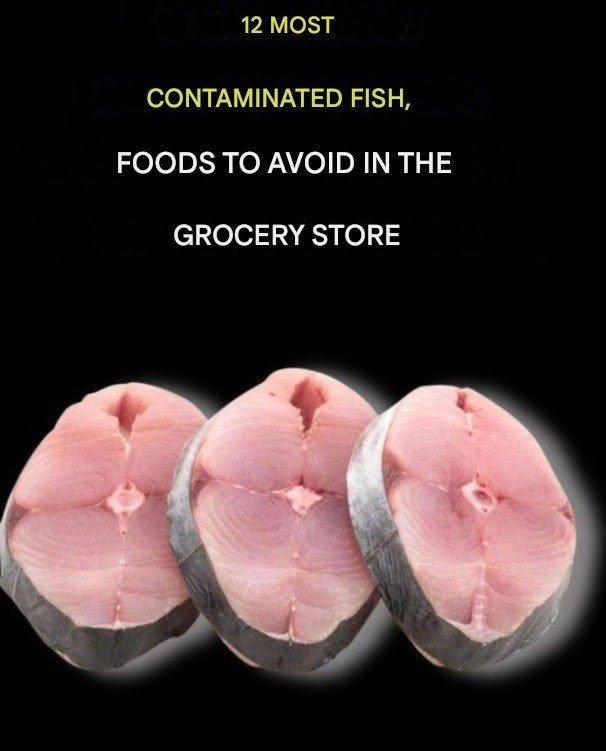
If you mean the fish with the highest concerns for contamination (mercury, PCBs, dioxins, pollutants, or unsustainable sourcing) that shoppers may want to avoid or limit, the list below covers commonly flagged choices. Contamination levels vary by species, location, size, and fishing method, so this is a guide rather than a rule that every piece of that fish is unsafe.
12 Most Contaminated Fish to Avoid or Limit at the Grocery Store
1. Shark
Main concern: Very high mercury levels
Sharks are large, long-lived predators that accumulate mercury by eating many smaller fish over their lifetime. Mercury can damage the nervous system, especially in developing babies and young children.
Why limit it:
- High position in the food chain
- Long lifespan allows toxin buildup
- Often among the highest-mercury seafood choices
Better alternatives:
- Salmon
- Sardines
- Trout
2. Swordfish
Main concern: High mercury
Swordfish are fast-growing predators that accumulate significant mercury.
Risks:
- Mercury exposure from frequent consumption
- Greater concern for pregnant people and children
Better alternatives:
- Wild-caught salmon
- Atlantic mackerel (not king mackerel)
- Herring
3. King mackerel
Main concern: Extremely high mercury
King mackerel is one of the fish most commonly advised against because of mercury levels.
Important distinction:
- King mackerel: high mercury — avoid or limit
- Atlantic mackerel: generally much lower mercury and a healthier choice
4. Tilefish (especially Gulf of Mexico tilefish)
Main concern: Very high mercury
Tilefish from certain regions can contain some of the highest mercury concentrations measured in seafood.
Why it is risky:
- Large bottom-dwelling fish
- Long life span
- Exposure to contaminated sediments
5. Orange roughy
Main concern: Mercury and sustainability concerns
Orange roughy can live for more than 100 years, allowing contaminants to accumulate.
Concerns:
- Higher mercury than many common fish
- Slow reproduction makes populations vulnerable
- Often harvested from deep waters
6. Bigeye tuna
Main concern: High mercury
Bigeye tuna is a large predatory tuna species.
Common sources:
- Sushi
- Tuna steaks
- Some frozen tuna products
Why limit it:
- Larger tuna accumulate more mercury than smaller species
Better alternatives:
- Light canned tuna
- Skipjack tuna
- Salmon
7. Bluefin tuna
Main concern: Mercury and environmental contaminants
Bluefin tuna are large predators and can contain high mercury levels.
Additional concerns:
- Overfishing pressure
- Fat tissues may accumulate certain pollutants
Better choices:
- Skipjack tuna
- Sardines
- Anchovies
8. Grouper
Main concern: Mercury
Grouper are large reef predators and may accumulate mercury.
Risks:
- Higher mercury compared with many smaller fish
- Some imported grouper may have limited traceability
Better alternatives:
- Cod
- Haddock
- Pollock
9. Marlin
Main concern: Very high mercury
Marlin is another large ocean predator.
Why avoid frequent consumption:
- Long lifespan
- High position in marine food chains
- Mercury accumulation
10. Imported swordfish and tuna
Main concern: Mercury plus possible chemical contamination
Imported seafood can have additional concerns depending on:
- Country of origin
- Farming conditions
- Inspection standards
- Water pollution levels
Possible contaminants:
- Mercury
- Antibiotic residues (in some farmed fish)
- Industrial chemicals
11. Farmed salmon (some sources)
Main concern: Persistent pollutants and farming practices
Farmed salmon is not automatically dangerous, but some older studies raised concerns about contaminants such as PCBs.
Modern farming has improved in many regions, but quality varies.
If buying salmon:
Look for:
- Wild Alaskan salmon
- Certified responsibly farmed salmon
- Transparent sourcing
12. Eel
Main concern: PCBs, dioxins, and other pollutants
Eels are bottom-dwelling fish and can accumulate contaminants from sediments.
Concerns:
- Pollution exposure
- High fat content can store fat-soluble contaminants
The Biggest Contaminants Found in Fish
1. Mercury
Mercury is the biggest concern in large predatory fish.
High exposure may affect:
- Brain development
- Memory and learning
- Nervous system function
Most at risk:
- Pregnant people
- Infants
- Young children
2. PCBs (Polychlorinated Biphenyls)
PCBs are industrial chemicals that persist in the environment.
Possible effects:
- Hormonal disruption
- Immune system effects
- Increased health risks with long-term exposure
3. Dioxins
These are toxic environmental pollutants that can accumulate in fatty fish.
4. Microplastics
Many marine animals ingest plastic particles, although the long-term human health impact is still being studied.
Safer Fish Choices (Generally Lower Contaminant Options)
These fish are usually considered better choices because they are smaller, shorter-lived, and lower on the food chain:
| Fish | Why it is a better choice |
|---|---|
| Sardine | Low mercury, high omega-3 |
| Anchovy | Small fish, low toxin buildup |
| Salmon | High omega-3, generally lower mercury |
| Trout | Good nutrition, lower mercury |
| Herring | Omega-3 rich, low mercury |
| Pollock | Usually low mercury |
| Shrimp | Generally low mercury |
How to Reduce Risk When Buying Fish
✅ Choose smaller fish more often
✅ Avoid eating large predator fish frequently
✅ Check the fishing location when possible
✅ Prefer reputable seafood certifications
✅ Eat a variety of seafood instead of one type repeatedly
✅ Remove skin and fatty portions if concerned about fat-soluble pollutants
A Practical Rule
Avoid or rarely eat:
- Shark
- Swordfish
- King mackerel
- Tilefish from the Gulf of Mexico
- Marlin
- Bigeye tuna
Eat more often:
- Salmon
- Sardines
- Herring
- Trout
- Anchovies
Fish can still be an excellent source of protein, iodine, vitamin D, and omega-3 fats—the key is choosing species that are lower in accumulated contaminants.