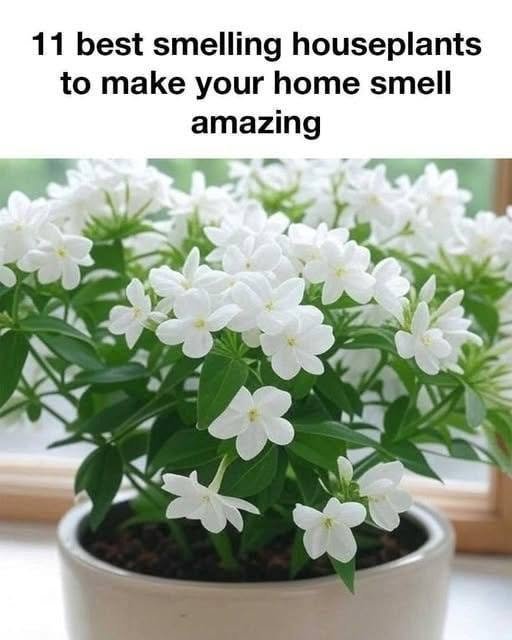
Fragrant Houseplants That Will Make Your Home Smell Incredible — Detailed Guide
Fragrant houseplants do more than decorate your home. They can create a natural indoor perfume, improve the atmosphere, and bring a sense of calm and freshness to your living spaces. Many aromatic plants release their scent through flowers, leaves, or essential oils, especially when placed in bright light and cared for properly.
Below are some of the best fragrant houseplants, their scents, care needs, and tips for keeping them thriving indoors.
1. Arabian Jasmine (Jasminum sambac)
Scent: Sweet, floral, exotic, and intensely fragrant
Arabian jasmine is one of the most famous scented houseplants. Its small white flowers produce a powerful perfume, especially in the evening and at night. The scent is often used in perfumes and traditional garlands.
Care Requirements:
- Light: Bright indirect sunlight; a few hours of gentle morning sun is beneficial
- Water: Keep soil slightly moist but avoid soggy conditions
- Humidity: Prefers moderate to high humidity
- Temperature: 18–30°C (65–86°F)
Benefits:
- Creates a luxurious floral fragrance indoors
- Attractive white blooms
- Can flower multiple times a year with proper care
Tips:
Place jasmine near a window, balcony door, or bedroom where its nighttime fragrance can be enjoyed.
2. Gardenia (Gardenia jasminoides)
Scent: Rich, creamy, sweet, and similar to luxury perfumes
Gardenias are prized for their large white flowers and unforgettable fragrance. Their scent can fill an entire room when the plant is flowering.
Care Requirements:
- Light: Bright indirect light
- Water: Use slightly acidic, well-draining soil; keep evenly moist
- Humidity: High humidity is essential
- Temperature: Prefer 18–24°C (65–75°F)
Benefits:
- Beautiful glossy green leaves
- Elegant white flowers
- Strong natural fragrance
Challenges:
Gardenias can be demanding. Yellow leaves often indicate problems such as low humidity, poor soil acidity, or watering issues.
Tips:
Use filtered water if your tap water is high in minerals, and avoid sudden changes in environment.
3. Lavender (Lavandula)
Scent: Fresh, herbal, calming, slightly sweet
Lavender is famous for its relaxing aroma. Although many people grow it outdoors, compact varieties can be grown indoors with enough sunlight.
Care Requirements:
- Light: Needs 6+ hours of direct sunlight
- Water: Allow soil to dry slightly between watering
- Soil: Sandy, fast-draining soil
- Humidity: Prefers dry air
Benefits:
- Naturally calming fragrance
- Dried flowers can be used for sachets
- Attractive purple blooms
Tips:
Place lavender in your sunniest window. Avoid overwatering, as its roots dislike standing moisture.
4. Mint (Mentha)
Scent: Cool, refreshing, minty
Mint is one of the easiest aromatic plants to grow indoors. Its leaves release a refreshing scent when touched or brushed.
Care Requirements:
- Light: Bright indirect light or some direct sun
- Water: Keep soil consistently moist
- Humidity: Moderate humidity
- Temperature: 15–24°C (60–75°F)
Benefits:
- Freshens rooms naturally
- Leaves can be used for tea and cooking
- Fast-growing plant
Tips:
Grow mint in its own pot because it spreads aggressively and can crowd other plants.
5. Lemon Balm (Melissa officinalis)
Scent: Fresh lemon with a mild herbal sweetness
Lemon balm produces a pleasant citrus fragrance from its leaves. Simply rubbing the leaves releases its aroma.
Care Requirements:
- Light: Bright indirect sunlight
- Water: Keep soil lightly moist
- Soil: Well-draining potting mix
Benefits:
- Fresh citrus scent
- Easy beginner plant
- Useful culinary herb
Tips:
Trim regularly to encourage bushier growth and stronger fragrance.
6. Eucalyptus (Eucalyptus gunnii)
Scent: Clean, fresh, menthol-like aroma
Eucalyptus is known for its refreshing scent and attractive silver-green leaves.
Care Requirements:
- Light: Bright sunlight
- Water: Moderate watering; allow soil to dry slightly
- Space: Needs room because it can grow tall
Benefits:
- Modern decorative appearance
- Fresh spa-like fragrance
- Leaves can be dried for decoration
Tips:
Prune regularly to maintain a manageable indoor size.
7. Citrus Trees (Lemon, Lime, Orange, Calamondin)
Scent: Fresh citrus blossoms and zesty leaves
Small citrus trees can grow indoors and produce wonderfully scented flowers.
Care Requirements:
- Light: Very bright light; several hours of direct sun
- Water: Water when the top layer of soil dries
- Humidity: Moderate to high humidity
Benefits:
- Fragrant flowers
- Attractive glossy leaves
- Some varieties produce edible fruit
Popular Indoor Choices:
- Calamondin orange
- Meyer lemon
- Kaffir lime
Tips:
Rotate the plant regularly so all sides receive sunlight.
8. Hoya (Hoya carnosa)
Scent: Sweet, honey-like, sometimes chocolate or vanilla-like
Hoyas are beautiful trailing plants with clusters of waxy flowers. Their blooms often release fragrance in the evening.
Care Requirements:
- Light: Bright indirect light
- Water: Allow soil to dry between watering
- Humidity: Enjoy moderate humidity
Benefits:
- Long-lasting flowers
- Attractive vines
- Low-maintenance plant
Tips:
Do not remove old flower stems after blooming; hoyas often flower from the same spots again.
9. Tuberose (Polianthes tuberosa)
Scent: Powerful, sweet, floral perfume
Tuberose is famous in the perfume industry because of its intense fragrance.
Care Requirements:
- Light: Bright sunlight
- Water: Moderate watering
- Temperature: Warm conditions
Benefits:
- Extremely fragrant flowers
- Elegant appearance
Tips:
Because the scent is strong, place it in larger rooms or areas with good airflow.
10. Scented Geranium (Pelargonium)
Scent: Rose, lemon, mint, or spice depending on variety
Scented geraniums release fragrance from their leaves rather than flowers.
Care Requirements:
- Light: Bright sunlight
- Water: Allow soil to dry between watering
- Soil: Well-draining soil
Benefits:
- Many fragrance varieties available
- Attractive foliage
- Easy to grow
Popular Types:
- Rose-scented geranium
- Lemon-scented geranium
- Peppermint-scented geranium
11. Rosemary (Salvia rosmarinus)
Scent: Woody, herbal, fresh
Rosemary is both a decorative plant and a useful kitchen herb.
Care Requirements:
- Light: Full sunlight
- Water: Allow soil to dry between watering
- Soil: Very well-draining
Benefits:
- Pleasant herbal aroma
- Can be used in cooking
- Attractive needle-like leaves
Tips:
A sunny kitchen window is ideal.
12. Sweet Olive / Tea Olive (Osmanthus fragrans)
Scent: Sweet apricot, peach, and floral notes
This plant produces tiny flowers with a surprisingly powerful fragrance.
Care Requirements:
- Light: Bright indirect light
- Water: Moderate watering
- Humidity: Moderate humidity
Benefits:
- Strong fragrance despite small flowers
- Attractive evergreen leaves
Best Locations for Fragrant Houseplants
Bedroom:
- Jasmine
- Lavender
- Gardenia
Kitchen:
- Mint
- Rosemary
- Lemon balm
Living Room:
- Hoya
- Citrus trees
- Gardenia
Bathroom (with good light):
- Eucalyptus
- Jasmine
- Mint
How to Make Fragrant Plants Smell Stronger
1. Provide Enough Light
Most scented plants produce more oils and flowers when they receive proper sunlight.
2. Avoid Overwatering
Waterlogged roots can weaken growth and reduce flowering.
3. Improve Humidity
Tropical fragrant plants such as jasmine and gardenia appreciate humidity.
4. Prune Regularly
Pruning encourages new growth and often increases fragrance production.
5. Place Plants Where You Spend Time
A fragrant plant near a doorway, desk, or seating area allows you to enjoy its scent naturally.
Best Fragrant Houseplants for Beginners
| Plant | Difficulty | Fragrance Strength |
|---|---|---|
| Mint | Easy | Medium |
| Lemon Balm | Easy | Medium |
| Rosemary | Easy | Medium |
| Hoya | Easy | Strong |
| Jasmine | Moderate | Very Strong |
| Lavender | Moderate | Medium |
| Gardenia | Difficult | Very Strong |
| Citrus Tree | Moderate | Strong |
Final Recommendation
For a home that smells naturally beautiful throughout the year, a combination works best:
- Jasmine for a romantic floral scent
- Lavender for relaxation
- Mint or lemon balm for freshness
- Gardenia for luxury fragrance
- Citrus plants for a clean, uplifting aroma
With the right light and care, fragrant houseplants can turn your home into a naturally scented indoor garden without relying on artificial air fresheners.