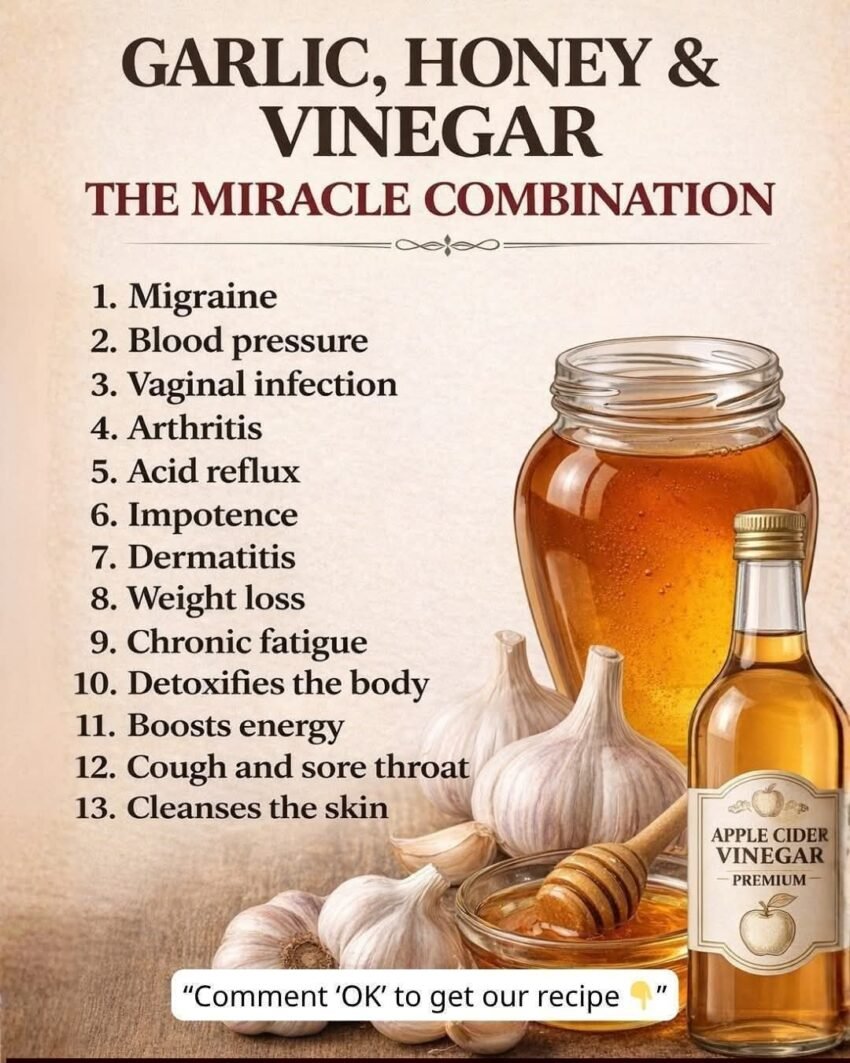
A mixture of garlic, honey, and vinegar is a popular home remedy. While many health claims are based on tradition rather than strong clinical evidence, the ingredients themselves do have some studied properties.
Potential Benefits
Garlic
Contains compounds such as allicin that have antimicrobial properties.
May help support heart health by modestly improving blood pressure and cholesterol levels in some people.
Provides antioxidants.
Honey
Has mild antimicrobial properties.
Can soothe sore throats and coughs.
Contains antioxidants.
Vinegar
Most commonly made with Apple Cider Vinegar or other vinegars.
May help reduce blood sugar spikes after meals in some people.
Adds acidity that helps preserve the mixture.
Combined
The mixture is commonly used as a wellness tonic for:
Sore throat relief
Cold-season support
Digestive comfort
General antioxidant intake
However, there is no strong evidence that the combination cures infections, detoxifies the body, or dramatically boosts immunity.
Simple Recipe
Ingredients
1 cup honey
8–10 cloves fresh garlic, peeled and lightly crushed
2–4 tablespoons vinegar (such as apple cider vinegar)
Method
1. Place the crushed garlic in a clean glass jar.
2. Pour the honey over the garlic until fully covered.
3. Add the vinegar and stir gently.
4. Seal the jar loosely and let it sit at room temperature for 1–3 days.
5. Store in the refrigerator afterward.
How to Use
Take 1 teaspoon to 1 tablespoon daily.
For a sore throat, some people take a teaspoon as needed.
The garlic cloves themselves can also be eaten.
Precautions
Garlic can increase bleeding risk, especially if you take blood thinners.
Honey should not be given to infants under 1 year old because of the risk of botulism.
Vinegar may irritate the stomach or worsen acid reflux in some people.
People with diabetes should account for the sugar content of honey.
If you’re considering it for a specific health goal (immunity, blood pressure, cholesterol, cough, digestion, etc.), I can provide a more evidence-based breakdown of what benefits are supported by research and what claims are mostly anecdotal.