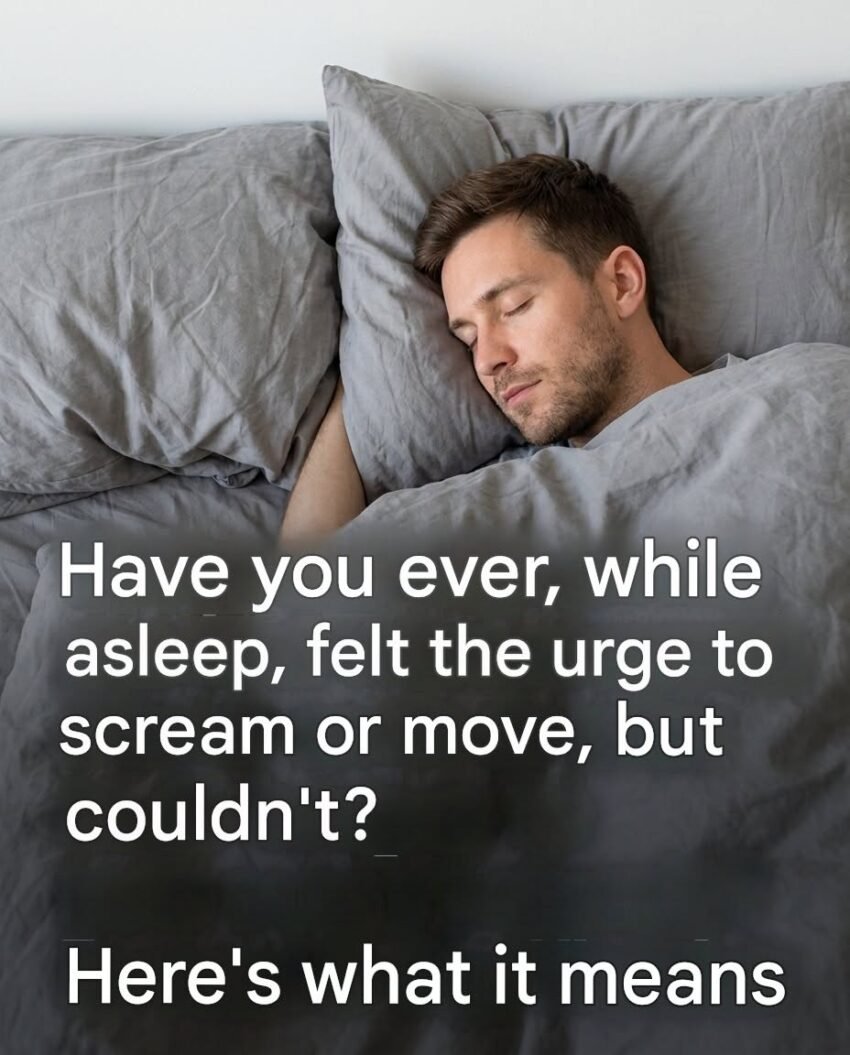
The sleep disorder you’re describing sounds like sleep paralysis — a frightening condition where a person wakes up (or falls asleep) but temporarily cannot move or speak, as if their body refuses to obey their commands.
Sleep Paralysis: A Detailed Explanation
What is sleep paralysis?
Sleep paralysis is a temporary state in which your mind becomes awake before your body regains normal movement control. During this episode, you may be fully conscious but unable to move your arms, legs, or speak.
It happens because your brain and body are briefly out of sync during the transition between REM (rapid eye movement) sleep and wakefulness.
During REM sleep:
- Your brain is highly active.
- Dreams are vivid.
- Your body naturally enters a temporary state of muscle paralysis (REM atonia) to prevent you from physically acting out dreams.
In sleep paralysis, this muscle “off switch” remains active for a short time after you become aware.
What does an episode feel like?
People often describe:
1. Complete inability to move
You may try to:
- Sit up
- Move your hands
- Open your mouth
- Call for help
…but nothing happens.
Many people describe it as feeling like they are trapped inside their own body.
2. Pressure on the chest
A common experience is:
- A heavy weight on the chest
- Difficulty taking deep breaths
- A feeling of being suffocated
This happens because REM-related breathing patterns and fear responses can create a sensation of pressure, even though breathing continues.
3. Hallucinations
Some people experience extremely realistic sensations, such as:
Visual hallucinations
- Seeing a shadowy figure
- Seeing a person or creature in the room
- Seeing strange shapes or movements
Auditory hallucinations
- Hearing footsteps
- Hearing voices
- Hearing whispers
- Hearing a buzzing or electrical sound
Tactile hallucinations
- Feeling touched
- Feeling pulled
- Feeling someone sitting on the bed
These experiences are called sleep-related hallucinations and can feel terrifying because the person is awake and aware.
Why does sleep paralysis happen?
The exact cause is not always clear, but several factors increase the likelihood:
1. Sleep deprivation
Not getting enough sleep can disturb the normal sleep cycle.
2. Irregular sleep schedule
Examples:
- Working night shifts
- Frequent travel across time zones
- Changing bedtime often
3. Stress and anxiety
High stress levels can interfere with sleep regulation.
4. Sleeping on your back
Some people experience episodes more often while lying on their back.
5. Narcolepsy
Sleep paralysis is more common in people with narcolepsy, a neurological disorder that causes excessive daytime sleepiness and sudden episodes of muscle weakness.
6. Family history
Some people may have a genetic tendency toward experiencing it.
How long does sleep paralysis last?
Although it feels much longer, most episodes last:
- A few seconds to a few minutes
- Rarely longer
The person usually regains movement suddenly, often with a small movement such as:
- Wiggling a finger
- Moving the eyes
- Taking control of breathing
Is sleep paralysis dangerous?
For most people, sleep paralysis is not physically dangerous.
It does not:
- Stop your breathing
- Cause permanent paralysis
- Damage the brain
- Mean you are losing your mind
However, repeated episodes can cause:
- Fear of sleeping
- Anxiety around bedtime
- Poor sleep quality
Why does it feel supernatural?
Throughout history, many cultures have interpreted sleep paralysis as:
- Demonic attacks
- Ghost encounters
- Spirit possession
- Night creatures sitting on the chest
The reason these beliefs became common is that the experience combines:
- Awareness
- Immobility
- Fear
- Realistic hallucinations
Modern sleep science explains these events as a temporary disturbance in the brain’s sleep-wake transition.
How can you reduce the chances of sleep paralysis?
Helpful habits include:
Improve sleep routine
- Sleep and wake at consistent times
- Aim for enough sleep
- Avoid frequent all-night wakefulness
Reduce stress before bed
- Relaxation exercises
- Meditation
- Reading
- Limiting intense screen use before sleeping
Improve sleep environment
- Keep the room dark and comfortable
- Avoid excessive caffeine late in the day
Avoid sleep disruption
- Treat conditions like insomnia or sleep apnea if present
What should you do during an episode?
If it happens:
- Remind yourself it will pass
- The paralysis is temporary.
- Focus on small movements
- Try moving a finger, toe, or blinking.
- Control your breathing
- Slow breathing can reduce panic.
- Avoid fighting violently against it
- Struggling can increase fear and make the experience feel worse.
When should you see a doctor?
Consider speaking with a healthcare professional if:
- Episodes happen frequently
- You are extremely sleepy during the day
- You suddenly lose muscle control while awake (possible narcolepsy)
- Fear of episodes is affecting your life
- You have other unusual sleep symptoms
Sleep paralysis is one of the most terrifying sleep experiences a person can have, but it is usually a temporary glitch in the brain’s transition between dreaming and waking — not a sign that your body is permanently failing you.