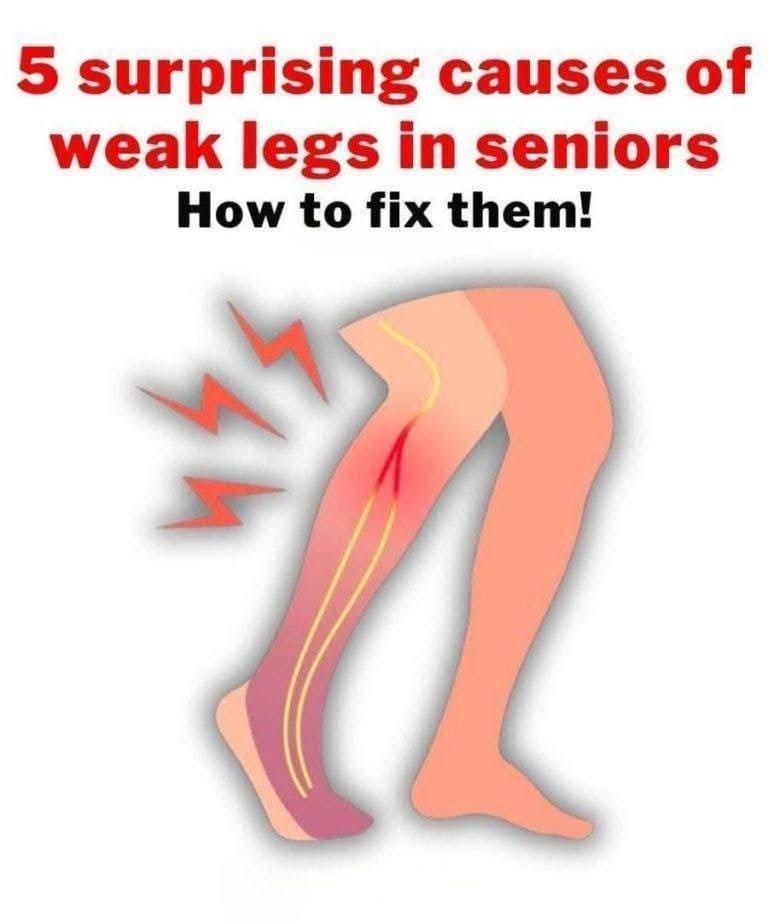
Weak legs can result from many different conditions, ranging from simple lifestyle factors to medical problems affecting the muscles, nerves, blood vessels, or brain. Here are five causes that often surprise people.
1. Vitamin B12 Deficiency
Many people associate vitamin B12 only with energy levels, but a deficiency can also affect the nervous system.
Possible Symptoms
Leg weakness
Tingling or numbness in the feet
Balance problems
Fatigue
Difficulty walking
Why It Happens
Vitamin B12 is needed for healthy nerves. Low levels can damage nerves that control the legs.
Higher Risk Groups
Older adults
Vegetarians and vegans who do not supplement B12
People with digestive disorders affecting nutrient absorption
2. Poor Blood Circulation
Reduced blood flow to the legs can make them feel weak, heavy, or tired.
Possible Symptoms
Leg pain while walking
Cramping in the calves
Cold feet
Slow-healing wounds on the legs or feet
This may be related to Peripheral Artery Disease, where narrowed arteries reduce blood flow to the limbs.
3. Dehydration and Electrolyte Imbalances
Even mild dehydration can affect muscle function.
Possible Symptoms
Muscle weakness
Fatigue
Dizziness
Muscle cramps
Common Causes
Excessive sweating
Vomiting or diarrhea
Not drinking enough fluids
Certain medications, such as diuretics
Low levels of potassium, magnesium, or sodium can contribute to weakness.
4. Thyroid Disorders
An underactive thyroid can affect muscle strength.
Possible Symptoms
Weakness in the thighs
Fatigue
Weight gain
Feeling cold
Dry skin
One common cause is Hypothyroidism, which can lead to muscle weakness and slower muscle recovery.
5. Nerve Problems
Weakness can occur when nerves that control the leg muscles are compressed or damaged.
Possible Symptoms
Weakness in one or both legs
Numbness or tingling
Shooting pain down the leg
Difficulty lifting the foot
Examples include:
Sciatica
Herniated discs
Diabetic nerve damage
When Weak Legs Need Urgent Medical Attention
Seek immediate medical care if leg weakness:
Appears suddenly
Affects only one side of the body
Is accompanied by facial drooping or speech difficulties
Occurs with loss of bladder or bowel control
Makes it difficult to stand or walk
These symptoms can be signs of serious conditions such as Stroke or severe spinal cord compression.
What Can Help?
Depending on the cause, treatment may involve:
Correcting vitamin deficiencies
Improving hydration and nutrition
Managing thyroid disease
Physical therapy and exercise
Treating circulation or nerve problems
Because the causes vary widely, persistent or unexplained leg weakness should be evaluated by a healthcare professional, especially if it is worsening or interfering with daily activities.