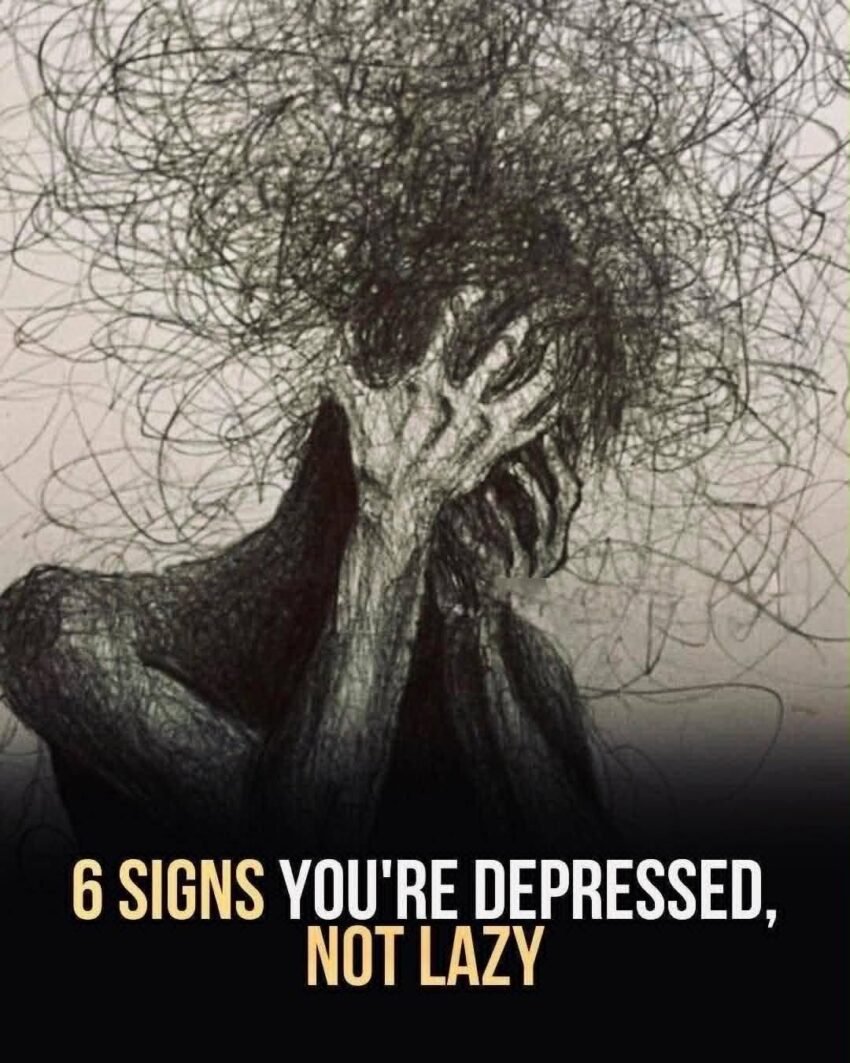
Here are six signs that what you’re experiencing may be depression rather than laziness.
1. Constant Exhaustion Even After Rest
People with depression often feel physically and mentally drained, even after sleeping for many hours. Everyday tasks like showering, cooking, or replying to messages can feel overwhelming.
Difference from laziness:
- Laziness is usually a choice to avoid effort.
- Depression causes a lack of energy that a person cannot simply “push through.”
2. Loss of Interest in Things You Once Enjoyed
One of the most common symptoms of depression is losing interest in hobbies, sports, socializing, or activities that used to bring happiness.
Examples:
- No longer enjoying games, music, or movies.
- Avoiding friends and family.
- Feeling emotionally “numb.”
3. Difficulty Concentrating
Depression can make it hard to:
- Focus on work or studies.
- Remember information.
- Make simple decisions.
- Finish tasks you start.
This can lead others to think you’re unmotivated when you’re actually struggling with concentration.
4. Feeling Guilty or Worthless
People with depression often experience negative thoughts such as:
- “I’m a failure.”
- “I’m not good enough.”
- “Everyone would be better without me.”
These thoughts can reduce motivation because they make efforts feel pointless.
5. Changes in Sleep and Appetite
Depression commonly affects basic body functions.
You may:
- Sleep too much or have insomnia.
- Eat much more or much less than usual.
- Gain or lose weight without trying.
These physical changes are medical symptoms, not signs of laziness.
6. Persistent Sadness or Emptiness
Feeling down for a day or two is normal. Depression usually involves:
- Sadness lasting at least two weeks.
- Feeling hopeless.
- Frequent crying or emotional numbness.
- Irritability, especially in teenagers and some adults.
If these feelings interfere with daily life, they deserve attention.
Depression vs. Laziness
| Depression | Laziness |
|---|---|
| Medical condition | Temporary lack of motivation |
| Wants to do things but struggles | Chooses not to do things |
| Persistent sadness or emptiness | Usually no persistent sadness |
| Causes fatigue, sleep, and appetite changes | No significant physical symptoms |
| May require professional treatment | Usually improves with motivation or routine |
When to Seek Help
Consider talking with a healthcare professional if these symptoms:
- Last for two weeks or longer.
- Affect school, work, or relationships.
- Keep getting worse.
- Include thoughts of self-harm or suicide.
Depression is treatable. Common treatments include therapy, lifestyle changes, and, for some people, medication.
If you’re experiencing thoughts of hurting yourself or feel that you’re in immediate danger, contact your local emergency services or a suicide crisis service right away, or tell someone you trust who can stay with you and help you get immediate support.
Recognizing these signs doesn’t confirm that someone has depression, but it can be an important reason to seek an evaluation from a qualified mental health professional. Early support often leads to better outcomes.