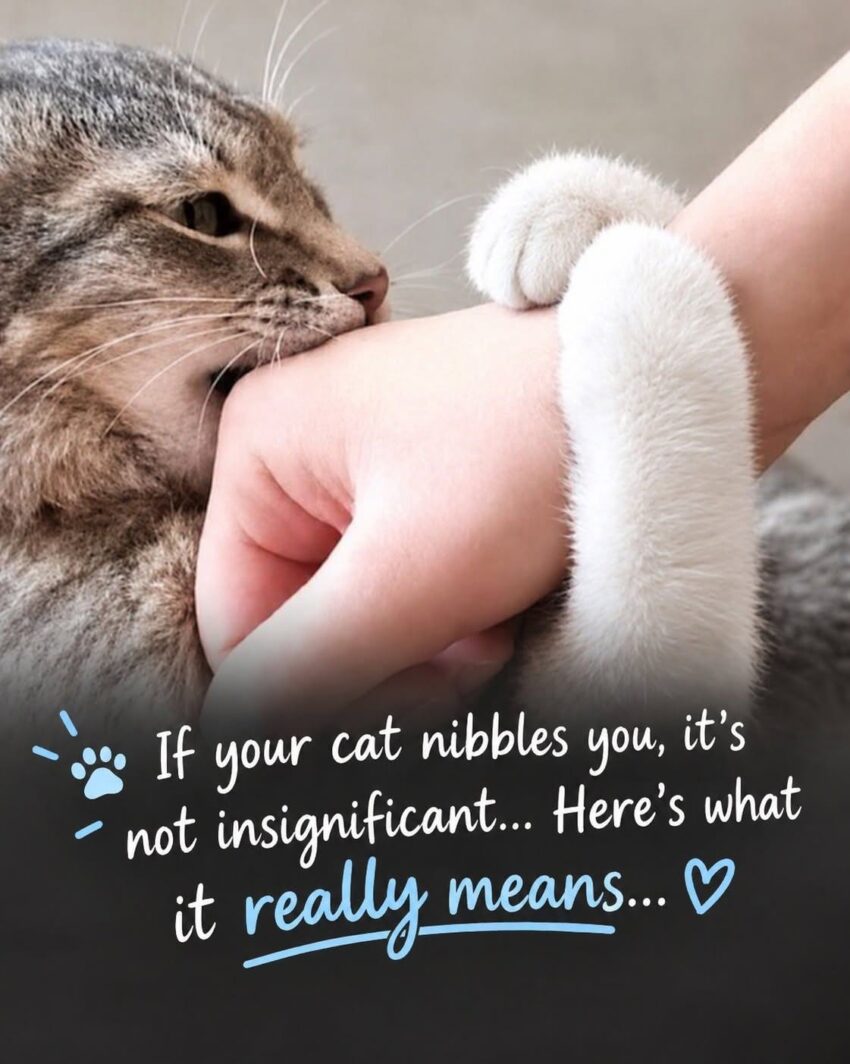
Does your cat bite you “for no reason”? Here’s what your cat may be trying to tell you.
If your cat suddenly bites your hand while you’re petting them, nips your ankles as you walk past, or grabs you with their teeth during play, it can seem completely random. But cats usually bite for a reason, even when the signal is difficult for humans to recognize.
A bite isn’t always a sign of aggression. It can be a way for your cat to communicate discomfort, fear, excitement, or an unmet need.
5 hidden reasons your cat might bite you

1. Your cat has had enough petting
Your cat may enjoy being stroked at first, then become overstimulated. A bite can mean, “Please stop.” Watch for tail flicking, ears turning backward, or a suddenly tense body.

2. Your cat is treating you like prey
Moving fingers, toes under blankets, and feet walking past can trigger your cat’s natural hunting instincts. Young or under-stimulated cats may stalk, grab, and bite during play. Use toys instead of your hands.

3. Your cat feels threatened
Sudden movements, loud noises, or being cornered can cause a defensive bite. Give your cat a clear escape route and avoid forcing contact.

4. Your cat wants something different
Rubbing against you or sitting on your lap doesn’t always mean your cat wants to be petted. They may want food, play, company, or simply to sit beside you without being touched.

5. Your cat may be in pain
This is especially important if biting is new, happens when you touch a particular area, or comes with other behavior changes. Dental problems, joint pain, and skin irritation can make a normally affectionate cat react suddenly. Arrange a veterinary examination.
How to recognize a bite before it happens


Look for these warning signs:
-
Tail flicking or thumping: your cat may be getting irritated or overstimulated.
-
Ears turned sideways or backward: your cat may be uncomfortable or anxious.
-
Body suddenly becoming stiff: your cat may want the interaction to end.
-
Head turning toward your hand: your cat may be warning you to stop.
When you notice these signals, stop touching your cat and let them move away. Never punish them for warning you.
What should you do if your cat bites you?
-
Stop interacting and give your cat space.
-
Avoid shouting, hitting, or chasing them.
-
Offer appropriate toys for play and keep petting sessions short.
-
If the biting is new, frequent, or getting worse, consult your veterinarian.
-
If a bite breaks the skin, wash it thoroughly with soap and running water and seek prompt medical advice, particularly for punctures to the hand or fingers, because cat bites can cause serious infections.
VCA Animal Hospitals+1
The most important lesson: your cat isn’t necessarily trying to hurt you. Learning to recognize their boundaries can help you build a safer, more trusting relationship.
Tell me what your cat does
When does your cat usually bite you?
1. When does the biting happen?
2. How hard does your cat bite?
3. Is this behavior new?