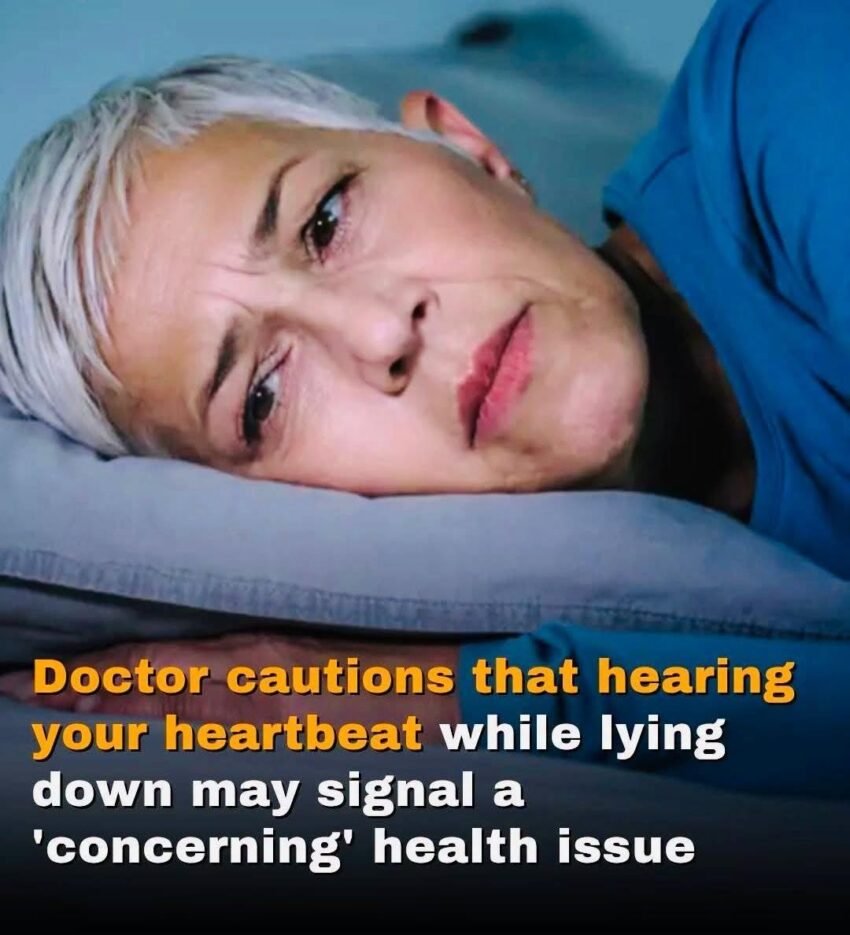
Hearing your heartbeat while lying down is a fairly common experience for many people, and most of the time it is not a sign of a serious medical problem. However, if it is new, persistent, or accompanied by other symptoms, it can sometimes indicate an underlying health condition that deserves medical evaluation.
What does it mean to hear your heartbeat?
When you become aware of your heartbeat without intentionally checking your pulse, it’s called heart palpitations or increased heartbeat awareness. While lying down, especially on your left side, your heart is closer to the chest wall, making the heartbeat easier to feel or hear.
Some people also hear a rhythmic “whooshing” sound in one or both ears that matches their heartbeat. This is called pulsatile tinnitus.
Common, harmless causes
Many cases are not dangerous and may result from:
- Sleeping on your left side
- A quiet bedroom where body sounds are more noticeable
- Stress or anxiety
- Drinking too much caffeine
- Nicotine use
- Alcohol consumption
- Exercise shortly before bed
- Fever
- Pregnancy
In these situations, the sensation often comes and goes.
Medical conditions that may cause it
Several health conditions can make your heartbeat more noticeable:
1. High blood pressure
Elevated blood pressure can make the pulse feel stronger and more noticeable, particularly at night.
2. Heart rhythm disorders
Abnormal heart rhythms (arrhythmias) may cause:
- Racing heartbeat
- Fluttering sensation
- Skipped beats
- Irregular pulse
Examples include atrial fibrillation and other rhythm disturbances.
3. Heart valve disease
Problems with the heart valves can alter blood flow and increase awareness of heartbeats.
4. Overactive thyroid
hyperthyroidism speeds up the body’s metabolism and may cause:
- Rapid heartbeat
- Sweating
- Weight loss
- Tremors
- Difficulty sleeping
5. Anemia
Low red blood cell levels force the heart to work harder, making the heartbeat more noticeable.
Symptoms may include:
- Fatigue
- Weakness
- Shortness of breath
- Dizziness
6. Anxiety and panic disorders
Stress hormones increase heart rate and can make even a normal heartbeat seem unusually loud or forceful.
7. Obesity
Extra tissue around the chest and abdomen can sometimes change how heartbeats are perceived, especially while lying down.
8. Sleep apnea
obstructive sleep apnea can place extra strain on the heart and contribute to nighttime palpitations.
When hearing your heartbeat in your ear
If you hear a rhythmic sound in your ear that matches your pulse, possible causes include:
- High blood pressure
- Narrowing of blood vessels
- Anemia
- Ear disorders
- Increased blood flow during pregnancy
- Rarely, abnormalities involving blood vessels near the ear
A healthcare professional may recommend hearing tests or imaging if this symptom is persistent.
Warning signs that need urgent medical care
Seek immediate medical attention if hearing your heartbeat is accompanied by:
- Chest pain
- Severe shortness of breath
- Fainting or loss of consciousness
- Sudden confusion
- Blue lips or skin
- A very rapid or irregular heartbeat that does not settle
- Symptoms of a stroke, such as facial drooping, arm weakness, or difficulty speaking
These symptoms could indicate a serious heart or circulation problem.
When to schedule a doctor’s appointment
Arrange a medical evaluation if:
- The symptom is new and persistent.
- It occurs frequently or wakes you from sleep.
- It is accompanied by dizziness, fatigue, or swelling in the legs.
- You have a history of heart disease, high blood pressure, thyroid disease, or anemia.
- You hear a heartbeat-like sound in one ear repeatedly.
How doctors evaluate the problem
A healthcare provider may perform:
- A physical examination
- Blood pressure measurement
- Blood tests (including thyroid function and anemia screening)
- electrocardiogram
- A Holter monitor to record heart rhythm over 24–48 hours or longer
- An ultrasound of the heart (echocardiogram)
- Additional imaging if pulsatile tinnitus is suspected
Tips that may help
If no serious cause is found, these measures may reduce symptoms:
- Limit caffeine, especially in the evening.
- Avoid nicotine and excessive alcohol.
- Stay well hydrated.
- Maintain a healthy weight.
- Manage stress through relaxation techniques.
- Exercise regularly, unless your doctor advises otherwise.
- Treat underlying conditions such as high blood pressure or thyroid disease.
Bottom line
Simply noticing your heartbeat while lying down is often a normal phenomenon, especially in a quiet environment or when lying on your left side. However, if the sensation is new, persistent, worsening, or associated with symptoms such as chest pain, fainting, significant shortness of breath, or an irregular heartbeat, it should be evaluated by a healthcare professional. A medical assessment can help determine whether the cause is harmless or related to a condition requiring treatment.