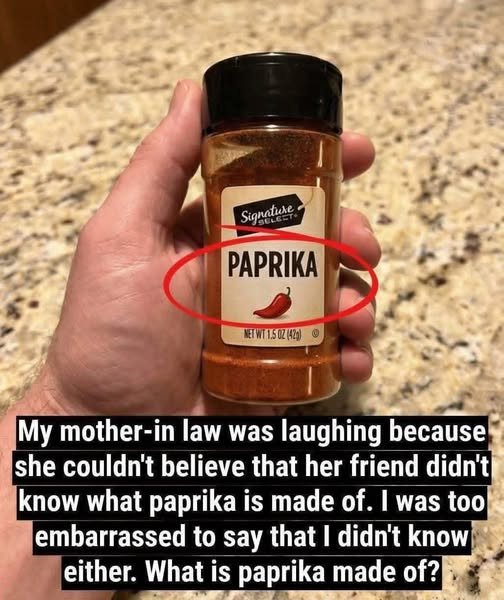
Paprika is a spice that many people use for color and flavor, but a surprising number of people don’t know what it is actually made from. Paprika is made from dried and ground peppers — specifically varieties of the Capsicum annuum plant, the same plant family that includes bell peppers and chili peppers.
What is paprika made from?
Paprika is produced by:
- Growing peppers
- Farmers grow special paprika pepper varieties that are usually mild and red.
- These peppers are related to sweet peppers, pimentos, and some chili peppers.
- The peppers are allowed to ripen fully until they become bright red because ripe peppers contain more pigments and flavor compounds.
- Harvesting and drying
- The ripe red peppers are picked and dried.
- Drying removes the water while preserving the natural color and flavor.
- Traditional methods may involve air-drying or sun-drying, while modern production often uses controlled drying systems.
- Grinding into powder
- The dried peppers are crushed and ground into a fine powder.
- The seeds and inner parts may be removed or included depending on the type of paprika being produced.
- The final powder is the familiar red-orange spice called paprika.
Is paprika made from tomatoes or a special root?
No. A common misconception is that paprika comes from a completely different plant, like a root or a seed. It does not.
Paprika is simply dried pepper powder.
Types of paprika
Different peppers and processing methods create different kinds of paprika:
1. Sweet paprika
- The most common type.
- Made from mild, sweet red peppers.
- Adds a bright red color and a gentle pepper flavor.
- Usually not spicy.
2. Hot paprika
- Made using hotter pepper varieties or by including more spicy parts of the pepper.
- Adds heat along with color.
- Common in dishes where a mild chili flavor is wanted.
3. Smoked paprika
- Also called Spanish paprika in many places.
- Peppers are dried over wood smoke, often oak.
- Gives food a smoky, barbecue-like flavor.
- Popular in Spanish dishes such as those using chorizo and in many modern recipes.
4. Hungarian paprika
Hungary is famous for paprika production, and Hungarian varieties range from mild and sweet to hot. It is a major ingredient in dishes such as goulash.
Why is paprika red?
The red color comes mainly from natural pigments called carotenoids, especially:
- Capsanthin
- Capsorubin
These compounds are also responsible for the red-orange color of many ripe peppers.
Does paprika contain capsaicin?
Sometimes.
Capsaicin is the compound that creates the burning sensation in chili peppers.
- Sweet paprika contains very little capsaicin.
- Hot paprika contains more.
- The heat level depends on the pepper variety and how much of the spicy parts are used.
Where did paprika come from?
Although paprika is strongly associated with Hungary and Spain today, the peppers used to make paprika originally came from the Americas.
After European exploration in the 15th and 16th centuries, peppers spread around the world. They became especially important in:
- Hungary
- Spain
- Turkey
- parts of the Balkans
Hungary later developed paprika into a major culinary ingredient.
What does paprika taste like?
Paprika flavor depends on the type:
- Sweet paprika: mild, slightly sweet, earthy, fruity
- Hot paprika: peppery and spicy
- Smoked paprika: smoky, deep, and savory
Many people mainly notice paprika for its color rather than its flavor because some commercial paprikas are chosen more for coloring than taste.
Common foods that use paprika
Paprika is used in:
- Goulash
- Chicken paprikash
- Deviled eggs
- Potato dishes
- Soups and stews
- Rice dishes
- Sausages
- Spice rubs for meat
- Roasted vegetables
- Hummus toppings
- Sauces
Is paprika the same as chili powder?
No.
They are related but different:
- Paprika: usually pure ground dried peppers.
- Chili powder: often a blend of ground chilies plus other spices such as cumin, garlic, oregano, and salt.
Some paprika can be spicy, but most paprika is much milder than typical chili powder.
Nutritional information
Paprika contains small amounts of:
- Vitamin A (especially from carotenoids)
- Vitamin E
- Iron
- Antioxidants
However, because people usually use only small amounts, it is mainly valued for flavor and color rather than nutrition.
In short: paprika is not a mysterious red powder — it is simply dried, ground red peppers. The variety of pepper and the way it is processed determine whether the paprika is sweet, spicy, or smoky