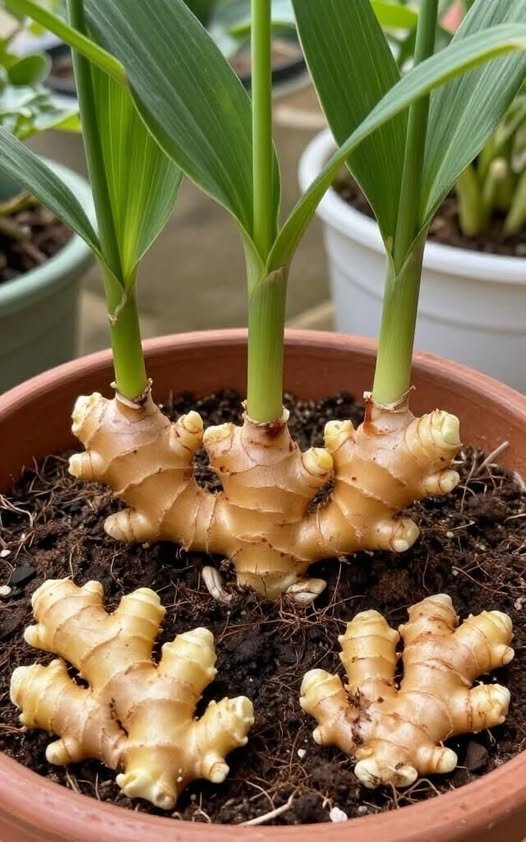
Yes, one healthy ginger root (rhizome) can be turned into a continuous indoor harvest if you keep replanting pieces of the growing rhizome. Ginger is not grown from seeds in most home situations; it grows by producing new underground stems called rhizomes.
Method: Growing an Endless Indoor Ginger Supply
1. Choose the right ginger root
- Buy a fresh organic ginger root from a grocery store or nursery.
- Look for:
- Plump, firm rhizomes
- Smooth skin
- Several visible “eyes” (small buds or bumps)
- No mold, wrinkles, or soft spots
Best time: Late winter or early spring, when ginger naturally begins sprouting.
2. Prepare the ginger piece
- Cut the ginger rhizome into pieces:
- Each piece should be about 5–8 cm (2–3 inches) long.
- Each piece must have at least 1–2 healthy buds (eyes).
- Let cut pieces dry for:
- 1–3 days
- This helps prevent rotting.
Optional:
- Dust the cut surfaces lightly with cinnamon powder as a natural antifungal measure.
3. Sprouting before planting (optional but faster)
Place ginger pieces:
- On a shallow tray
- In a warm, slightly humid place
- With buds facing upward
Keep them lightly moist.
After 1–3 weeks, small green shoots may appear.
4. Planting indoors
Container
Use a wide, shallow pot because ginger grows sideways.
Recommended:
- Depth: 25–30 cm (10–12 inches)
- Width: 30–45 cm (12–18 inches)
- Drainage holes are essential
Soil mix
Use loose, rich soil:
- 50% compost or quality potting soil
- 30% coco coir or peat moss
- 20% perlite/sand for drainage
Ginger hates waterlogged soil.
5. Planting steps
- Fill the pot with soil.
- Place ginger piece:
- Buds facing upward
- About 2–5 cm (1–2 inches) below soil surface
- Cover lightly with soil.
- Water gently.
Keep temperature:
- Ideal: 20–30°C (68–86°F)
6. Indoor care
Light
Ginger likes:
- Bright indirect sunlight
- A sunny window with filtered light
Avoid:
- Harsh direct afternoon sun, which can burn leaves.
Watering
Keep soil:
- Slightly moist
- Never constantly wet
Water when the top 2–3 cm of soil feels dry.
Too much water causes:
- Root rot
- Yellow leaves
- Bad smell
Feeding
Every 3–4 weeks during active growth:
Use:
- Compost tea
- Worm castings
- Balanced organic fertilizer
Ginger is a heavy feeder because the rhizome stores nutrients.
7. Harvesting for an endless cycle
Baby ginger harvest
After:
- 4–6 months
You can gently remove small sections.
Steps:
- Move soil aside.
- Cut a piece from the outer edge.
- Leave the main plant growing.
- Cover the remaining rhizome again.
The plant continues producing.
Full harvest
After:
- 8–10 months (sometimes longer indoors)
Signs:
- Leaves turn yellow
- Growth slows
- Plant begins dormancy
Remove the entire rhizome, then:
- Save the healthiest pieces with buds.
- Replant them.
- Continue the cycle.
The “Never Buy Ginger Again” Cycle
Example:
Month 0
- Plant one ginger piece
⬇️
Month 3–4
- Plant produces several new rhizome branches
⬇️
Month 6–10
- Harvest some ginger while leaving sections growing
⬇️
Replant saved pieces
⬇️
New plants grow
⬇️
Repeat forever indoors.
Tips for maximum production
✅ Use a large container
✅ Give warmth and humidity
✅ Add compost regularly
✅ Harvest only outer pieces for continuous supply
✅ Keep 2–3 pots growing at different stages
✅ Rotate pots for even growth
A single ginger root can realistically become many plants over time, but it is not truly infinite from one original root—the cycle continues because each harvest produces new planting material.