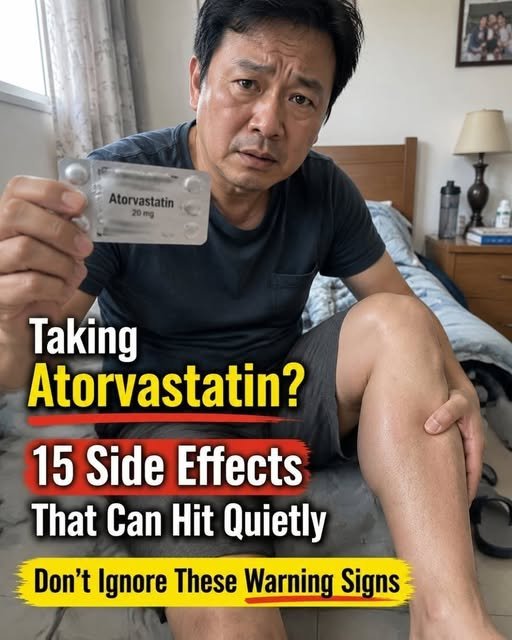
Here are 15 subtle side effects that may occur with atorvastatin, along with what is known about them.
1. Mild Muscle Aches or Soreness
This is the most commonly reported side effect.
Symptoms:
- Aching muscles
- Mild stiffness
- Tenderness
- Feeling sore after normal activity
Why it happens:
Statins can affect muscle cells, although the exact mechanism is not fully understood.
When to seek medical care:
- Severe pain
- Weakness that makes daily activities difficult
- Dark or cola-colored urine (could indicate a rare but serious muscle injury)
2. Fatigue or Low Energy
Some people report feeling more tired than usual.
Possible symptoms:
- Low stamina
- Daytime sleepiness
- Reduced exercise tolerance
Possible reasons:
- Muscle effects
- Individual response to the medication
- Other underlying medical conditions
Fatigue is not among the most common side effects, but it has been reported.
3. Mild Memory Problems or “Brain Fog”
A small number of people have reported:
- Forgetfulness
- Difficulty concentrating
- Feeling mentally slower
Current research suggests that if these symptoms occur, they are generally uncommon and often improve after discontinuing or changing therapy. Large studies have not consistently shown that statins cause long-term cognitive decline.
4. Digestive Upset
Digestive symptoms are relatively common, especially when first starting treatment.
These may include:
- Nausea
- Indigestion
- Gas
- Stomach discomfort
- Diarrhea
- Constipation
These symptoms often improve after a few weeks.
5. Mild Headaches
Some people experience headaches during the first days or weeks.
Usually:
- Mild
- Temporary
- Improve as the body adjusts
Persistent or severe headaches should be evaluated for other causes.
6. Sleep Disturbances
Some users report:
- Difficulty falling asleep
- Frequent waking
- Vivid dreams
Research findings are mixed, and it’s not certain that atorvastatin directly causes these problems.
7. Joint Pain
Some people notice:
- Achy knees
- Shoulder discomfort
- Wrist pain
- General joint stiffness
Joint pain has been reported with statins, although it is less common than muscle symptoms.
8. Mild Elevation in Blood Sugar
Statins can slightly increase blood glucose levels.
This is more likely in people who already have risk factors for diabetes, such as:
- Obesity
- Prediabetes
- Family history of diabetes
Despite this small increase in risk, the cardiovascular benefits of statins usually outweigh this concern for people who need them.
9. Increased Liver Enzymes
Atorvastatin can occasionally cause elevated liver enzymes.
Usually:
- No symptoms
- Found on blood tests
Rarely, liver injury can occur.
Possible warning signs include:
- Yellowing of the skin or eyes
- Dark urine
- Severe fatigue
- Persistent nausea
- Upper right abdominal pain
These symptoms warrant prompt medical evaluation.
10. Mild Muscle Weakness
Rather than pain, some people experience:
- Difficulty climbing stairs
- Trouble lifting objects
- Reduced grip strength
Persistent weakness should be assessed by a healthcare professional.
11. Skin Rash or Itching
Occasionally people develop:
- Mild rash
- Itchy skin
- Hives
Seek urgent medical care if a rash is accompanied by swelling of the face, lips, tongue, or difficulty breathing, as this could indicate an allergic reaction.
12. Reduced Exercise Performance
Some individuals notice:
- Earlier fatigue during workouts
- Slower recovery
- Decreased endurance
Many people remain able to exercise normally while taking atorvastatin, but some may notice changes.
13. Tingling or Numbness
Rarely reported symptoms include:
- Pins-and-needles sensations
- Mild numbness in the hands or feet
These symptoms have many possible causes, including diabetes, vitamin deficiencies, and nerve disorders, so they should be evaluated rather than assumed to be medication-related.
14. Mood Changes
A small number of people report:
- Irritability
- Feeling down
- Anxiety
Evidence linking statins to mood changes is limited and inconsistent. If you experience significant mood symptoms, discuss them with your healthcare provider.
15. Sexual Side Effects
Some people report:
- Reduced libido
- Erectile difficulties
Research findings are mixed. Cardiovascular disease itself is also a common cause of sexual dysfunction, making it difficult to determine whether symptoms are due to the medication or underlying health conditions.
Rare but Serious Side Effects
Although uncommon, seek immediate medical attention if you experience:
- Severe muscle pain or weakness with dark urine (possible muscle breakdown)
- Yellowing of the skin or eyes
- Severe allergic reactions (swelling, difficulty breathing)
- Persistent severe abdominal pain
- Unexplained fever with muscle symptoms
Factors That Increase the Risk of Side Effects
You may be more likely to experience side effects if you:
- Are over age 65
- Take higher doses of atorvastatin
- Have kidney or liver disease
- Have untreated hypothyroidism
- Take certain medications that interact with atorvastatin
- Drink large amounts of alcohol
- Consume large amounts of grapefruit or grapefruit juice, which can increase atorvastatin levels in the body
What You Can Do
If you’re taking atorvastatin:
- Take it exactly as prescribed.
- Tell your healthcare provider about all prescription medications, over-the-counter medicines, and supplements you use to check for interactions.
- Report persistent muscle pain, weakness, or unusual symptoms promptly.
- Attend recommended follow-up appointments and blood tests if advised.
- Do not stop atorvastatin without consulting your healthcare provider, as stopping it suddenly may increase your risk of heart attack or stroke if it was prescribed for cardiovascular protection.
The Bottom Line
Atorvastatin is one of the most extensively studied cholesterol-lowering medications and has been shown to significantly reduce the risk of heart attacks, strokes, and cardiovascular death in people who need it. While side effects can occur, serious complications are uncommon, and for most patients the benefits of treatment outweigh the risks. If you develop bothersome or concerning symptoms, your healthcare provider may be able to adjust the dose, switch to another statin, or recommend an alternative treatment rather than stopping cholesterol management altogether.