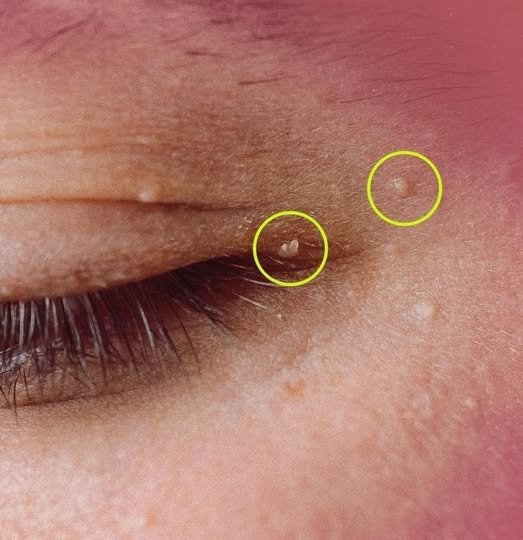
Milia are tiny, white or yellowish bumps that form when keratin (a skin protein) becomes trapped just beneath the surface of the skin. Although they’re often called “fat cysts,” they are not filled with fat. Milia are harmless, don’t usually hurt, and are very common around the eyes, cheeks, nose, forehead, and sometimes the chest or genital area.
What Are Milia?
Milia are small cysts, usually 1–2 mm in diameter, that develop when dead skin cells become trapped instead of naturally shedding. They are firm, round, and don’t pop like pimples.
Types of Milia
- Primary Milia
- Occur naturally in children and adults.
- Often appear around the eyes and cheeks.
- Secondary Milia
- Develop after skin injury such as:
- Burns
- Blisters
- Laser treatments
- Chemical peels
- Severe sun damage
- Develop after skin injury such as:
- Neonatal Milia
- Common in newborn babies.
- Usually disappear within a few weeks without treatment.
What Causes Milia?
Several factors can contribute:
- Natural buildup of keratin
- Aging skin
- Sun damage
- Heavy skincare products
- Oil-based creams
- Long-term steroid cream use
- Skin trauma or burns
- Certain rare genetic disorders
Symptoms
Milia typically:
- Look like tiny white or cream-colored bumps
- Feel hard to the touch
- Are painless
- Don’t itch
- Don’t become inflamed unless irritated
Unlike acne, they usually have no redness or black opening.
Can You Pop Milia?
No.
Unlike pimples, milia don’t have an opening to the skin. Squeezing them can:
- Damage the skin
- Cause infection
- Lead to scarring
- Make pigmentation worse
Best Ways to Get Rid of Milia
1. Leave Them Alone
Many milia disappear naturally over weeks or months.
Best for:
- Babies
- Newly formed milia
- Small, isolated bumps
2. Gentle Exfoliation
Removing dead skin cells may help prevent new milia.
Use products containing:
- Alpha hydroxy acids (AHAs)
- Glycolic acid
- Lactic acid
- Beta hydroxy acid (BHA)
- Salicylic acid (more helpful for oily skin)
Exfoliate only 1–3 times per week to avoid irritation.
3. Retinoids
Topical retinoids speed up skin cell turnover.
Examples include:
- Adapalene
- Tretinoin (prescription)
- Retinol (over the counter)
Benefits:
- Helps existing milia gradually resolve
- Prevents new ones
- Improves skin texture
Retinoids can irritate the skin, especially around the eyes. Use sunscreen daily when using them.
4. Professional Extraction
This is the fastest and most effective treatment.
A dermatologist will:
- Clean the area
- Use a sterile needle or tiny blade to create a small opening
- Gently remove the keratin plug
The procedure usually takes only a few minutes.
5. Electrocautery
A small electrical current destroys the cyst.
Useful for:
- Multiple milia
- Persistent lesions
Healing usually takes several days.
6. Laser Treatment
Some lasers can remove stubborn or widespread milia.
Often recommended when:
- Many lesions are present
- Other treatments have failed
7. Cryotherapy
Liquid nitrogen freezes the lesion.
Less commonly used because of the risk of temporary skin discoloration, especially in darker skin tones.
Home Remedies: Do They Work?
Warm Compress
May soften the skin but usually does not remove milia.
Steam
Can make the skin more pliable but won’t dissolve the trapped keratin.
Honey
Has moisturizing and mild antibacterial properties but no strong evidence that it treats milia.
Castor Oil
No reliable scientific evidence supports its use for milia.
Tea Tree Oil
May irritate sensitive skin and has not been shown to effectively remove milia.
Skincare Routine to Help Prevent Milia
Morning
- Gentle cleanser
- Lightweight moisturizer
- Broad-spectrum SPF 30 or higher sunscreen
Evening
- Gentle cleanser
- Retinol or adapalene (if appropriate for your skin)
- Non-comedogenic moisturizer
Once or twice weekly:
- Gentle chemical exfoliant (AHA or BHA)
Avoid These Mistakes
- Picking or squeezing the bumps
- Using harsh scrubs
- Applying thick, heavy eye creams if you’re prone to milia
- Over-exfoliating
- Using expired cosmetics
Who Is Most Likely to Get Milia?
Risk factors include:
- Sun-damaged skin
- Older age
- Heavy skincare or makeup products
- Skin injuries
- Certain blistering skin conditions
- Genetic predisposition
When Should You See a Dermatologist?
Seek medical advice if:
- Milia persist for several months.
- There are many bumps or they keep recurring.
- They become red, painful, or swollen.
- You’re unsure whether the bumps are milia or another skin condition.
- They are affecting your vision or located very close to the eyelid margin.
How Long Do Milia Last?
- Newborns: Usually disappear within a few weeks.
- Adults: May last from several weeks to many months, and some can persist until professionally removed.
Can Milia Be Prevented?
While not always preventable, you can reduce your risk by:
- Using non-comedogenic skincare and makeup.
- Wearing sunscreen daily to limit sun damage.
- Exfoliating gently on a regular schedule.
- Avoiding overly heavy creams, especially around the eyes if you’re prone to milia.
- Following aftercare instructions after procedures such as laser treatments or chemical peels.
Frequently Asked Questions
Are milia dangerous?
No. Milia are benign and do not become cancerous.
Are milia the same as whiteheads?
No. Whiteheads are a form of acne caused by clogged pores with oil and bacteria. Milia are tiny keratin-filled cysts beneath the skin.
Can toothpaste remove milia?
No. Toothpaste is not a treatment for milia and may irritate or burn the skin.
Can children and adults both get milia?
Yes. Although very common in newborns, milia can occur at any age.
Key Takeaway
Milia are small keratin-filled cysts—not fat cysts—and they are not acne. They are usually harmless and may resolve on their own, but persistent milia are most effectively treated by a dermatologist through simple extraction. A gentle skincare routine that includes sun protection, appropriate exfoliation, and—when suitable—a retinoid can help reduce the chance of new milia forming. Avoid squeezing or picking at them, as this can lead to irritation, infection, or scarring.