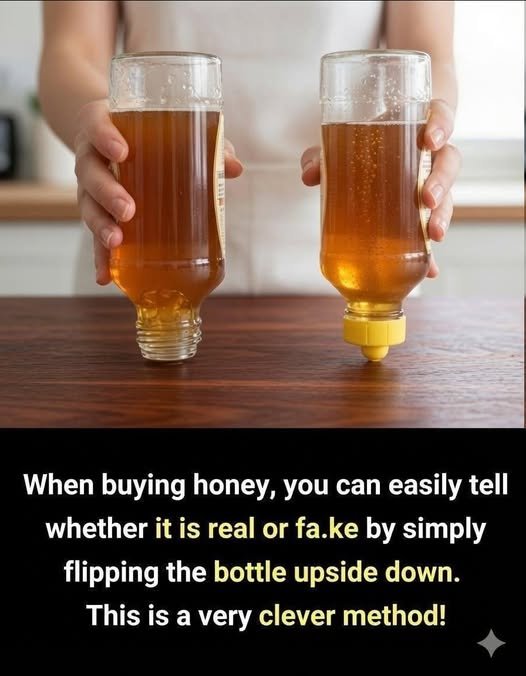
To check whether honey is real (pure) or fake (adulterated), you can use several home tests and also understand their limitations. Many fake honeys contain added sugar syrups (such as glucose syrup, corn syrup, rice syrup, or sugar solutions), and some pure honeys can still vary naturally in color, texture, and taste.
1. Read the label first
Check:
- Ingredients: Pure honey should list only “honey”. Avoid products listing glucose syrup, sugar syrup, fructose syrup, or additives.
- Source: Look for the beekeeper/producer name, origin, and batch information.
- Processing claims: “Raw,” “unfiltered,” or “organic” may indicate less processing, but these labels alone do not guarantee purity.
2. Water test (simple home test)
Method:
- Put a spoonful of honey into a glass of room-temperature water.
- Observe how it behaves.
Common observation:
- Pure, thick honey often settles slowly and forms a lump before dissolving.
- Diluted or syrup-added honey may spread and dissolve more quickly.
Important: This test is not definitive. Thick fake honey can also behave like pure honey.
3. Thumb test
Method:
- Put a small drop of honey on your thumb.
- Tilt your thumb.
Observation:
- Pure honey usually stays together and moves slowly.
- Honey with extra water may spread quickly.
Limitation: Thickness depends on honey type and temperature.
4. Flame test (often shared online, but unreliable)
Some people dip a cotton wick in honey and try to burn it.
- If it burns easily, they claim it is pure.
- If it does not, they claim it is fake.
Reality: This test is unreliable because moisture content, wick quality, and other factors affect the result. Do not use it as proof.
5. Crystallization test
Many people think crystallized honey is fake, but this is incorrect.
- Real honey often crystallizes over time because it naturally contains glucose.
- Some honeys crystallize quickly; others remain liquid for months.
Very smooth, permanently liquid honey may have been heated or filtered, but it is not automatically fake.
6. Smell and taste test
Pure honey often has:
- A natural floral or plant-like aroma
- A complex taste that changes after swallowing
- Slight acidity or a mild throat sensation
Fake honey often tastes:
- Very one-dimensional (just sweet)
- Like sugar syrup
However, taste varies greatly by flower source.
7. Bread test
Method:
- Spread honey on a piece of bread.
- Wait a few minutes.
Observation:
- Honey with higher water content may make bread soggy faster.
- Thick honey may keep the surface drier.
Limitation: Not a reliable purity test.
8. The most accurate tests (laboratory methods)
For true verification, laboratories check:
- C4 sugar test (stable isotope ratio analysis): Detects added sugar syrups from plants like corn or sugarcane.
- NMR (Nuclear Magnetic Resonance) testing: Detects many types of adulteration.
- Moisture content testing
- HMF (Hydroxymethylfurfural) levels: Shows overheating or aging.
- Pollen analysis: Helps verify botanical and geographic origin.
Signs that may suggest fake or poor-quality honey
- Extremely cheap price compared with other honey
- Strong caramel-like smell
- No natural aroma
- Fermented smell or bubbles (may indicate excess water)
- Ingredients other than honey
- Suspiciously identical texture and taste across different “varieties”
Best way to buy genuine honey
- Buy from a trusted beekeeper or known producer.
- Prefer honey with traceable origin.
- Buy small quantities and compare taste, smell, and crystallization over time.
- For expensive honey or commercial use, request a laboratory purity report.
Bottom line: Home tests can give clues, but none can prove honey is 100% pure. Laboratory testing is the only reliable confirmation.