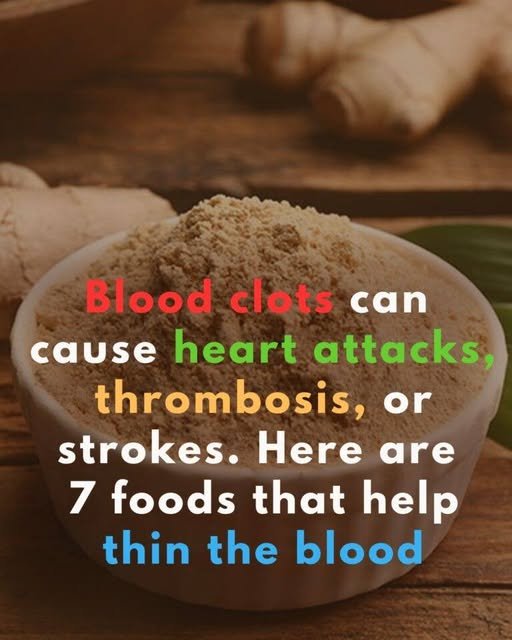
Here are 7 foods often discussed for their natural blood-thinning or circulation-supporting properties:
1. Garlic 🧄
How it may help:
- Garlic contains allicin, a sulfur compound released when garlic is crushed or chopped.
- Research suggests garlic may help reduce platelet aggregation (the tendency of platelets to clump together) and support cardiovascular health.
- It may also modestly help blood pressure and cholesterol levels.
How to use it:
- Add fresh crushed garlic to vegetables, soups, sauces, or salad dressings.
- Allow chopped garlic to sit for a few minutes before cooking to help form allicin.
Caution:
Large amounts of garlic supplements may increase bleeding risk, especially with blood-thinning medications.
2. Fatty Fish (Salmon, Sardines, Mackerel) 🐟
How it may help:
- Rich in omega-3 fatty acids (EPA and DHA).
- Omega-3s can influence platelet function and may reduce excessive clotting activity.
- They also help reduce inflammation and support healthy blood vessels.
Best choices:
- Salmon
- Sardines
- Trout
- Mackerel
- Herring
How to use it:
Aim for fish a couple of times per week if it fits your diet.
3. Ginger 🫚
How it may help:
- Ginger contains compounds such as gingerol, which may have anti-inflammatory and antiplatelet effects.
- It may support circulation by helping blood vessels function normally.
How to use it:
- Fresh ginger in tea
- Add grated ginger to stir-fries, soups, or smoothies
Caution:
High-dose ginger supplements may not be appropriate before surgery or with certain anticoagulants.
4. Turmeric (Curcumin) 🌿
How it may help:
- Curcumin, turmeric’s active compound, has anti-inflammatory properties.
- Some studies suggest it may influence platelet activity and support vascular health.
How to use it:
- Add turmeric to curries, soups, or roasted vegetables.
- Combine with black pepper to improve curcumin absorption.
Caution:
Turmeric supplements can interact with blood thinners and may increase bleeding risk in some people.
5. Berries (Blueberries, Strawberries, Raspberries) 🍓
How they may help:
- Rich in polyphenols and flavonoids.
- These plant compounds support blood vessel health and may reduce oxidative stress and inflammation.
- Some research suggests certain flavonoids may affect platelet activity.
How to use them:
- Eat fresh or frozen berries in oatmeal, yogurt, or smoothies.
6. Leafy Green Vegetables 🥬
(Spinach, kale, collard greens, Swiss chard)
How they may help:
- High in nitrates, which the body can convert into nitric oxide.
- Nitric oxide helps blood vessels relax and supports circulation.
- They also provide antioxidants and heart-supporting nutrients.
Important note:
Leafy greens are high in vitamin K, which plays a major role in blood clotting.
If you take warfarin:
Do not suddenly increase or decrease your intake of vitamin K–rich foods without discussing it with your healthcare provider. Consistency is usually the goal.
7. Dark Chocolate (High Cocoa Content) 🍫
How it may help:
- Dark chocolate with high cocoa content contains flavanols.
- These compounds may improve blood vessel function and may have mild effects on platelet activity.
Choose:
- Dark chocolate with around 70% cocoa or higher
- Eat moderate portions because it is calorie-dense.
Other foods commonly associated with healthy circulation
- Extra virgin olive oil
- Nuts (especially walnuts)
- Tomatoes (lycopene)
- Citrus fruits
- Green tea
- Onions
Foods and habits that can increase clotting risk or harm circulation
- Smoking
- Excess alcohol
- Highly processed diets
- Excess added sugar
- Long periods of inactivity
Important safety note
If you take blood thinners, have a bleeding disorder, are preparing for surgery, or have had a stroke, heart attack, deep vein thrombosis (DVT), or pulmonary embolism, do not intentionally add large amounts of “blood-thinning” foods or supplements without medical advice.
Foods can support cardiovascular health, but they cannot replace prescribed anticoagulant treatment.