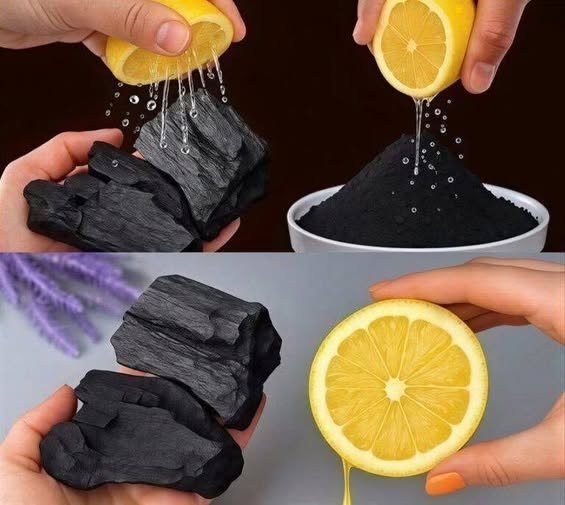
Here is a detailed explanation of the idea, what is supported, and what is not.
The Lemon and Charcoal Duo: What It Means
1. Lemon as a Natural Cleaning Agent
Lemon is commonly used in household cleaning because it contains:
- Citric acid — helps dissolve mineral deposits, soap scum, and some types of stains.
- Natural oils from the peel — provide fragrance and may help loosen grease.
- Mild antibacterial properties — lemon juice can reduce some microbes on surfaces, though it is not a replacement for disinfectants in situations requiring sterilization.
Common uses:
- Removing hard-water marks from faucets
- Freshening garbage disposals
- Cleaning cutting boards (with proper rinsing)
- Removing odors from kitchens
- Cutting through light grease
Example:
- A mixture of lemon juice and water can be used on stainless steel or glass surfaces.
- Lemon peel can be placed in vinegar to create a homemade cleaning solution.
Important: Lemon juice is acidic and can damage:
- Marble
- Granite
- Some natural stones
- Certain finishes on wood or metals
2. Activated Charcoal as a Household Helper
Activated charcoal is a highly porous material that can trap certain molecules through a process called adsorption.
Common household uses:
- Odor absorption
- Refrigerator odor control
- Shoe and closet deodorizing
- Moisture management when combined with other materials
Examples:
- Charcoal odor bags can reduce smells in small enclosed spaces.
- Activated charcoal filters are used in some air and water filtration systems.
Important: Activated charcoal does not “clean everything” or remove all toxins from a home environment. Its effectiveness depends on the substance being captured and the amount of charcoal available.
How the Duo Could Reduce Household Costs
A lemon-and-charcoal routine might lower expenses by replacing some purchased products:
| Traditional purchase | Possible lower-cost alternative |
|---|---|
| Air fresheners | Activated charcoal odor absorbers |
| Some surface cleaners | Diluted lemon-based cleaners |
| Refrigerator deodorizers | Charcoal bags |
| Some drain fresheners | Lemon peel treatments |
The potential savings depend heavily on:
- How many commercial products a household replaces
- Local prices
- How often products are used
- Whether homemade alternatives actually meet the household’s cleaning needs
About the “60 Percent Savings” Claim
A claim that this method “slashed household expenses by 60 percent” would require:
- A defined household budget
- A comparison period
- A controlled test
- Evidence showing which expenses were reduced
Without such data, a 60% reduction should not be considered a proven result. Some households may save substantially by reducing purchases of cleaners and deodorizers, while others may see only modest savings.
A Practical Lemon + Charcoal Household Routine
Kitchen
- Use diluted lemon solution for suitable surfaces.
- Place activated charcoal near odor sources:
- Refrigerator
- Trash area
- Pantry
Bathroom
- Use lemon-based solutions for soap residue on acid-safe surfaces.
- Use charcoal packs for damp or musty areas.
Maintenance
- Replace or recharge charcoal products according to manufacturer instructions.
- Avoid using acidic lemon solutions on sensitive materials.
Bottom Line
The lemon and charcoal combination is a low-cost household maintenance strategy, and both ingredients have legitimate uses. However, there is no widely established expert-validated evidence showing that this duo alone reduces household expenses by exactly 60 percent. The savings claim appears more like a marketing or anecdotal figure unless supported by a specific study.