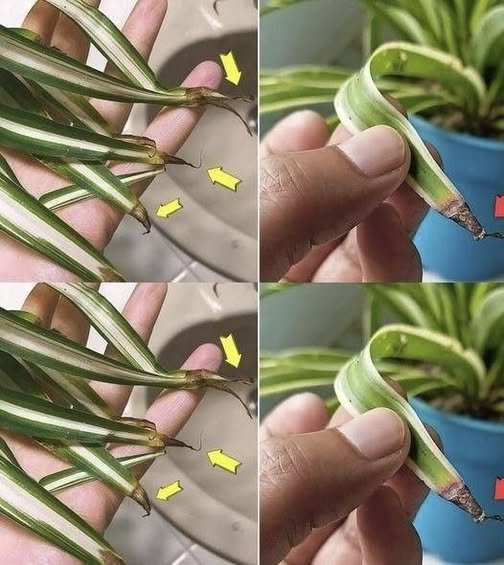
The browning of the tips of herbaceous plants (plants with soft, non-woody stems) is called leaf tip burn or tip necrosis. It occurs when the cells at the ends of leaves die because they are the farthest from the plant’s water and nutrient supply and are often the first to be affected by stress.
Causes of Brown Leaf Tips
1. Water Stress
Water stress is the most common cause.
Underwatering: When the soil remains dry for too long, the plant cannot transport enough water to the leaf tips. The tips dry out first, becoming brown and crispy.
Overwatering: Excess water fills the air spaces in the soil, reducing oxygen available to roots. Damaged roots cannot absorb water effectively, causing symptoms similar to drought, including brown tips.
Signs:
Dry, brittle tips indicate underwatering.
Yellowing leaves along with brown tips often suggest overwatering.
2. Low Humidity
Many herbaceous plants naturally grow in humid environments.
Dry indoor air or hot winds increase water loss from leaves.
The leaf tips lose water faster than the plant can replace it, causing dehydration and browning.
Examples: Ferns, peace lilies, and calatheas commonly develop brown tips in dry air.
3. Salt Accumulation
Excess fertilizer or minerals in irrigation water can accumulate in the soil.
High salt concentrations draw water out of root cells by osmosis.
Roots absorb less water, and leaf tips become dry and brown.
Common sources:
Over-fertilization
Hard water
Softened water containing sodium
Prevention:
Flush the soil periodically with clean water.
Apply fertilizer according to recommendations.
4. Nutrient Deficiencies
Plants require essential nutrients for healthy growth.
Deficiencies that may cause tip browning include:
Potassium (K): Brown leaf margins and tips.
Calcium (Ca): Death of growing tissues and young leaf tips.
Magnesium (Mg): Yellowing followed by browning in some species.
A soil test helps identify nutrient shortages.
5. Nutrient Toxicity
Too much fertilizer can also damage plants.
Excess nutrients, especially nitrogen, increase salt levels in the soil, leading to root injury and leaf tip burn.
6. Poor Water Quality
Water containing:
High fluoride
Chlorine
Excess sodium
High dissolved salts
can injure sensitive herbaceous plants, resulting in brown tips.
7. Temperature Stress
Extreme temperatures damage leaf tissues.
High temperatures increase water loss.
Frost damages cells, causing black or brown leaf tips.
Sudden temperature changes can also injure leaves.
8. Sunburn (Leaf Scorch)
Plants exposed to stronger sunlight than they are adapted to may develop scorched leaf tips.
Symptoms:
Brown, dry patches
Bleached areas
Crispy leaf margins
9. Root Problems
Healthy roots are essential for water and nutrient uptake.
Root damage can result from:
Root rot caused by fungi
Compacted soil
Root-bound pots
Mechanical injury during transplanting
Damaged roots cannot supply enough water to leaf tips.
10. Diseases
Certain fungi and bacteria infect leaves.
Examples:
Leaf blight
Bacterial leaf spot
Anthracnose
Symptoms often begin at the tips or margins and spread inward.
11. Pests
Sap-sucking insects reduce water flow within the plant.
Examples include:
Aphids
Spider mites
Thrips
Whiteflies
Feeding damage may lead to brown, dry tips.
12. Natural Aging
Older leaves naturally senesce (age).
Their tips may turn brown before the entire leaf dies and falls off. This is a normal part of the plant’s life cycle.
Why Do the Tips Brown First?
Leaf tips are:
Farthest from the roots and water supply.
Areas where transpiration (water loss) is greatest.
More exposed to heat, wind, and dry air.
When water or nutrients become limited, the tip tissues lose moisture first and die, resulting in brown discoloration.
Prevention
To reduce leaf tip browning:
Water plants consistently according to their needs.
Ensure pots and soils have good drainage.
Avoid over-fertilizing.
Use clean, good-quality water if possible.
Maintain appropriate humidity for the plant species.
Provide suitable light and temperature conditions.
Inspect regularly for pests and diseases.
Repot root-bound plants when necessary.
Test soil periodically to monitor nutrient levels and pH.
Summary
Brown tips on herbaceous plants usually indicate stress rather than a specific disease. The most common causes are improper watering, low humidity, fertilizer salt buildup, nutrient imbalances, poor water quality, temperature extremes, root damage, pests, or diseases. Because leaf tips are the most distant parts of the plant from the roots and experience the greatest water loss, they are typically the first tissues to show injury when the plant is under stress. Proper watering, balanced nutrition, healthy roots, and suitable growing conditions are the most effective ways to prevent leaf tip browning.