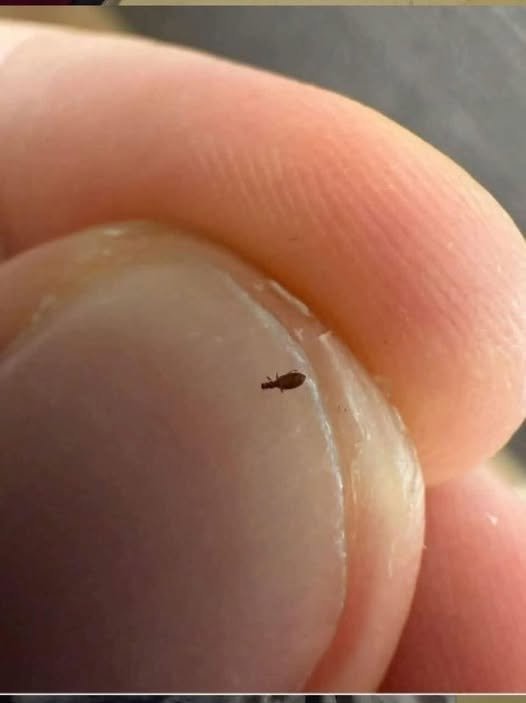
here are the most common possibilities:
1. Head louse (most likely if found in hair)
- Size: 2–3 mm long (about the size of a sesame seed).
- Color: Gray, tan, or brown; may appear darker after feeding.
- Appearance: Flattened body with six legs ending in claws that grip hair.
- Behavior: Crawls quickly but cannot jump or fly.
- Where found: Usually close to the scalp, especially behind the ears and at the back of the neck.
- Signs: Itchy scalp, scratch marks, and tiny white eggs (nits) firmly attached to hair shafts.
2. Flea
- Small (1–3 mm), dark brown, flattened from side to side.
- Can jump long distances.
- Usually found on pets rather than living in human hair.
3. Tick
- Rounder body with eight legs (not six).
- Attaches firmly to the skin rather than moving through hair.
- Can become much larger after feeding.
4. Booklouse
- Tiny (1–2 mm), pale or translucent.
- Feeds on mold, not people.
- May accidentally end up in hair but does not live there.
If it is a head louse
- Check for more lice and nits using a fine-toothed lice comb.
- Over-the-counter lice treatments or prescription medications can be effective.
- Wash recently used pillowcases, hats, and bedding in hot water and dry on high heat.
- Close contacts should be checked, but treatment is usually only needed if live lice are found.
If your friend has severe itching, signs of a skin infection, or if the infestation persists despite treatment, they should see a healthcare professional.
The best next step: Upload a sharp photo of the bug next to a coin or ruler if possible. I can examine its shape, legs, color, and size to help identify exactly what it is.