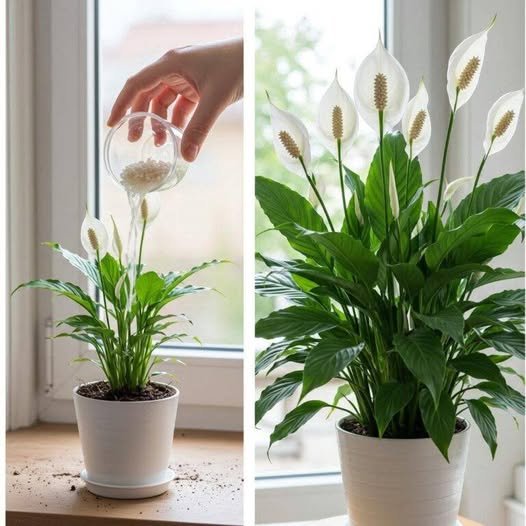
Here’s a detailed explanation of what actually helps a peace lily produce more flowers.
What Makes Peace Lilies Bloom?
Peace lilies bloom when they receive the right balance of:
- Bright, indirect sunlight
- Proper watering
- Moderate humidity
- Regular feeding
- Healthy roots
- Warm temperatures
Flowers are actually specialized leaves called spathes that surround the flower spike.
A Simple Homemade Plant Feed
One gentle homemade fertilizer is rice water.
Ingredients
- 1 glass (about 250 ml) of plain rice water
- Rice water should be unsalted and free of oil or spices.
How to Prepare
- Wash uncooked rice with clean water.
- Collect the first or second rinse.
- Let it sit for 12–24 hours (optional).
- Dilute with an equal amount of clean water (1:1).
How to Use
- Apply about 1 glass to the soil every 3–4 weeks.
- Do not use it every week, as excess nutrients can encourage mold or attract pests.
Rice water contains small amounts of:
- Potassium
- Phosphorus
- Magnesium
- Trace minerals
These nutrients can support overall plant health but are not a replacement for a balanced fertilizer.
Better Fertilizer Option
For more reliable flowering, use a balanced houseplant fertilizer such as:
- 10-10-10
- 20-20-20
Use it at half the recommended strength once every 4–6 weeks during spring and summer.
Light Requirements
Light is the most important factor for flowering.
- Place the plant near an east- or north-facing window.
- If using a south- or west-facing window, keep the plant behind a sheer curtain.
- Avoid direct afternoon sunlight, which can scorch the leaves.
A peace lily may survive in low light but often won’t bloom well there.
Watering
Water only when the top 1 inch (2.5 cm) of soil feels dry.
- Water thoroughly until excess drains out.
- Empty the saucer afterward.
- Avoid keeping the soil constantly soggy.
Signs:
- Drooping leaves usually mean it needs water.
- Yellow leaves often indicate overwatering.
Humidity
Peace lilies prefer 50–60% humidity or higher.
To increase humidity:
- Mist occasionally.
- Place a tray of pebbles and water beneath the pot (without the pot sitting directly in water).
- Use a humidifier if your indoor air is very dry.
Temperature
Ideal temperature:
- 65–80°F (18–27°C)
Avoid:
- Cold drafts
- Air conditioners blowing directly on the plant
- Temperatures below 55°F (13°C)
Repotting
Repot every 1–2 years if the roots become crowded.
Use a well-draining mix containing:
- Potting soil
- Perlite
- Bark or coco coir
A slightly root-bound peace lily can still bloom well, but severely crowded roots may reduce flowering.
Pruning
Remove:
- Brown leaves
- Spent flowers
Cut flower stems at the base after blooming to encourage the plant to direct energy into new growth.
Common Reasons a Peace Lily Doesn’t Bloom
- Too little light
- Too much nitrogen fertilizer
- Underfeeding
- Overwatering
- Pot is too large
- Plant is still immature
Realistic Expectations
A healthy indoor peace lily typically flowers:
- Once or twice a year naturally.
- With excellent care, some varieties may bloom more often, but continuous flowering all year is uncommon.
Key Takeaway
There is no proven “1-glass miracle” solution that keeps peace lilies blooming all year. Consistent care—especially providing bright, indirect light, proper watering, moderate humidity, and occasional balanced fertilizer—is the most reliable way to encourage frequent, healthy blooms. Homemade options like diluted rice water can be used occasionally as a mild supplement, but they should not be relied upon as the sole source of nutrition.