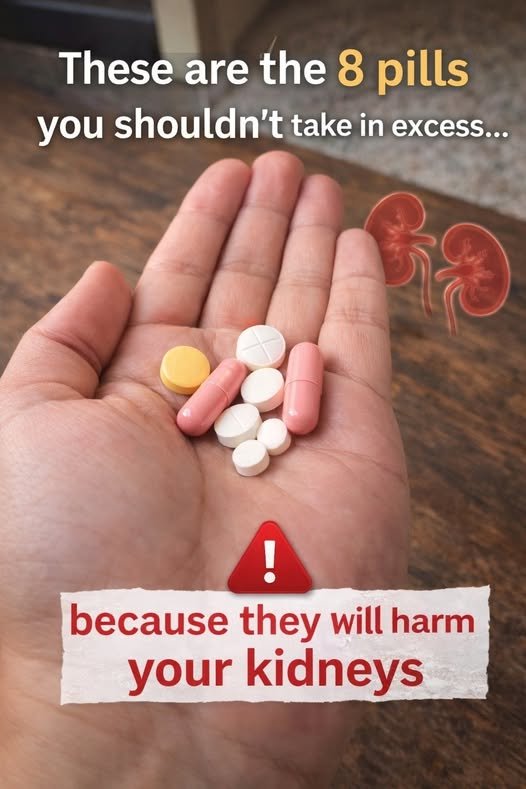
Here are 8 common medications to avoid taking in excess:
- Ibuprofen (Advil, Motrin)
- Belongs to a group called NSAIDs (nonsteroidal anti-inflammatory drugs).
- Taking too much or using it regularly can reduce blood flow to the kidneys, potentially causing kidney injury.
- Follow the recommended dose and avoid long-term use unless advised by a healthcare professional.
- Naproxen (Aleve)
- Another NSAID that can affect kidney function when used frequently or in high doses.
- The risk is higher in older adults and people with existing kidney disease.
- Diclofenac
- Available as tablets and some topical forms.
- Oral diclofenac can increase the risk of kidney problems if overused.
- Aspirin (high doses)
- Low-dose aspirin prescribed for heart protection is generally different from high-dose use for pain relief.
- Regular high doses may contribute to kidney damage in some people.
- Acetaminophen (Paracetamol)
- Usually considered safer for the kidneys than NSAIDs when taken as directed.
- However, taking more than the recommended daily dose can be dangerous, especially for the liver, and excessive long-term use may also increase the risk of kidney problems.
- Proton Pump Inhibitors (PPIs)
- Examples include omeprazole, esomeprazole, and pantoprazole.
- Long-term use has been associated with an increased risk of certain kidney conditions in some studies. These medicines should be used only as directed.
- Certain Antibiotics
- Some antibiotics, such as gentamicin and vancomycin, can be harmful to the kidneys, especially at high doses or when used for prolonged periods.
- Healthcare professionals usually monitor kidney function when these medicines are needed.
- Diuretics (“Water Pills”)
- Examples include furosemide and hydrochlorothiazide.
- Taking too much can lead to dehydration and reduced blood flow to the kidneys, increasing the risk of kidney injury.
Tips to protect your kidneys
- Always follow the prescribed or recommended dose.
- Stay well hydrated, especially during illness or hot weather.
- Avoid taking multiple NSAIDs at the same time.
- Tell your healthcare provider about all medicines and supplements you take.
- If you have chronic kidney disease, diabetes, high blood pressure, or are over 65, consult a healthcare professional before using over-the-counter pain relievers regularly.
- Have your kidney function checked if you’re taking medications that can affect the kidneys long term.
Seek medical attention immediately if you experience:
- Very little or no urine.
- Swelling in your legs, ankles, or face.
- Severe fatigue or confusion.
- Persistent nausea or vomiting.
- Blood in the urine.
- Severe pain after taking medication or signs of an overdose.
Using these medications as directed is generally safe for most people. Problems are more likely to occur with excessive doses, prolonged use, dehydration, or underlying kidney disease. If you’re concerned about a specific medication, I can explain its kidney risks and safer alternatives.