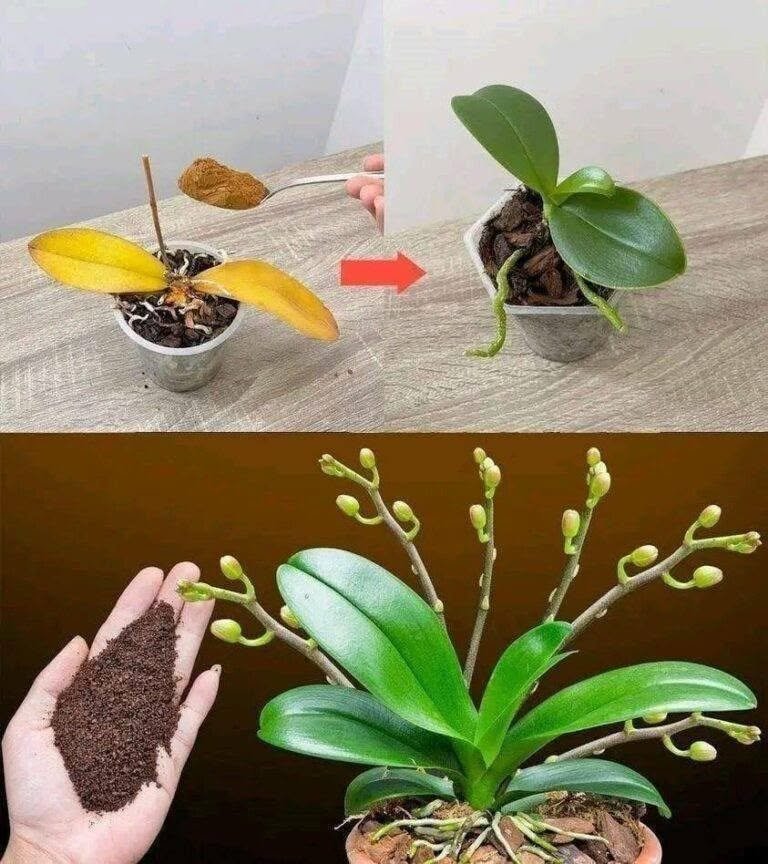
Here’s what actually influences orchid blooming:
1. Proper Light (Most Important)
- Orchids need bright, indirect sunlight.
- Too little light is one of the main reasons orchids fail to bloom.
- East-facing windows are often ideal for many orchid species, especially Phalaenopsis.
2. Correct Watering
- Water only when the potting medium is nearly dry.
- Overwatering can rot the roots and prevent flowering.
- Use pots with good drainage.
3. Fertilizer
A balanced orchid fertilizer is much more reliable than homemade “miracle” recipes.
- Use a fertilizer such as 20-20-20 or one specifically made for orchids.
- Apply at ¼ to ½ the recommended strength every 2–4 weeks during active growth.
- Flush the pot with plain water occasionally to remove salt buildup.
4. Temperature
Many orchids need a difference between day and night temperatures.
- Day: 20–29°C (68–85°F)
- Night: 15–18°C (59–65°F)
This temperature drop often encourages flower spikes.
5. Humidity
- Maintain 40–70% humidity.
- Use a humidity tray or room humidifier if the air is very dry.
6. Healthy Roots
Healthy green or silvery roots are essential.
- Repot every 1–2 years if the bark has decomposed.
- Remove dead or rotten roots.
7. Patience
Most orchids bloom naturally once or twice a year, with flowers lasting several weeks to a few months depending on the species.
What about the “one teaspoon” recipes?
Videos often recommend one teaspoon of:
- Rice water
- Coffee
- Sugar
- Baking soda
- Cinnamon
- Milk
- Garlic water
There is no scientific evidence that a teaspoon of any of these will cause an orchid to bloom rapidly. Some can even harm orchids by encouraging mould, attracting pests, or damaging roots if used repeatedly.
Best Practice
If you want abundant blooms:
- Give the orchid bright indirect light.
- Water correctly.
- Fertilize lightly but regularly with an orchid fertilizer.
- Maintain appropriate temperature and humidity.
- Keep the roots healthy.
These proven care practices are far more effective than any “miracle teaspoon” trick and give orchids the best chance of producing multiple healthy flower spikes over time.