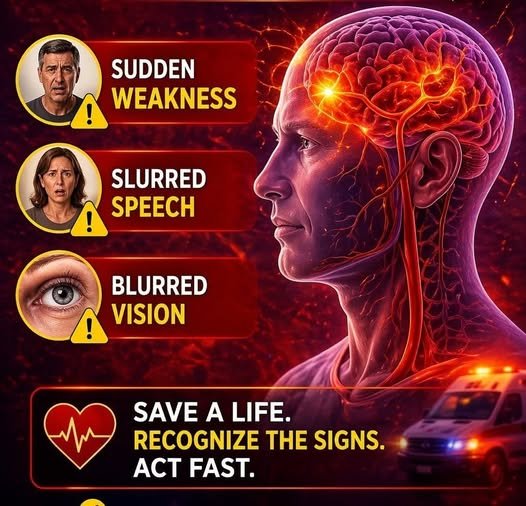
A stroke is a medical emergency that happens when blood flow to part of the brain is interrupted or when a blood vessel in the brain bursts. Brain cells begin to die within minutes, so recognising the warning signs and getting immediate medical help can save a person’s life and reduce the risk of permanent disability.
Top 10 Early Warning Signs of Stroke
1. Sudden Weakness or Numbness
One of the most common early signs is sudden weakness or numbness, especially on one side of the body.
- Face may droop on one side.
- One arm or leg may become weak or numb.
- The person may be unable to lift both arms evenly.
2. Difficulty Speaking or Understanding Speech
A stroke can affect the brain’s language centres.
- Slurred speech.
- Difficulty finding the right words.
- Trouble understanding what others are saying.
- Confused or nonsensical speech.
3. Sudden Vision Problems
A stroke may affect one or both eyes.
Symptoms include:
- Blurred vision.
- Double vision.
- Sudden loss of vision in one eye.
- Difficulty seeing clearly.
4. Severe Headache
A sudden, severe headache with no obvious cause can be a warning sign, particularly in strokes caused by bleeding in the brain.
It may be accompanied by:
- Nausea.
- Vomiting.
- Dizziness.
- Loss of consciousness.
5. Loss of Balance or Coordination
A person may suddenly:
- Stagger while walking.
- Feel dizzy.
- Lose coordination.
- Have trouble standing.
6. Sudden Confusion
The person may suddenly become:
- Disoriented.
- Unable to recognise familiar people.
- Unable to follow simple instructions.
- Mentally confused.
7. Facial Drooping
One side of the face may droop or feel numb.
A simple test is to ask the person to smile.
- One side of the smile may appear uneven.
- The eyelid or mouth may droop.
8. Trouble Walking
Stroke can affect movement and coordination.
Symptoms include:
- Difficulty walking.
- Frequent stumbling.
- Feeling as though the room is spinning.
- Weakness in the legs.
9. Sudden Difficulty Swallowing
Some people experience:
- Choking while eating or drinking.
- Pain or difficulty swallowing.
- Coughing after swallowing liquids.
10. Sudden Fatigue or Loss of Consciousness
Although less common, some strokes can cause:
- Extreme tiredness.
- Sudden drowsiness.
- Fainting.
- Loss of consciousness.
Remember the FAST Test
The FAST test helps identify a stroke quickly:
- F – Face: Ask the person to smile. Does one side droop?
- A – Arms: Ask them to raise both arms. Does one drift downward?
- S – Speech: Is their speech slurred or strange?
- T – Time: Call your local emergency services immediately. Every minute counts.
Risk Factors for Stroke
Common factors that increase the risk include:
- High blood pressure (the biggest risk factor)
- Diabetes
- Smoking
- High cholesterol
- Heart disease
- Obesity
- Physical inactivity
- Excessive alcohol consumption
- Older age
- Family history of stroke
What to Do if You Suspect a Stroke
- Call emergency medical services immediately.
- Note the exact time symptoms began.
- Do not give food, drink, or medication unless instructed by a healthcare professional.
- Keep the person comfortable while waiting for medical help.
- If they become unconscious and are not breathing normally, follow emergency dispatcher instructions.
Why Immediate Treatment Matters
Treatment is most effective when started quickly. For many strokes caused by a blocked blood vessel, clot-dissolving medication may be used within a limited time window (often up to 4.5 hours after symptoms begin in eligible patients). Other treatments, such as mechanical clot removal, may be possible for some patients within a longer window depending on brain imaging and medical assessment.
Key Takeaway
Stroke symptoms usually appear suddenly. Even if symptoms improve or disappear after a few minutes (which may indicate a transient ischaemic attack, or “mini-stroke”), they should never be ignored. Seek emergency medical care immediately, as rapid treatment greatly improves the chances of recovery and reduces the risk of long-term disability.