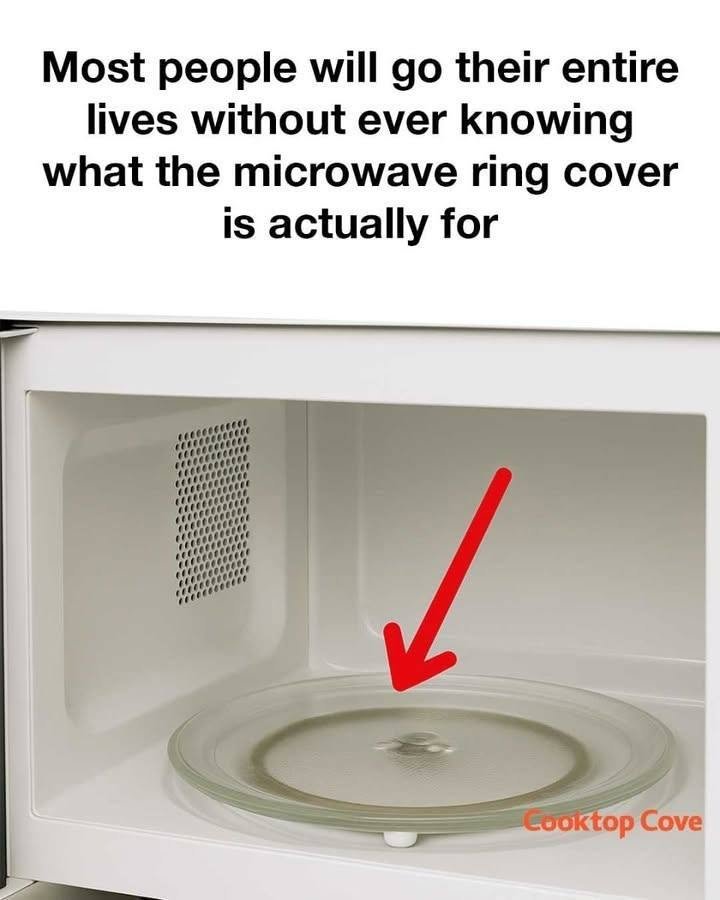
The ring cover inside a microwave is more accurately called the waveguide cover. Although it’s a small part, it has an important job in helping your microwave work safely and efficiently.
What is the waveguide cover?
The waveguide cover is a thin sheet, usually made from mica or a heat-resistant plastic, attached to one of the inside walls of the microwave oven. Behind it is the waveguide, a metal channel that directs microwave energy from the magnetron (the component that generates microwaves) into the cooking cavity.
What does it do?
The waveguide cover has several functions:
- Protects the waveguide: It prevents food splatters, grease, steam, and moisture from entering the waveguide, where they could damage the magnetron.
- Allows microwaves through: Mica is transparent to microwave energy, so the waves pass through the cover with very little loss.
- Prevents electrical arcing: By keeping food residue out of the waveguide, it reduces the risk of sparks (arcing) that can damage the oven.
Why does it sometimes burn or spark?
A waveguide cover can become damaged if:
- Food splashes are left on it and become carbonized.
- Grease builds up over time.
- The cover cracks, tears, or develops burn marks.
When this happens, microwaves can cause the damaged area to spark or burn further.
Can you replace it?
Yes. If the cover is burnt, cracked, or sparking, it should be replaced before using the microwave again. Replacement covers are inexpensive and are often made from sheets of mica that can be cut to match the original shape.
How do you maintain it?
- Wipe the inside of the microwave regularly with a damp cloth.
- Avoid using abrasive cleaners on the cover.
- Never operate the microwave if the waveguide cover is severely damaged or missing.
In short, the waveguide cover acts like a protective window: it lets microwave energy pass into the oven while shielding the sensitive internal components from food, grease, and moisture. Without it, the microwave is much more likely to suffer damage or electrical arcing.