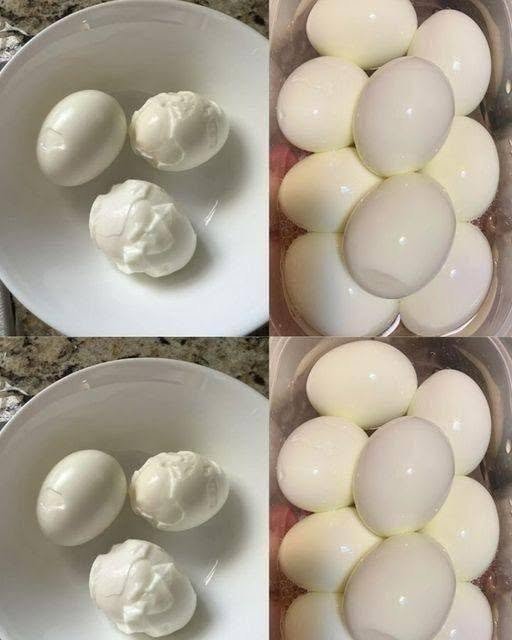
Why Hard-Boiled Eggs Are Sometimes Difficult to Peel
The eggshell has two membranes beneath it. When an egg is very fresh, the membrane clings tightly to the egg white, making peeling difficult. As eggs age, the pH of the egg white increases, causing the membrane to separate more easily from the white.
Best choice: Eggs that are 7–14 days old are usually the easiest to peel.
Step 1: Choose the Right Eggs
- Use eggs that are at least one week old.
- Store them in the refrigerator until you’re ready to cook them.
- Avoid extremely fresh eggs if easy peeling is your priority.
Step 2: Start with Boiling Water
Many cooks find that lowering cold eggs into already boiling water helps the egg white set quickly, reducing sticking.
Instructions
- Fill a saucepan with enough water to cover the eggs by about 1 inch (2.5 cm).
- Bring the water to a rolling boil.
- Reduce the heat slightly so the water isn’t violently bubbling.
- Carefully lower the eggs into the water using a spoon.
Step 3: Cook for the Right Amount of Time
For large eggs:
| Doneness | Time |
|---|---|
| Soft-boiled | 6–7 minutes |
| Medium | 8–9 minutes |
| Firm hard-boiled | 10–12 minutes |
For perfectly cooked hard-boiled eggs with creamy yolks:
Cook for about 11 minutes.
Avoid cooking much longer than 12–13 minutes, which can produce a gray-green ring around the yolk.
Step 4: Ice Bath (The Most Important Step)
Immediately transfer the eggs to a bowl filled with:
- Ice
- Cold water
Leave them for 10–15 minutes.
Benefits
- Stops the cooking process.
- Prevents overcooked yolks.
- Causes the egg to contract slightly, helping separate it from the shell.
Step 5: Crack the Egg Correctly
Instead of cracking just one spot:
- Tap the egg gently all over.
- Roll it lightly on the countertop.
- Create many small cracks.
This loosens the shell from the membrane.
Step 6: Peel Under Running Water
Running cool water between the shell and the egg helps lift the membrane away.
Another option is to peel the egg while it’s submerged in a bowl of water.
Step 7: Start from the Wide End
The wider end of the egg usually contains a small air pocket.
Begin peeling there because it’s often easier to get underneath the membrane.
Extra Tricks That Many People Use
Add Baking Soda
Add ½ teaspoon baking soda to the cooking water.
Some people find this raises the water’s alkalinity, making shells easier to remove.
Add Vinegar
Add 1 tablespoon white vinegar to the water.
Vinegar won’t always make peeling easier, but it helps prevent egg whites from leaking out if a shell cracks during cooking.
Steam Instead of Boil
Steaming eggs for 12–13 minutes is another popular method.
Many cooks find steamed eggs peel even more easily than boiled eggs.
Best Foolproof Method
- Use eggs that are 7–14 days old.
- Bring water to a boil first.
- Lower eggs into the boiling water.
- Cook for 11 minutes.
- Transfer immediately to an ice bath for 10–15 minutes.
- Crack all over.
- Peel under running water, starting from the wide end.
Common Mistakes
- Using very fresh eggs.
- Skipping the ice bath.
- Overcooking the eggs.
- Peeling while the eggs are still warm without cooling them first.
- Cracking only one small section of the shell.
Frequently Asked Questions
Should eggs be room temperature before boiling?
Not necessarily. Cold eggs from the refrigerator work well if you lower them gently into the boiling water to reduce the chance of cracking.
Why do my yolks turn green?
This happens when eggs are overcooked or cooled too slowly. Using the correct cooking time and an immediate ice bath helps prevent it.
Can hard-boiled eggs be stored?
Yes. Keep them refrigerated. Unpeeled hard-boiled eggs generally stay fresh for about one week. Peeled eggs should also be refrigerated and are best eaten within a few days.
Summary
The most reliable way to get perfectly peeled hard-boiled eggs is to:
- Use eggs that are about 1–2 weeks old.
- Place them into boiling water.
- Cook for around 11 minutes.
- Cool them immediately in an ice bath.
- Crack the shell all over and peel under running water, starting from the wide end.
Following these steps consistently gives smooth, intact eggs that are ideal for salads, deviled eggs, sandwiches, or meal prep.