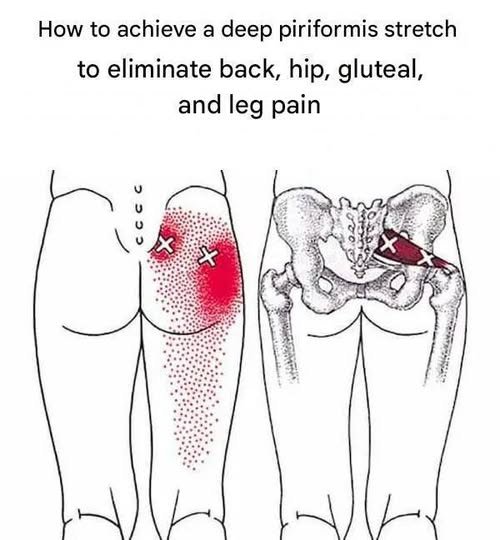
If you have piriformis syndrome, stretching can help reduce pressure on the sciatic nerve, improve hip mobility, and relieve pain. The key is to stretch gently—forcing the stretch can worsen symptoms. Aim to hold each stretch for 20–30 seconds, repeat 2–4 times, and perform them 1–2 times daily, as long as your symptoms don’t worsen.
What Is Piriformis Syndrome?
The piriformis is a small muscle located deep in the buttock. It helps rotate and stabilize the hip. Piriformis syndrome occurs when this muscle becomes tight, inflamed, or spasms, irritating the nearby sciatic nerve.
Common symptoms
- Deep pain in the buttock
- Pain that may radiate down the back of the thigh
- Pain when sitting for long periods
- Pain while climbing stairs or squatting
- Tingling or numbness in the leg (sometimes)
1. Figure-4 Stretch (Most Effective)
How to do it
- Lie on your back with both knees bent.
- Cross the affected leg so the ankle rests on the opposite thigh.
- Reach behind the supporting thigh.
- Pull the thigh toward your chest.
- Keep your head and shoulders relaxed.
You should feel
A stretch deep in the buttock and hip.
Hold
20–30 seconds
Repeat
3 times
Avoid
- Pulling too hard
- Lifting your hips off the floor
2. Knee-to-Opposite-Shoulder Stretch
This directly targets the piriformis.
Steps
- Lie flat on your back.
- Bend the affected knee.
- Grab the knee with both hands.
- Pull it toward the opposite shoulder.
- Keep the other leg straight.
Hold
30 seconds
Repeat
3–5 times
Feel
Stretch in the outer hip and buttock.
3. Seated Piriformis Stretch
Good if getting onto the floor is difficult.
Steps
- Sit in a sturdy chair.
- Place the affected ankle on the opposite knee.
- Keep your back straight.
- Lean forward slowly from the hips.
Hold
20–30 seconds
Repeat
3 times
4. Supine Piriformis Stretch
Steps
- Lie on your back.
- Bend both knees.
- Cross one leg over the other.
- Pull the lower knee toward your chest.
Hold
30 seconds
Repeat
3 times
5. Standing Piriformis Stretch
Steps
- Stand facing a sturdy surface.
- Place the affected ankle across the opposite thigh.
- Slowly bend the standing knee as if sitting into a chair.
- Keep your back straight.
Hold
20–30 seconds
Repeat 3 times.
6. Pigeon Pose (Yoga Stretch)
This provides a deeper stretch and should only be attempted if it feels comfortable.
Steps
- Start on your hands and knees.
- Bring one knee forward.
- Extend the other leg straight behind you.
- Lower your hips gently.
- Lean forward as tolerated.
Hold
20–60 seconds
Stop if
- Pain shoots down the leg
- You experience numbness or severe discomfort
7. Hip External Rotation Stretch
Steps
- Sit on the floor.
- Bend both knees.
- Rotate the affected leg inward.
- Lean forward gently.
Hold for 30 seconds.
8. Child’s Pose with Hip Shift
Steps
- Kneel on the floor.
- Sit back on your heels.
- Reach your arms forward.
- Shift your hips slightly toward the unaffected side.
Hold for 30 seconds.
9. Butterfly Stretch
Steps
- Sit on the floor.
- Bring the soles of your feet together.
- Hold your ankles.
- Lean forward gently.
Hold for 30 seconds.
10. Hip Flexor Stretch
Tight hip flexors can contribute to altered hip mechanics.
Steps
- Kneel on one knee.
- Place the opposite foot in front.
- Shift your weight forward.
- Keep your back upright.
Hold for 30 seconds.
Strengthening Exercises
Stretching alone may not fully resolve piriformis syndrome. Strengthening the surrounding muscles can improve hip stability and reduce strain on the piriformis.
Glute Bridge
- Lie on your back with knees bent.
- Lift your hips until your body forms a straight line from shoulders to knees.
- Lower slowly.
- Perform 10–15 repetitions for 2–3 sets.
Clamshell
- Lie on your side with knees bent.
- Keep your feet together.
- Lift the top knee without rotating your pelvis.
- Perform 10–15 repetitions for 2–3 sets.
Side-Lying Leg Raise
- Lie on your side with legs straight.
- Raise the top leg about 12–18 inches.
- Lower slowly.
- Perform 10–15 repetitions for 2–3 sets.
Bird Dog
- Start on your hands and knees.
- Extend one arm and the opposite leg.
- Hold for 3–5 seconds.
- Return and switch sides.
- Perform 10 repetitions per side.
Tips for Better Results
- Warm up with a 5–10 minute walk before stretching.
- Stretch slowly without bouncing.
- Breathe normally throughout each stretch.
- Avoid sitting for prolonged periods; stand up and move every 30–60 minutes.
- Ice the buttock for 15–20 minutes after activity if it becomes sore.
- Gradually return to sports or vigorous exercise as symptoms improve.
What to Avoid
Avoid activities that increase pain, such as:
- Aggressive stretching that causes sharp pain
- Sitting on hard surfaces for long periods
- Running uphill during a painful flare-up
- Heavy squats or lunges if they aggravate symptoms
- Wallets or bulky objects in your back pocket while sitting
When to Stop Stretching
Stop the exercise and seek medical advice if you experience:
- Sharp or severe pain
- Increasing numbness or weakness
- Loss of bowel or bladder control (this requires urgent medical evaluation)
- Pain that continues to worsen despite several weeks of conservative care
How Long Until You Feel Better?
With consistent stretching, strengthening, and activity modification:
- Mild cases: often improve within 2–6 weeks
- Moderate cases: may take 6–12 weeks
- Chronic cases: can require several months, sometimes with guidance from a physical therapist
If symptoms persist beyond several weeks, are severe, or include significant weakness or numbness, it’s important to see a healthcare professional. Pain that travels down the leg can also be caused by conditions such as a lumbar disc problem, which may require different treatment.