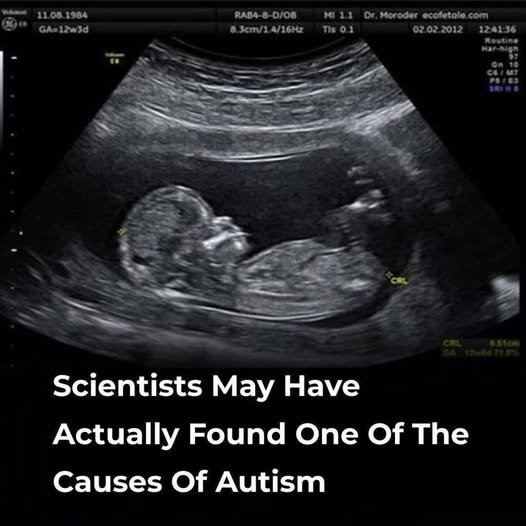
Research into whether maternal gut health during pregnancy influences the risk of autism spectrum disorder (ASD) in children is an active area of science. It has generated a lot of headlines, but it’s important to distinguish what has been observed in animals, what has been found in humans, and what remains unproven.
What is the maternal gut microbiome?
The gut microbiome is the collection of trillions of bacteria, viruses, fungi, and other microorganisms that live in the digestive tract. These microbes help with:
- Digesting food
- Producing vitamins
- Training the immune system
- Influencing metabolism
- Producing molecules that can affect the brain through the “gut-brain axis”
During pregnancy, the mother’s microbiome naturally changes as part of normal development.
Why are scientists studying autism and the maternal gut?
Autism spectrum disorder is a neurodevelopmental condition that affects communication, social interaction, and behavior.
Scientists know that autism develops through a complex interaction of genetics and environmental factors.
Research has suggested that the mother’s gut microbiome might influence fetal brain development through:
- Immune system activity
- Inflammation
- Hormones
- Nutrients
- Microbial metabolites (chemicals produced by gut bacteria)
This does not mean gut bacteria cause autism, but researchers are investigating whether they may be one factor among many.
Evidence from animal studies
Much of the excitement comes from experiments in mice.
Maternal immune activation
Researchers discovered that when pregnant mice experience strong immune activation—such as from certain infections—their offspring sometimes develop behaviors that resemble aspects of autism.
Scientists found that:
- Gut bacteria influence the mother’s immune response.
- Certain bacteria promote production of immune cells called Th17 cells.
- These cells release an inflammatory molecule called IL-17A.
High IL-17A levels during specific stages of pregnancy altered fetal brain development in mice.
When researchers:
- removed certain gut bacteria,
- blocked IL-17A,
- or changed the microbiome,
many of the mouse offspring showed fewer autism-like behaviors.
This finding has been replicated in several animal studies.
However:
Mouse studies do not prove the same process happens in humans.
Important bacterial species being studied
Scientists have investigated several bacteria, including:
- Segmented filamentous bacteria (mainly in mice)
- Bacteroides species
- Lactobacillus species
- Bifidobacterium species
Researchers are studying how these bacteria affect immune signaling rather than labeling them as “good” or “bad.”
Human evidence
Human studies are much more complicated.
Researchers cannot experimentally change pregnant women’s microbiomes in the same way they can in animals.
Instead, they perform:
- observational studies
- stool sample analyses
- genetic studies
- birth cohort studies
What have researchers found?
Some studies have reported that mothers of autistic children showed differences in:
- gut bacterial diversity
- bacterial composition
- inflammatory markers
- metabolic products
Examples include:
Lower abundance of bacteria that produce beneficial short-chain fatty acids in some groups.
Differences in bacteria involved in immune regulation.
Changes in microbial metabolites.
However:
These findings are not consistent across all studies.
Different research groups often find different bacterial patterns.
There is no specific “autism microbiome.”
Maternal inflammation
One of the strongest human findings is that:
Maternal inflammation during pregnancy may increase the likelihood of certain neurodevelopmental outcomes.
Possible causes include:
- severe infections
- autoimmune diseases
- obesity
- chronic inflammatory conditions
Scientists think the microbiome may influence this inflammation.
But inflammation itself is only one possible contributor and does not determine whether a child will develop autism.
Genetics remain the biggest factor
Current evidence suggests genetics play a major role in autism.
Large genetic studies estimate that inherited genetic factors account for much of autism risk, though estimates vary depending on the population and methods used.
Researchers have identified hundreds of genes associated with autism, many involved in:
- brain development
- communication between neurons
- synapse formation
- gene regulation
The gut microbiome is being investigated as one possible environmental influence, not a replacement for genetic explanations.
Could diet during pregnancy matter?
Scientists are exploring whether diet affects the maternal microbiome and, indirectly, fetal development.
A balanced diet rich in:
- vegetables
- fruits
- whole grains
- legumes
- fermented foods (when appropriate)
- fiber
generally supports a diverse gut microbiome.
Researchers are studying nutrients such as:
- folate
- omega-3 fatty acids
- vitamin D
- iron
Some studies suggest associations between adequate nutrition and healthier neurodevelopment, but no specific diet has been proven to prevent autism.
What about probiotics?
This is a common question.
Currently:
There is no evidence that taking probiotics during pregnancy prevents autism.
Clinical trials have not established probiotics as a preventive treatment for ASD.
Some probiotics may be recommended for other health reasons in certain people, but not specifically to reduce autism risk.
Can antibiotics affect the microbiome?
Antibiotics can change gut bacteria.
Researchers have investigated whether antibiotic use during pregnancy is linked to autism.
Results are mixed.
Some studies initially suggested small associations, but after accounting for factors such as maternal infections and genetics, the evidence has generally not supported antibiotics themselves as a direct cause of autism.
When antibiotics are medically necessary during pregnancy, treating infections is important because untreated infections can also pose risks.
Can gut bacteria directly affect the baby’s brain?
Scientists think this is biologically plausible.
Possible pathways include:
1. Immune signals
Gut bacteria influence cytokines that can cross or affect the placenta.
2. Microbial metabolites
Gut microbes produce chemicals like:
- short-chain fatty acids
- tryptophan metabolites
- bile acid derivatives
Some of these influence nervous system development in animal studies.
3. Hormones
Gut bacteria can affect hormones involved in metabolism and immune function.
4. Placental function
Researchers are studying whether microbial products influence placental health and nutrient transport.
Major limitations of current research
Scientists emphasize several important limitations:
- Most mechanistic evidence comes from animals.
- Human microbiomes vary greatly between individuals.
- Diet, medications, environment, genetics, and geography all influence the microbiome.
- Observational studies cannot prove cause and effect.
- Different studies often identify different bacterial changes.
These factors make it difficult to determine whether microbiome differences contribute to autism, result from other factors, or are unrelated.
What do major health organizations say?
Current medical guidance does not recommend:
- microbiome testing during pregnancy to predict autism
- probiotics specifically to prevent autism
- special diets intended to prevent autism
Routine prenatal care—including recommended nutrition, prenatal vitamins, management of chronic health conditions, vaccinations as advised, and treatment of infections—remains the evidence-based approach to supporting maternal and fetal health.
Key takeaways
- Scientists are actively investigating how the maternal gut microbiome might influence fetal brain development.
- Animal studies show that changes in maternal gut bacteria can affect immune pathways and alter offspring brain development in mice.
- Human studies have found associations between maternal gut health, inflammation, and neurodevelopment, but results are inconsistent and do not establish causation.
- Genetics remain a major contributor to autism, with environmental and biological factors likely interacting in complex ways.
- No specific microbiome pattern, probiotic, supplement, or diet has been proven to prevent autism.
- This is a promising area of research, but current evidence does not support using maternal gut microbiome changes as a way to predict or prevent autism.