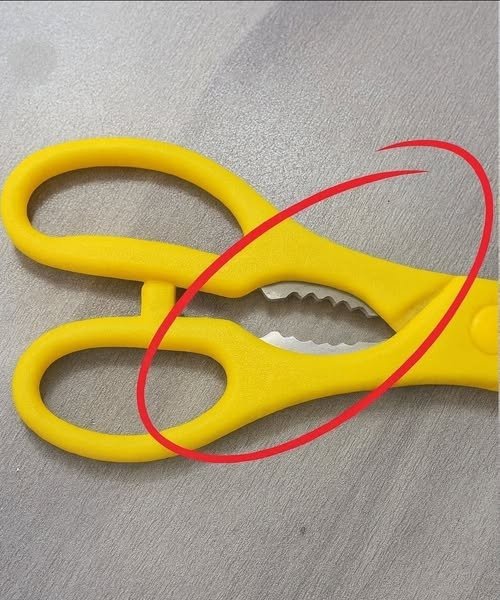
Here are the most common uses:
1. Cracking Nuts
One of the primary purposes is as a nutcracker.
- Place a nut (such as a walnut, pecan, or hazelnut) between the toothed jaws.
- Squeeze the handles firmly.
- The serrated teeth grip the shell and help crack it without the nut slipping away.
The curved shape helps distribute pressure evenly.
2. Opening Bottle Caps
Some kitchen scissors use the toothed section to grip:
- Twist-off bottle caps
- Plastic bottle lids
- Small jar lids
The teeth provide extra friction, making it easier to twist stubborn caps.
3. Gripping Slippery Foods
The serrated jaws can hold slippery foods securely, such as:
- Fish
- Chicken skin
- Meat
- Crab legs
This gives better control while cutting or handling food.
4. Cracking Shellfish
Many heavy-duty kitchen shears are designed for seafood.
You can use the toothed section to crack:
- Crab claws
- Lobster shells
- Shrimp shells
The strong grip prevents the shell from sliding.
5. Crushing Small Bones
Some poultry shears have especially strong toothed jaws that help grip and cut through:
- Chicken wing joints
- Small poultry bones
This feature is intended only for robust kitchen shears, not lightweight scissors.
6. Stripping Herbs or Stems (on Some Models)
Certain kitchen scissors use notches or toothed openings to strip leaves from herb stems.
Examples include:
- Rosemary
- Thyme
- Oregano
Pull the stem through the opening, and the leaves are removed.
7. Holding Objects Securely
The teeth also work like small pliers.
They can grip:
- Hot corn cobs
- Bones
- Tough packaging
- Small kitchen items that are difficult to hold
Why Are the Teeth Serrated?
The serrations:
- Increase friction.
- Prevent round or smooth objects from slipping.
- Allow a stronger grip with less effort.
- Help concentrate force for cracking shells or gripping hard items.
Can You Cut with This Part?
No. The toothed section is not a cutting edge. It works as a gripping or crushing mechanism. The actual cutting is done by the scissor blades.
Is It Safe for All Foods?
It is generally safe for:
- Nuts
- Seafood
- Poultry (if the shears are designed for it)
- Vegetables and herbs
Avoid using it on very hard objects (such as large bones or frozen food) unless the manufacturer specifically states the scissors are designed for those tasks, as excessive force can damage the tool.
Summary of Common Functions
| Feature | Purpose |
|---|---|
| Serrated toothed jaws | Grip slippery items |
| Curved toothed section | Crack nuts |
| Strong gripping teeth | Open bottle caps and jar lids |
| Heavy-duty jaws | Crack shellfish |
| Reinforced grip | Hold meat while cutting |
| Notches (on some models) | Strip herb leaves |
That toothed section essentially turns kitchen scissors into a small pair of gripping pliers, making them a versatile tool for many kitchen tasks beyond simply cutting.