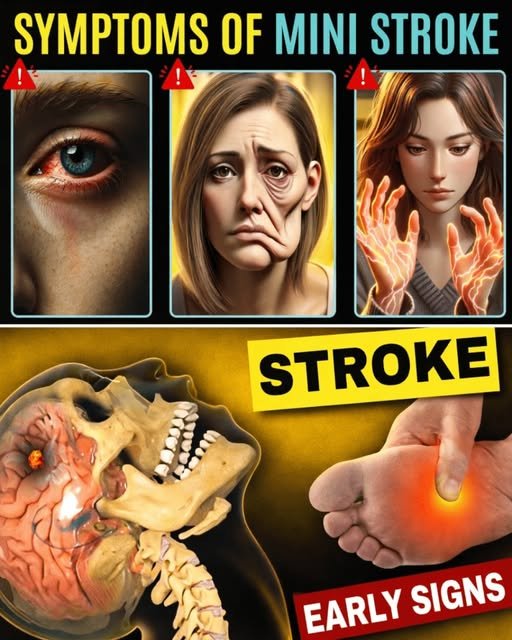
Below are 15 warning signs that people sometimes overlook, along with what they may mean.
Important: If you or someone else develops any sudden symptoms suggestive of a TIA or stroke—even if they disappear—call your local emergency services immediately. Do not wait to see if they improve.
1. Sudden Weakness on One Side of the Body
This is one of the most common TIA symptoms.
You may notice:
- One arm or leg feels weak.
- Difficulty lifting an arm.
- One side of the face droops.
- Trouble walking normally.
Why it happens:
Reduced blood flow affects the brain area controlling muscle movement.
2. Numbness or Tingling
Instead of weakness, some people experience sudden numbness.
Common locations include:
- Face
- Arm
- Leg
- Entire side of the body
Unlike numbness from sitting awkwardly, TIA-related numbness appears suddenly without an obvious cause.
3. Difficulty Speaking
Speech changes are often subtle.
Examples:
- Slurred speech
- Words sound “thick”
- Trouble forming sentences
- Speaking unusually slowly
Even brief episodes lasting only a few minutes require emergency evaluation.
4. Trouble Understanding Others
Some people can hear perfectly but suddenly cannot understand what people are saying.
They may:
- Appear confused
- Respond inappropriately
- Have difficulty following conversations
This is called receptive aphasia.
5. Temporary Vision Loss
Vision problems may affect one or both eyes.
Symptoms include:
- Blurred vision
- Double vision
- Partial vision loss
- Complete vision loss in one eye
Temporary blindness in one eye may last only a few minutes.
6. Sudden Severe Dizziness
Many people dismiss dizziness as fatigue or dehydration.
A TIA may cause:
- Feeling the room spinning
- Loss of balance
- Difficulty standing
- Sudden instability
Dizziness is more concerning when it occurs suddenly along with other neurological symptoms.
7. Difficulty Walking
Walking may suddenly become difficult.
Possible signs:
- Staggering
- Veering to one side
- Feeling unusually clumsy
- Frequent stumbling
8. Loss of Coordination
Simple activities become unexpectedly difficult.
Examples:
- Dropping objects
- Missing when reaching
- Difficulty buttoning clothing
- Trouble writing
This may indicate involvement of the cerebellum or other coordination centers.
9. Sudden Confusion
A person may suddenly seem:
- Disoriented
- Unable to think clearly
- Forgetful
- Unable to complete familiar tasks
The confusion often comes on abruptly.
10. Brief Memory Problems
Some people experience short-lived memory disturbances.
Examples:
- Forgetting recent events
- Difficulty recalling names
- Repeating questions
- Temporary inability to remember where they are
11. Sudden, Unexplained Fatigue
Although fatigue alone is not a classic TIA symptom, some people report sudden overwhelming exhaustion occurring alongside other neurological symptoms.
It may feel very different from normal tiredness.
12. Severe Headache
A sudden headache can occur, although it is less common with TIA than with some other stroke types.
Seek urgent evaluation if the headache:
- Appears suddenly
- Is unusually severe
- Occurs with weakness, speech changes, or vision problems
13. Facial Drooping
One side of the face may:
- Sag
- Feel numb
- Smile unevenly
A quick check is to ask the person to smile. An uneven smile can be a warning sign.
14. Difficulty Swallowing
Some TIAs temporarily affect muscles used for swallowing.
Symptoms include:
- Choking while drinking
- Trouble swallowing food
- Feeling food is “stuck”
15. Symptoms That Come and Go
One reason TIAs are often overlooked is that symptoms disappear.
Someone might think:
- “I’m fine now.”
- “It was just stress.”
- “I must have been tired.”
However, disappearing symptoms do not mean the event was harmless. A TIA is a strong warning that a stroke may occur, especially within the next hours to days.
The FAST Method for Recognizing Stroke
Remember the acronym FAST:
- F – Face: Ask the person to smile. Does one side droop?
- A – Arms: Ask them to raise both arms. Does one drift downward?
- S – Speech: Is speech slurred or difficult to understand?
- T – Time: Call emergency services immediately.
Who Is at Higher Risk?
Risk factors include:
- High blood pressure
- Diabetes
- High cholesterol
- Smoking
- Atrial fibrillation (an irregular heart rhythm)
- Heart disease
- Obesity
- Physical inactivity
- Older age
- Previous TIA or stroke
- Family history of stroke
Some of these risk factors can be reduced through medical treatment and lifestyle changes.
What Happens at the Hospital?
Doctors may perform:
- A neurological examination
- Brain imaging (CT or MRI)
- Blood tests
- Heart rhythm monitoring (ECG)
- Ultrasound or imaging of the neck arteries
- Other tests to determine the cause and reduce future stroke risk
Treatment depends on the underlying cause and may include medications to prevent blood clots, treatment for high blood pressure or cholesterol, or other interventions.
When to Seek Emergency Care
Seek emergency medical attention immediately if you notice any sudden:
- Weakness or numbness on one side
- Trouble speaking or understanding speech
- Vision loss or double vision
- Severe dizziness with balance problems
- Facial drooping
- Loss of coordination
- Sudden confusion
Do not drive yourself to the hospital if possible. Even if symptoms resolve within a few minutes, they require urgent medical assessment because a TIA can be an early warning of an impending stroke.
Early recognition and prompt treatment after a TIA can substantially reduce the risk of a future stroke and improve long-term outcomes.