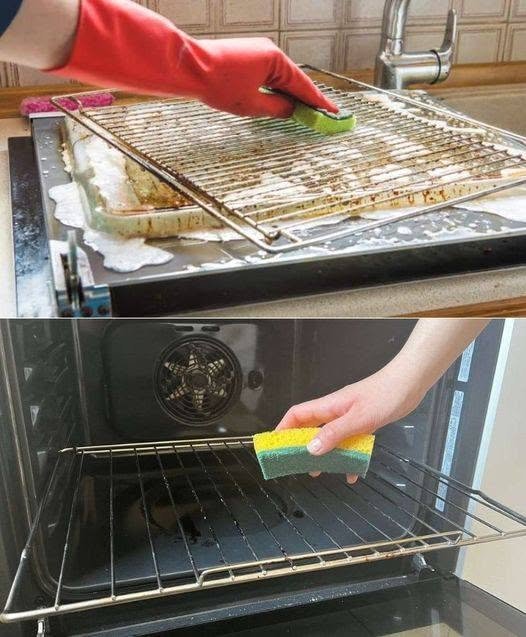
Oven grates are exposed to high heat, grease, food spills, and carbonized residue. Over time, these build up into a hard layer that can be difficult to remove with ordinary wiping. While many cleaning methods rely on strong chemicals, a simple sponge—when used correctly with the right cleaning solution—can effectively remove stubborn dirt without damaging the grates.
Why Oven Grates Get So Dirty
Each time you cook, tiny droplets of oil and food particles land on the oven grates. The oven’s high temperatures bake these residues onto the metal, creating:
- Burnt grease
- Carbon deposits
- Sticky food residue
- Dark discoloration
These layers become harder after repeated heating cycles, making them resistant to ordinary soap and water.
Why a Sponge Works
A sponge is effective because it combines absorption, flexibility, and gentle abrasion.
Soft Side
The soft side:
- Holds warm water and detergent.
- Loosens grease.
- Wipes away dissolved dirt.
- Prevents scratches on coated grates.
Scrubbing Side
The rough side:
- Provides enough friction to break apart baked-on grease.
- Removes carbon deposits after they have softened.
- Reaches grooves and corners that cloths often miss.
Unlike steel wool, a sponge is much less likely to damage enamel-coated oven grates.
Step-by-Step Cleaning Method
1. Remove the Grates
Take the oven grates out after they have cooled completely.
2. Soak Them
Fill a sink or large tub with:
- Very warm water
- Dish soap
- Optional: ½ cup baking soda
Allow the grates to soak for 30–60 minutes. For heavily soiled grates, soaking overnight can help loosen stubborn buildup.
3. Use the Sponge
Dip the sponge into the cleaning solution.
Start with the soft side to remove loose grease. Then switch to the scrubbing side for burnt-on areas.
Work in small circular motions instead of pressing excessively hard.
4. Focus on Tough Spots
If residue remains:
- Sprinkle baking soda directly on the stain.
- Add a few drops of water to create a paste.
- Let it sit for 10–15 minutes.
- Scrub again with the sponge.
The mild abrasiveness of baking soda helps lift stubborn deposits.
5. Rinse Thoroughly
Wash away all soap and residue with clean water.
6. Dry Completely
Dry the grates with a clean towel or let them air-dry before returning them to the oven. This helps prevent rust on uncoated metal grates.
Tips for Better Results
- Clean spills soon after the oven cools to prevent buildup.
- Wipe the grates regularly instead of waiting until heavy deposits form.
- Replace worn-out sponges, as fresh scrubbing surfaces clean more effectively.
- Avoid using excessive force, which can wear down protective coatings.
When a Sponge Isn’t Enough
If grease has been baked on for years, a sponge alone may not remove all the residue. In these cases, repeat the soaking process or use a baking soda paste before scrubbing. Commercial oven cleaners can also be effective but should be used according to the manufacturer’s instructions, especially if the grates have special finishes.
Common Mistakes to Avoid
- Cleaning hot grates, which can cause burns and make cleaners evaporate too quickly.
- Using highly abrasive tools, such as steel wool, on enamel-coated grates.
- Skipping the soaking step, making scrubbing much more difficult.
- Leaving the grates wet, which may encourage rust on certain metal finishes.
Final Thoughts
A simple sponge can be a surprisingly effective tool for cleaning oven grates when paired with warm, soapy water and a little patience. Soaking first softens baked-on grease, while the sponge’s scrubbing surface removes stubborn residue without being overly abrasive. With regular maintenance, oven grates stay cleaner, last longer, and help your oven perform more efficiently.