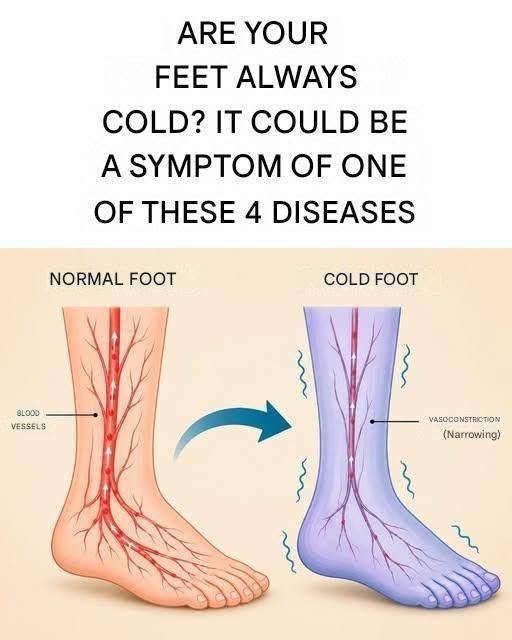
Are Your Feet Always Cold? Here’s What Your Body Might Be Trying to Tell You
Cold feet are common, especially in winter or after being exposed to cold temperatures. But if your feet feel cold all the time, even when the room is warm or when other people feel comfortable, it may be your body signaling something about circulation, nerves, hormones, or overall health.
Your feet are among the body parts most sensitive to changes in blood flow because they are farthest from the heart. When your body needs to protect core temperature, it reduces blood flow to the hands and feet, making them feel colder. However, persistent cold feet can sometimes point to an underlying issue.
1. Poor Blood Circulation
One of the most common reasons for constantly cold feet is reduced blood circulation.
Your arteries carry warm, oxygen-rich blood from your heart to your feet. If blood flow is limited, your feet may not receive enough warmth.
Possible causes include:
- Sitting for long periods
- Lack of physical activity
- Smoking
- High cholesterol
- High blood pressure
- Narrowed arteries (peripheral artery disease)
Signs that circulation may be involved:
- Feet feel cold but your body feels warm
- Skin looks pale, bluish, or unusually shiny
- Numbness or tingling
- Leg cramps while walking that improve with rest
- Slow-healing cuts or wounds
What may help:
- Regular walking or exercise
- Avoiding smoking
- Keeping cholesterol and blood pressure under control
- Moving your legs frequently if you sit for long periods
2. Nerve Problems (Peripheral Neuropathy)
Sometimes your feet are not actually cold — your nerves may be sending incorrect temperature signals to your brain.
This is called peripheral neuropathy, a condition where nerves outside the brain and spinal cord become damaged.
Common causes:
- Diabetes
- Vitamin B12 deficiency
- Excess alcohol use
- Certain medications
- Some autoimmune conditions
Symptoms may include:
- Burning sensation
- Pins and needles
- Tingling
- Numbness
- Feeling like your feet are freezing even when they are warm
- Reduced ability to feel heat or cold
People with diabetes are especially at risk because high blood sugar over time can damage small nerves and blood vessels in the feet.
3. Hypothyroidism (Underactive Thyroid)
Your thyroid gland controls your metabolism — the process that helps your body produce and use energy.
When thyroid hormone levels are low, your metabolism slows down, which can reduce heat production.
Cold feet may occur along with:
- Feeling cold throughout the body
- Fatigue
- Weight gain
- Dry skin
- Constipation
- Hair thinning
- Depression or low mood
- Slow heartbeat
A simple blood test measuring thyroid hormones can help identify thyroid problems.
4. Anemia and Low Iron Levels
Your blood carries oxygen and helps distribute heat throughout your body.
With anemia, your body may not have enough healthy red blood cells to carry oxygen efficiently.
Possible symptoms:
- Cold hands and feet
- Tiredness
- Weakness
- Shortness of breath
- Pale skin
- Dizziness
- Headaches
Iron deficiency is one of the most common causes of anemia, especially in people with blood loss, poor iron intake, or increased iron needs.
5. Raynaud’s Phenomenon
Raynaud’s phenomenon is a condition where small blood vessels in the fingers and toes temporarily tighten in response to cold temperatures or stress.
During an episode, toes may:
- Turn white because blood flow decreases
- Turn blue due to reduced oxygen
- Become red as blood flow returns
Other symptoms can include:
- Cold sensations
- Numbness
- Tingling
- Throbbing or pain after warming up
Raynaud’s can occur by itself or may be associated with other medical conditions.
6. Diabetes and Blood Vessel Changes
Diabetes can affect feet in two major ways:
1. Nerve damage
High blood sugar can injure nerves, causing unusual cold sensations.
2. Circulation problems
Diabetes can damage blood vessels, reducing blood supply to the feet.
People with diabetes should pay special attention to foot health because reduced sensation can make injuries harder to notice.
Watch for:
- Cuts
- Blisters
- Changes in skin color
- Sores that do not heal
7. Low Body Weight or Low Body Fat
Body fat acts as insulation. People with very low body weight may lose heat more quickly.
Cold feet may occur in people who:
- Have a very low body mass index (BMI)
- Have recently lost significant weight
- Do not consume enough calories
- Have eating disorders
The body may conserve energy by reducing blood flow to the extremities.
8. Stress and Anxiety
Stress activates your body’s fight-or-flight response.
During stress, hormones such as adrenaline cause blood vessels in the hands and feet to narrow. This redirects blood toward vital organs.
You may notice:
- Cold feet during stressful situations
- Sweaty palms or feet
- Rapid heartbeat
- Muscle tension
When the stress response decreases, circulation usually returns to normal.
9. Certain Medications
Some medications can contribute to cold sensations by affecting circulation or blood vessels.
Examples may include:
- Some blood pressure medications
- Certain migraine medicines
- Some decongestants
- Some chemotherapy drugs
If you notice cold feet after starting a new medication, discuss it with your healthcare provider.
10. Lifestyle Factors That Can Make Feet Cold
Several everyday habits can contribute:
Sitting too much
Long periods of inactivity reduce circulation.
Wearing tight shoes
Tight footwear can restrict blood flow.
Dehydration
Low fluid levels can affect circulation.
Poor sleep
Sleep deprivation can influence body temperature regulation.
Cold environments
Repeated exposure to cold can make feet more sensitive.
When Should You Be Concerned About Cold Feet?
Occasional cold feet are usually not dangerous. However, you should consider medical advice if cold feet are:
- Persistent and unexplained
- Getting worse over time
- Associated with numbness or weakness
- Accompanied by skin color changes
- Causing pain
- Linked with wounds that heal slowly
- Present with diabetes or circulation problems
Seek urgent medical attention if you have:
- A suddenly cold, pale, or painful foot
- Loss of feeling or movement
- A foot that becomes blue or black
- Signs of infection
Simple Ways to Warm Up Cold Feet
Improve circulation:
- Walk regularly
- Stretch your legs and ankles
- Avoid sitting in one position for hours
- Massage your feet gently
Keep feet warm:
- Wear warm socks
- Use insulated footwear in cold weather
- Keep floors warm if possible
Support overall health:
- Eat a balanced diet
- Stay hydrated
- Avoid smoking
- Manage blood sugar if you have diabetes
- Maintain regular physical activity
Foods That Support Circulation and Nerve Health
A nutrient-rich diet can support healthy blood vessels and nerves.
Helpful nutrients include:
Iron
Found in:
- Lean meats
- Beans
- Lentils
- Spinach
Vitamin B12
Found in:
- Fish
- Eggs
- Dairy products
- Fortified foods
Omega-3 fatty acids
Found in:
- Salmon
- Sardines
- Walnuts
- Flaxseeds
Magnesium
Found in:
- Nuts
- Seeds
- Whole grains
The Bottom Line
Cold feet are often caused by simple things like cold weather, inactivity, or stress. But feet that are constantly cold despite warmth and comfort may be your body’s way of signaling changes in circulation, nerve function, thyroid activity, blood health, or metabolism.
Pay attention to other symptoms that appear with cold feet. The pattern of symptoms often provides more information than the cold sensation alone. If persistent cold feet are new, worsening, or accompanied by pain, numbness, color changes, or wounds, it is worth discussing with a healthcare professional.