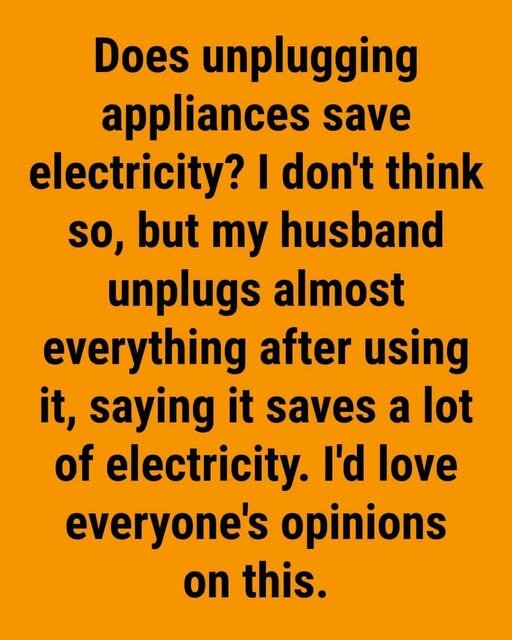
Absolutely — here is a detailed, ready-to-use article on whether unplugging appliances actually saves electricity.
Does Unplugging Appliances Save Electricity? A Detailed Guide
We often leave appliances plugged in even when we are not using them. Televisions, phone chargers, computers, coffee makers, gaming consoles, microwaves, and many other devices remain connected to electrical outlets around the clock. This raises an important question: Does unplugging appliances really save electricity?
The short answer is yes, unplugging some appliances can save electricity, but the amount of energy saved depends on the type of appliance, how much standby power it uses, and how long it remains plugged in.
The electricity consumed by devices when they are switched off but still connected to an outlet is commonly called standby power, vampire power, or phantom load. Although the electricity used by an individual device may be small, the combined consumption of many devices can become noticeable over a year.
What Is Standby Power?
Standby power is the electricity an electronic device uses while it is not performing its main function but remains connected to a power source.
For example, consider a television. When you turn it off using the remote control, the screen goes dark, but the television may continue drawing a small amount of electricity. It needs this power for functions such as receiving signals from the remote, maintaining settings, connecting to a network, or quickly starting when you turn it back on.
The same thing can happen with many other household devices.
Examples include:
- Televisions
- Streaming devices
- Video game consoles
- Computers and monitors
- Printers
- Wi-Fi routers
- Smart speakers
- Microwave ovens with digital clocks
- Coffee makers
- Battery chargers
- Smart-home devices
- Audio systems
- Some kitchen appliances
The amount of standby electricity varies significantly from one device to another.
Why Do Appliances Use Electricity When They Are Turned Off?
Modern electronic appliances often contain components that need to remain active even when the main function of the device is switched off.
For example, a device may need to:
- Listen for a remote-control signal
- Maintain a clock or timer
- Store settings
- Remain connected to Wi-Fi
- Receive software updates
- Monitor for voice commands
- Keep a display operating
- Charge an internal battery
- Prepare for a quick start
Because of these functions, “off” does not always mean that an appliance is using zero electricity.
However, it is important to understand that standby consumption has become much lower for many modern appliances. Energy-efficiency standards and improved electronic designs have reduced the amount of electricity many newer products consume while idle.
How Much Electricity Can Unplugging Save?
There is no single amount of electricity that every household will save by unplugging appliances.
The savings depend on:
- The number of devices in the home
- How much standby power each device consumes
- How long the devices remain plugged in
- The local electricity rate
- Whether the devices are actually consuming standby power
- How frequently they are used
A simple way to understand the calculation is:
Annual energy use = Power consumption × Time
If a device continuously uses 1 watt of standby power:
1 watt × 24 hours × 365 days = 8.76 kWh per year
If a device uses 5 watts continuously:
5 watts × 24 hours × 365 days = 43.8 kWh per year
The actual savings from unplugging a particular device therefore depend heavily on its standby consumption.
Does Unplugging Phone Chargers Save Electricity?
Yes, but usually the savings from unplugging a modern phone charger are very small.
Older or poorly designed chargers may consume measurable electricity even when they are not charging a phone. Modern chargers generally use very little power when they are plugged in without a device attached.
Therefore, unplugging a phone charger can eliminate that small amount of standby consumption, but it is unlikely to make a major difference to your electricity bill by itself.
However, unplugging chargers can still be useful if you have many chargers and other small electronics throughout your home.
What About Laptop and Computer Chargers?
Computers and laptops can consume electricity in several different ways.
A laptop charger may use a small amount of power while plugged in even when the laptop is not connected. The laptop itself may also consume electricity when it is sleeping or in standby mode.
Desktop computers can consume considerably more electricity than small chargers, particularly when they are left running.
If you are not going to use a computer for an extended period, shutting it down can reduce energy consumption. Unplugging the computer or its power strip can eliminate standby consumption completely.
For convenience, many people connect computers and accessories to a switchable power strip. When they finish working, they can shut down the computer and turn off the power strip.
Should You Unplug Your Television?
A television may continue to consume a small amount of electricity when it is turned off but connected to the outlet.
Smart TVs can have additional standby functions because they may remain connected to the internet or be ready to respond quickly to commands.
If you are going away for several days or longer, unplugging a television can eliminate its standby consumption during that period.
For everyday use, however, the financial savings may be relatively modest. A smart power strip can be a more convenient solution if you want to reduce standby electricity without repeatedly reaching behind the television.
What About Gaming Consoles?
Gaming consoles can be significant electricity users when they are actively operating. They may also use electricity while in standby or sleep modes.
The amount depends on the console, its settings, connected accessories, and the particular standby mode.
If a gaming console is used frequently, it may be convenient to leave it connected. But if it will not be used for a long period, switching it off completely can reduce unnecessary electricity consumption.
Many consoles provide settings that allow users to reduce background activity and standby energy use.
Does Unplugging a Microwave Save Electricity?
A microwave oven may continue to use electricity while it is not cooking because its digital clock, control panel, or other electronics remain active.
If you unplug a microwave, its standby electricity consumption will fall to zero. However, doing this every time you use the microwave may be inconvenient.
For most households, the easiest approach is simply to leave it plugged in unless you are trying to minimize every possible source of electricity consumption.
What About Wi-Fi Routers?
Wi-Fi routers are different from many other appliances because they are designed to operate continuously.
If you unplug your router whenever you are not actively using the internet, you will reduce electricity consumption. However, doing so can also interrupt internet access and disconnect other devices.
Turning off a router overnight may save some electricity, but the savings should be weighed against convenience and the requirements of devices that need a continuous internet connection.
For example, some smart-home devices, security systems, cameras, and connected appliances may depend on the network.
Which Appliances Are Worth Unplugging?
Not every appliance needs to be unplugged.
The biggest opportunities generally come from devices that:
- Consume electricity continuously
- Have relatively high standby consumption
- Are rarely used
- Remain plugged in for long periods
- Are easy to disconnect
- Are connected in large numbers
Examples might include entertainment systems, office equipment, chargers, and rarely used electronic devices.
Instead of unplugging everything in your home, focus on devices that are rarely used or groups of electronics that can easily be switched off together.
Appliances You Should Usually Not Unplug
Some appliances should generally remain connected because unplugging them can interfere with their function or create inconvenience.
Refrigerator
A refrigerator needs continuous electricity to keep food cold. Unplugging it for energy savings is not practical during normal use and can cause food to spoil.
Freezer
Like a refrigerator, a freezer needs continuous power to maintain safe temperatures.
Medical or Safety Equipment
Equipment that is necessary for health, safety, security, or emergency purposes should not be casually unplugged.
Internet and Security Equipment
Routers, security systems, cameras, alarms, and similar equipment may need continuous power.
Appliances With Important Timers
Some appliances may lose programmed settings or clocks when unplugged.
The goal should not be to unplug everything. Instead, identify unnecessary electricity consumption and reduce it intelligently.
Smart Power Strips Can Make Things Easier
One of the biggest disadvantages of unplugging appliances is convenience.
It can be annoying to reach behind a desk or entertainment center every night to unplug several devices.
A smart power strip or switchable power strip can make this easier.
For example, you might connect:
- Television
- Streaming device
- Gaming console
- Sound system
to the same power strip.
When you are finished using the entertainment system, you can switch off the strip instead of unplugging each device individually.
Some smart power strips can automatically cut power to connected devices when the primary device is turned off.
Does Unplugging Appliances Save Money?
Yes, but the savings vary.
Suppose a household eliminates 50 watts of continuous unnecessary electricity consumption.
Over a year:
50 W × 24 hours × 365 days = 438 kWh
At an electricity price of $0.20 per kWh:
438 kWh × $0.20 = $87.60 per year
This example illustrates why the total standby load matters. A single device using a tiny amount of power may not make much difference, but dozens of devices operating continuously can add up.
The actual electricity rate and standby consumption in your home will determine the real savings.
Unplugging vs. Turning Off With a Button
There is an important difference between turning an appliance off and disconnecting it from the electrical supply.
When you press the power button on some electronics, the device enters a low-power state rather than becoming completely disconnected from electricity.
Unplugging the device removes its connection to the electrical supply.
However, some modern appliances consume extremely little power in standby mode. For these products, the difference between leaving them plugged in and unplugging them may be too small to matter financially.
How to Find Out Which Appliances Use the Most Electricity
If you want to know whether unplugging is worthwhile in your home, you do not have to guess.
A plug-in electricity meter can measure how much electricity an individual appliance consumes.
You can connect the meter between the appliance and the wall outlet and observe its electricity use.
This can help answer questions such as:
- How much power does my television use while off?
- How much does my computer use in sleep mode?
- Does my charger draw power when nothing is connected?
- How much electricity does my entertainment center consume overnight?
- Which appliance has the highest standby consumption?
Measuring actual consumption is often more useful than assuming every appliance has the same standby load.
Standby Power and the Environment
Saving electricity is not only about reducing your utility bill.
When households reduce unnecessary electricity consumption, they can also reduce the amount of energy that needs to be generated.
The environmental benefit depends on how electricity is produced in a particular region. Electricity generated from renewable sources generally has a different environmental impact from electricity generated using fossil fuels.
Nevertheless, reducing unnecessary energy use is generally a sensible part of improving household energy efficiency.
Does Unplugging Everything Really Make a Big Difference?
This is where the answer becomes more nuanced.
Unplugging everything in your home can save electricity, but it may not be the most practical or effective energy-saving strategy.
Some devices use so little standby electricity that unplugging them provides only a tiny financial benefit.
Other devices can consume more energy, particularly if they remain active or in standby continuously.
The most effective strategy is to identify the largest unnecessary loads rather than obsessively unplugging every small device.
When Is Unplugging Most Useful?
Unplugging appliances can be particularly useful when:
You Are Going on Vacation
If you are leaving your home for several days or weeks, unplugging unnecessary electronics can prevent them from consuming standby electricity while you are away.
It can also reduce the number of devices connected to the electrical system while the home is unoccupied.
However, never disconnect appliances that need to remain operational, such as refrigerators, freezers, security systems, or necessary equipment.
You Rarely Use the Device
A device that is used only once every few weeks may spend far more time sitting idle than actually operating.
In such cases, keeping it unplugged until you need it can make sense.
You Have Many Electronics
A home office or entertainment center can contain numerous devices.
Even small standby loads can add up when several devices remain connected 24 hours a day.
You Want to Reduce Every Possible Source of Energy Waste
For households focused on maximum energy efficiency, reducing standby power can be one part of a broader strategy.
Other Ways to Save More Electricity
Although unplugging appliances can help, there are often larger opportunities for reducing electricity use.
Use Energy-Efficient Lighting
Replacing inefficient bulbs with LED lighting can reduce electricity consumption while providing the same amount of useful light.
Improve Heating and Cooling Efficiency
Heating and cooling can account for a substantial portion of household energy consumption. Improving insulation, maintaining equipment, adjusting thermostats, and using efficient systems can have a much larger impact than unplugging a single charger.
Use Appliances Efficiently
Run dishwashers and washing machines with full loads when appropriate.
Use energy-saving settings when they meet your needs.
Reduce Unnecessary Computer Use
Turn off computers and monitors when they will not be used for extended periods.
Avoid Leaving Electronics Running
A television, gaming system, or computer that is actively operating generally consumes much more electricity than one that is simply in standby mode.
Use Timers or Smart Controls
Timers and smart plugs can automatically turn selected devices off during periods when they are not needed.
Common Myths About Unplugging Appliances
Myth 1: Every plugged-in appliance uses a lot of electricity.
False.
Many modern devices consume very little standby electricity.
Myth 2: Turning something off always means it uses zero electricity.
False.
Some appliances continue to draw a small amount of electricity while switched off.
Myth 3: Unplugging one charger will dramatically lower your electricity bill.
Usually false.
The savings from one modern charger are generally small.
Myth 4: Unplugging all appliances is the best way to save energy.
Not necessarily.
There may be much larger energy-saving opportunities in heating, cooling, water heating, lighting, and high-power appliances.
Myth 5: Standby electricity does not matter at all.
Also false.
Small loads can add up when many devices remain connected continuously.
A Practical Unplugging Strategy
Instead of unplugging every appliance, try this simple approach:
Step 1: Walk around your home.
Make a list of electronics that remain connected when not in use.
Step 2: Identify rarely used devices.
Look for equipment that may sit unused for days or weeks.
Step 3: Check standby consumption.
Use an electricity meter if you want accurate measurements.
Step 4: Group electronics together.
Connect entertainment or office equipment to an appropriate power strip.
Step 5: Turn off the power strip when appropriate.
This can eliminate standby electricity from several devices at once.
Step 6: Keep essential appliances connected.
Do not unplug equipment that needs continuous power.
Step 7: Focus on the biggest energy users.
Heating, cooling, water heating, and frequently operated appliances may offer greater opportunities for savings.
Final Answer: Does Unplugging Appliances Save Electricity?
Yes, unplugging appliances can save electricity, but the amount depends on the appliances and their standby power consumption.
A device that consumes electricity while plugged in but not actively operating can contribute to unnecessary energy use. Unplugging it eliminates that consumption completely.
However, modern electronics are often much more efficient in standby mode than older equipment. As a result, unplugging one small device may save only a small amount of electricity.
The best approach is not to unplug everything indiscriminately. Instead, concentrate on rarely used electronics, entertainment systems, office equipment, chargers, and groups of devices that can easily be disconnected with a power strip.
For the greatest overall energy savings, combine standby-power reduction with more impactful measures such as improving heating and cooling efficiency, using LED lighting, choosing efficient appliances, and avoiding unnecessary operation of high-power equipment.
Bottom Line
Unplugging appliances does save electricity.
But think of it as one small piece of a larger energy-saving strategy. The biggest benefit comes when many unnecessary standby loads are eliminated together, particularly over long periods.
If you are leaving home for an extended period, unplugging unnecessary electronics is a simple way to avoid wasting standby electricity. For everyday life, smart power strips, timers, energy-efficient appliances, and good energy-use habits can provide a convenient balance between savings and convenience.
In short, you do not need to unplug everything—but eliminating unnecessary standby power can help reduce both electricity waste and your energy bill.