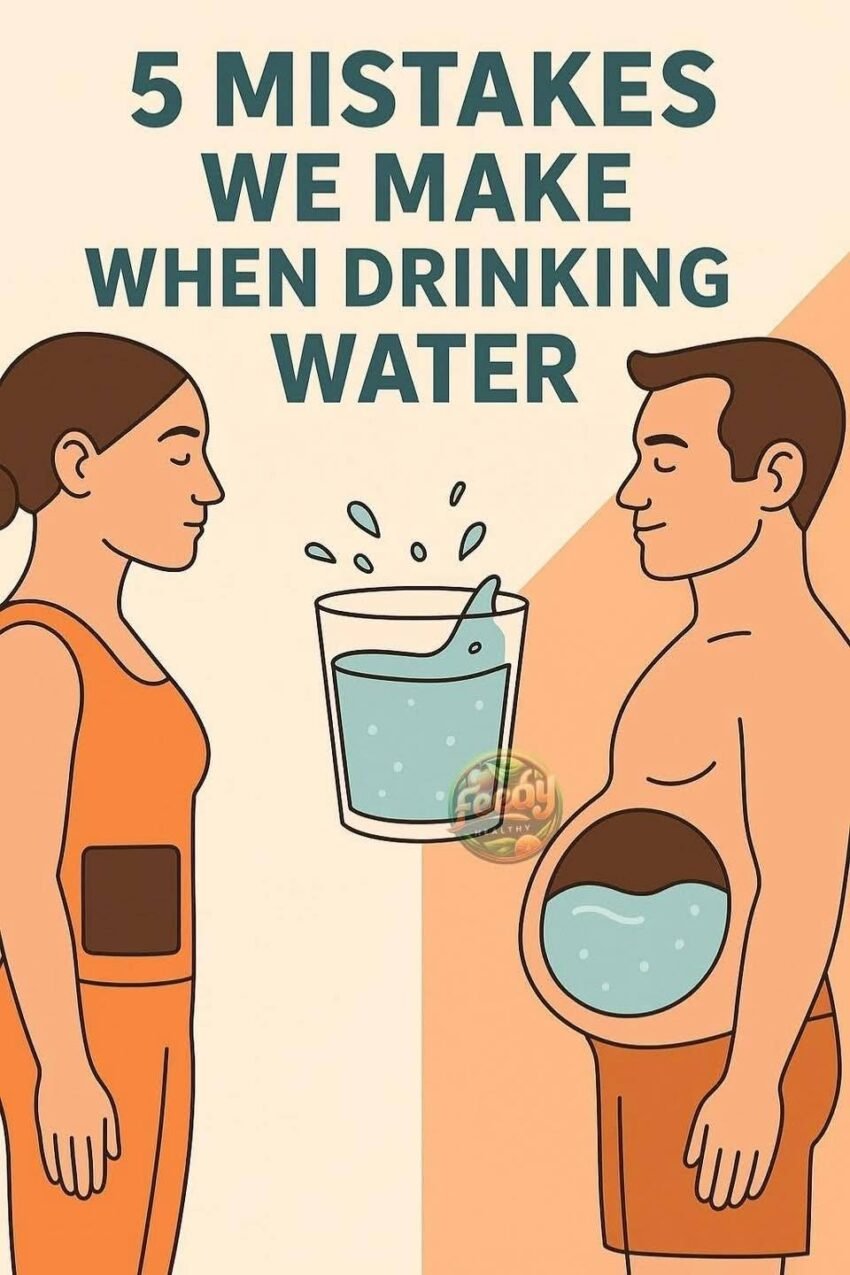
5 Common Mistakes When Drinking Water That Can Affect Your Health
Water is essential for nearly every function of the body. It helps regulate body temperature, supports blood circulation, allows cells to function properly, lubricates joints, and helps the body remove waste. However, more water is not always better, and the way you drink water can matter. Your fluid needs vary according to factors such as age, activity level, climate, illness, and certain medical conditions.
Here are five common mistakes to avoid.
1. Drinking Too Much Water Too Quickly
One of the biggest misconceptions about hydration is that you should constantly drink as much water as possible.
Drinking excessive amounts of water can overwhelm the kidneys’ ability to remove excess fluid. This can dilute the sodium concentration in your blood, causing a condition called hyponatremia. In severe cases, hyponatremia can cause brain swelling and become life-threatening.
Possible warning signs include:
- Nausea or vomiting
- Headache
- Unusual tiredness or weakness
- Muscle cramps or spasms
- Confusion or irritability
- Drowsiness
- Seizures in severe cases
The risk is particularly important during prolonged, intense exercise. Athletes may sometimes drink large quantities of water while losing sodium through sweat, increasing the risk of exercise-associated hyponatremia.
Better approach: Instead of forcing yourself to drink enormous quantities, spread your fluid intake throughout the day and pay attention to thirst and urine color. For many healthy people, pale-yellow urine and an absence of excessive thirst are reasonable signs of adequate hydration.
2. Waiting Until You Are Severely Dehydrated
The opposite mistake is drinking too little water throughout the day and waiting until you feel extremely thirsty.
Your body loses water continuously through urine, sweat, breathing, and bowel movements. You may lose even more during hot weather, exercise, fever, vomiting, or diarrhea.
When you don’t replace enough fluid, dehydration can develop.
Possible symptoms of dehydration include:
- Thirst
- Darker urine
- Headache
- Fatigue
- Dizziness or lightheadedness
- Reduced physical performance
- Confusion in more severe cases
However, there isn’t one universal amount of water that everyone should drink every day. Your requirements can change depending on your body, diet, activity, environment, and health. Food also contributes to your daily water intake; fruits and vegetables can contain substantial amounts of water.
Better approach: Drink fluids regularly throughout the day rather than deliberately going for long periods without drinking. Increase your attention to hydration when you’re exercising, sweating heavily, or spending time in hot or humid conditions.
3. Assuming Everyone Needs the Same Amount of Water
A common mistake is following a rigid rule such as “everyone must drink exactly X glasses of water every day.”
In reality, hydration needs differ considerably. A person sitting in an air-conditioned office may have very different requirements from someone exercising outdoors in hot weather.
Factors that can influence fluid requirements include:
- Body size
- Physical activity
- Temperature and humidity
- Illness and fever
- Vomiting or diarrhea
- Pregnancy or breastfeeding
- Diet
- Certain medications
- Kidney, heart, or liver conditions
Mayo Clinic notes that there is no simple one-size-fits-all answer to how much water a person needs each day.
Why this matters
Following a fixed water target without considering your circumstances can work in either direction. You might drink too little when you’re exercising heavily, or unnecessarily force yourself to drink large amounts when your body doesn’t need them.
Better approach: Think about hydration as an individual need rather than a competition to reach a particular number.
4. Assuming All Hydration Needs Are Met by Plain Water During Intense Exercise
For normal daily activities, plain water is an excellent choice for most people. However, prolonged or intense exercise can be different.
When you sweat heavily, you lose both water and electrolytes, including sodium. During long-duration endurance activities, replacing enormous amounts of fluid with plain water alone can contribute to low blood sodium.
This doesn’t mean everyone needs sports drinks. For ordinary exercise or daily activity, plain water is generally sufficient for most people. But during prolonged, strenuous exercise—particularly in hot conditions—electrolyte replacement may sometimes be appropriate.
Better approach: For ordinary activities, drink water according to thirst. For long-duration endurance exercise or heavy sweating, consider your fluid and electrolyte losses and follow guidance appropriate for your activity and health status.
5. Thinking That More Expensive or “Special” Water Is Automatically Healthier
Another common mistake is believing that bottled, alkaline, mineral-enhanced, or specially marketed water is automatically better for hydration.
For most people, ordinary plain water can adequately hydrate the body. Mayo Clinic notes that there is little credible evidence that alkaline water provides major health advantages over regular water for the general population.
The important thing is generally obtaining adequate fluids—not buying the most expensive type of water.
Be cautious about claims such as:
- “This water detoxifies your body.”
- “You need alkaline water to balance your blood pH.”
- “This special water burns fat.”
- “Higher-pH water is dramatically more hydrating.”
- “Everyone needs electrolyte water every day.”
Your body has sophisticated systems involving the kidneys and lungs that regulate blood chemistry. Drinking ordinary water is sufficient for hydration for most healthy people.
Better approach: Choose safe, clean water that you enjoy drinking and can access consistently. If you have a medical reason to use a particular type of fluid, follow your healthcare professional’s advice.
How to Drink Water More Effectively
A practical hydration routine can be simple:
- Drink when you’re thirsty. Thirst is an important signal of your body’s need for fluid.
- Spread fluids throughout the day instead of consuming huge amounts at once.
- Pay attention to urine color. Pale-yellow urine generally suggests adequate hydration; persistently dark urine can be a sign that you need more fluids.
- Drink more when you lose more fluid, such as during exercise or hot weather.
- Don’t force excessive water intake simply because you believe more is healthier.
- Remember that food contributes to hydration. Fruits, vegetables, soups, and other foods contain water.
- Consider electrolytes during prolonged, intense exercise when substantial sweating occurs, rather than automatically using them for ordinary daily activities.
Important health note
People with kidney, heart, or liver problems, certain hormonal conditions, or those taking medications that affect fluid or sodium balance may need individualized fluid advice.
If someone develops confusion, seizures, loss of consciousness, or severe symptoms after drinking excessive amounts of water, that can be a medical emergency and requires immediate medical attention.
Bottom line: Healthy hydration is about finding the right balance—not drinking as much water as possible. For most people, regular plain water, guided by thirst and other signs of hydration, is a sensible approach.