-
A spot that suddenly appears on your son’s ear when he wakes up can have several causes. It may be something minor, such as an insect bite or skin irritation, but some spots can indicate an infection or an allergic reaction.
The most important things are to identify what the spot looks like, where it is located, whether it is painful or itchy, and whether it is changing.
I’ll explain the possible causes, what you can safely do at home until his appointment, what to avoid, and which warning signs need medical attention sooner.
1. What could the spot on his ear be?
Here are some common possibilities.
1. Insect bite
-
A small red or pink raised bump.
-
Often itchy rather than painful.
-
Sometimes has a tiny central puncture.
-
Can cause swelling around the ear.
-
May appear suddenly overnight.
Usually improves over a few days.
2. Contact dermatitis (skin irritation or allergy)
-
Red, irritated or slightly swollen skin.
-
May be itchy, dry or flaky.
-
Can be triggered by shampoo, soap, laundry detergent, headphones or pillow materials.
Avoiding the triggering product usually helps.
3. Small cyst or blocked skin gland
-
A round bump under the skin.
-
Usually smooth and firm.
-
May be painless initially.
-
Can become red, tender or swollen if inflamed.
Don’t squeeze or attempt to drain it.
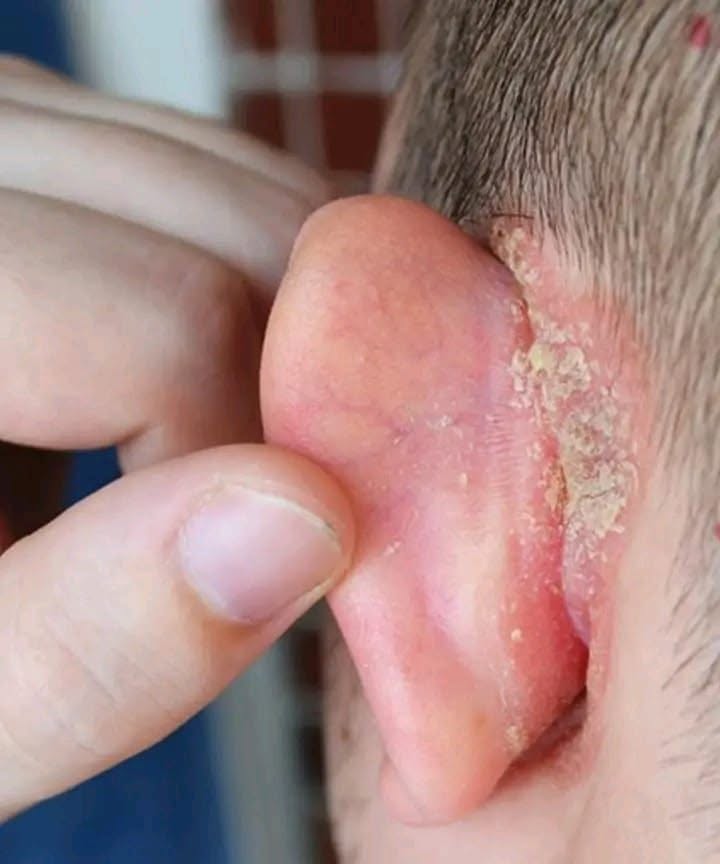
4. Impetigo (bacterial skin infection)
-
Red sores or small blisters.
-
May ooze fluid.
-
Can develop yellow or honey-colored crusts.
-
Can spread to nearby skin.
Needs medical assessment and sometimes prescription antibiotics.
5. Ear cartilage infection (perichondritis)
-
Redness and swelling of the outer ear.
-
Often painful or tender.
-
The ear may feel warm.
-
Sometimes follows an injury, scratch or piercing.
Needs urgent medical assessment
This can damage the ear cartilage if treatment is delayed.
These are possibilities, not a diagnosis. A photograph and examination can help distinguish them.
2. How to care for it until the appointment
If your son is otherwise well and the spot is small, with no significant pain, spreading redness or fever, you can take these precautions:
Step 1: Clean the area gently
-
Wash your hands first.
-
Use clean, lukewarm water.
-
Gently clean the outside of the ear.
-
Pat dry with a clean towel.
-
Avoid rubbing or scrubbing.
Step 2: Apply a cool compress
-
Wet a clean washcloth with cool water.
-
Place it gently against the spot for 10–15 minutes.
-
Repeat 3–4 times daily if itchy or swollen.
-
Don’t apply ice directly to the skin.
Step 3: Avoid touching or squeezing
-
Don’t pop the spot.
-
Don’t scratch it.
-
Don’t try to remove a scab.
-
Keep his fingernails clean and short.
Step 4: Avoid potentially irritating products Until you know what it is, avoid:
-
Alcohol or hydrogen peroxide.
-
Essential oils.
-
Perfumed creams.
-
Strong antiseptics.
-
Acne treatments.
-
Antibiotic or steroid creams unless advised by his clinician.
Step 5: Monitor the spot Take a photograph now and another later in the day. Note:
-
Whether it is getting bigger.
-
Whether redness is spreading.
-
Whether swelling is increasing.
-
Whether it becomes painful, warm or starts leaking fluid.
3. When should you seek medical attention sooner?
Don’t wait for the scheduled appointment if you notice any of the following:
Seek urgent medical attention
-
The ear becomes increasingly red, hot, swollen or painful.
-
The redness spreads beyond the original spot.
-
There is pus or yellow discharge.
-
The outer ear becomes very tender, particularly around the cartilage.
-
He develops a fever or seems generally unwell.
-
There is swelling or redness behind the ear, particularly if the ear starts sticking outward.
-
He develops significant ear pain or changes in hearing.
Emergency care: If he develops difficulty breathing, swelling of the lips or tongue, or becomes difficult to wake, seek emergency help immediately.
4. Can you give him anything for discomfort?
If he is uncomfortable:
-
Paracetamol (acetaminophen) may help with pain.
-
Ibuprofen may also be appropriate for some children, depending on age and medical history.
-
Follow the age- and weight-specific instructions on the medicine packaging or ask your pharmacist.
-
Never give aspirin to a child unless specifically prescribed.
Don’t put ear drops, oils or creams inside the ear canal unless a healthcare professional recommends them.
5. I would like to understand exactly what your son has
I can help narrow down the possibilities, but I need a little more information.
1. How old is your son?
2. Where exactly is the spot?
-
On the earlobe.
-
On the upper outer ear.
-
On the inner folds of the ear.
-
Behind the ear.
-
Inside the ear opening.
3. What does the spot look like?
-
A small red bump.
-
A white spot or pimple.
-
A blister filled with fluid.
-
A dark or black spot.
-
A red patch.
-
A swollen lump under the skin.
-
A sore with a yellow crust.
4. Does he have any symptoms?
-
Itching?
-
Pain when you touch it?
-
Warmth?
-
Swelling?
-
Fever?
-
No discomfort at all?
5. Has the spot changed since he woke up?
6. Most importantly: Can you send me a photograph?
A clear photograph would be very helpful.
Please send:
-
One close-up photograph of the spot.
-
One photograph showing the entire ear.
-
If the spot is behind the ear, a separate photograph of that area.
Try to use natural lighting and avoid filters.
With the photograph, his age and symptoms, I can help you understand:
-
Which conditions are most consistent with its appearance.
-
Whether it looks more like an insect bite, irritation, cyst or infection.
-
What treatment is appropriate while waiting for the appointment.
-
Whether the appointment can wait or he should be examined sooner.
One important point: I don’t want you to put any medication on the spot before we have a better idea of what it is, especially if it is blistered, broken, crusted or infected-looking.
-